Yamaha NS-10: Imperfection as a Translation Standard in Studio Monitoring
Explore how the unique frequency response of the Yamaha NS-10 became a critical standard for mix translation.
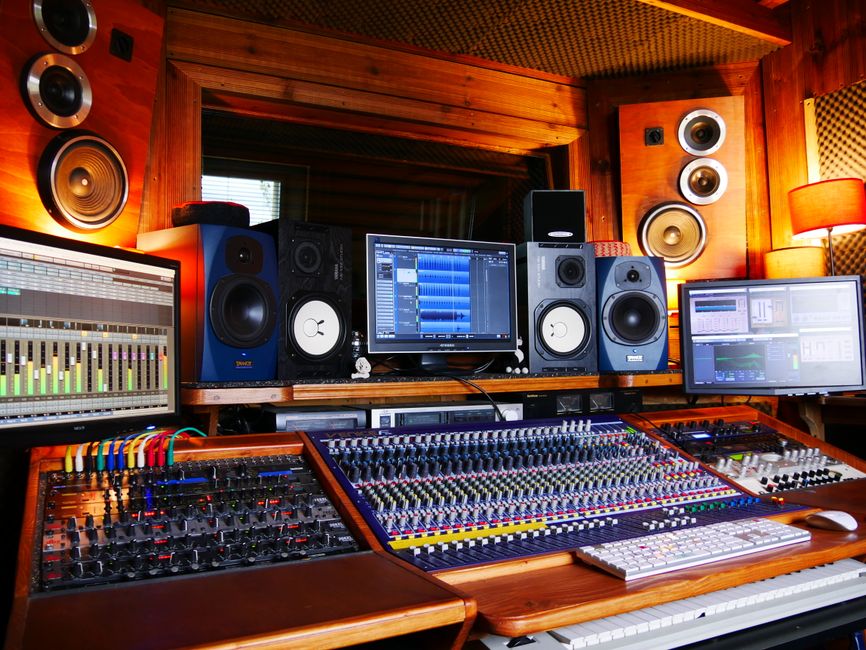
Yamaha NS-10: From Domestic Speaker to Studio Standard
In the vast universe of professional audio, few pieces of equipment boast a reputation as polarizing yet transcendent as the Yamaha NS-10 monitors. These loudspeakers, initially conceived for the domestic market in 1978, unexpectedly became a fundamental pillar in countless recording studios worldwide. Their design, characterized by a distinctive white woofer cone and a sealed cabinet, presented a frequency response that many considered imperfect, lacking deep bass and featuring a pronounced presence in the mid-range. However, it was precisely this “imperfection” that forged their legend, transforming them into an essential tool for engineers seeking maximum honesty in their mixes.
The NS-10’s journey from consumer shelves to the nerve centers of music production is a fascinating study in adaptation and necessity. Their emergence in recording studios during the 1980s was not the result of an aggressive marketing strategy, but an organic adoption driven by the community. Mix engineers quickly identified that if audio material sounded acceptable on the NS-10s, it would then translate optimally on virtually any other playback system. This characteristic, known as “translation capability,” became the hallmark of these monitors. Their particular emphasis on mid-range frequencies allowed professionals to clearly discern issues in vocal articulation, instrument definition, and the overall presence of a mix – aspects crucial for the intelligibility and emotional impact of music. The absence of an extended low end forced engineers to work intensely on managing the bass frequencies, ensuring that sub-harmonic content was perceived even on systems with limited bass response. More on their history can be found in specialized archives such as Sound on Sound [https://www.soundonsound.com/reviews/yamaha-ns10m-studio].
’Imperfection’ as a Tool: Translation and Mid-Range Focus
The influence of the NS-10s on shaping the sound of countless hit songs is undeniable. Their presence in most studios of the era meant that an entire generation of engineers honed their ears and mixing techniques based on their peculiar response. This phenomenon generated a sort of tacit industry standard: the benchmark for how a mix “should sound” before being considered finished. Although their production ceased in 2001, demand for NS-10s on the second-hand market persisted, evidencing their cult status. Today, this persistence is observed in how many professionals still use them as a secondary pair of monitors, complementing full-range systems with the critical perspective that only the NS-10s can offer. This dual or triple monitoring approach has become common practice, allowing mixes to be evaluated under various acoustic conditions and with different frequency responses, a concept that resonates with the original philosophy of the NS-10s.
The fundamental lesson that the Yamaha NS-10s bequeathed to contemporary music production lies in the importance of critical perspective in monitoring. In an ecosystem where music is consumed on an unprecedented diversity of devices—from high-fidelity headphones to Bluetooth speakers and surround sound systems—a mix’s ability to “translate” is more crucial than ever. Current innovations in monitor emulation software or room correction tools, such as those offered by brands like Sonarworks or the SoundID Reference system, aim precisely to replicate and optimize the monitoring experience, often including profiles that simulate the NS-10’s response. These advanced technologies allow producers and mixers to experience how their work will perform in various listening environments, a direct evolution of the “mix for the NS-10s” principle. The pursuit of sonic honesty and reliable translation remains a cornerstone in audio production, demonstrating that the essence of the NS-10s endures beyond their original hardware. Sites like Spotify for Artists [https://artists.spotify.com/en/help/article/audio-specifications] reiterate the need for mixes that sound good on any platform, a direct echo of the NS-10 philosophy.
Legacy and Influence: The Tacit Standard in Music Production
In summary, the trajectory of the Yamaha NS-10 monitors is a testament to how a tool, far from being perfect in its original conception, can become an industry standard thanks to its practical functionality and its ability to solve a critical problem in the music production workflow. Their legacy is not limited to a piece of vintage hardware but encapsulates a monitoring philosophy that continues to influence modern practices, emphasizing the importance of honesty, critical listening, and mix translation across multiple playback systems. Their story underscores that, in the realm of audio, the true value of a tool often lies in how it empowers the engineer’s ability to create a coherent and universal listening experience.
Related Posts
Parallel Compression: Fundamentals, Application, and Synergy with Modern Music Production Technologies
Explore the application of parallel compression in music production, from instruments to mix buses and its integration with AI.
Nearfield vs. Midfield Monitors: Technical Selection for Modern Studio Environments
Understand the acoustic and application differences between nearfield and midfield monitors to optimize sound accuracy in your production.

Formant Shifting: Pitch-Independent Vocal Timbre Manipulation
Technical exploration of formant shifting: how it alters vocal resonance for creative and corrective effects in music production.

The Sonic Evolution of El Peyote Asesino: A Technical Analysis of Record Production
A technical analysis of El Peyote Asesino's discography, exploring the evolution of their sound and music production in Latin America.