Fairlight CMI: A Digital Sampling Pioneer and its Legacy in Modern Music Production
An analysis of the genesis, innovation, and enduring influence of the Fairlight CMI on audio technology and music creation.

The Fairlight CMI: Origins and the Dawn of Digital Sampling
The Fairlight CMI (Computer Musical Instrument) burst onto the music scene in the late 1970s, radically redefining the possibilities of sound composition and production. This Australian system, a precursor to the digital audio workstation, not only introduced the concept of digital sampling to the industry but also offered an unprecedented graphical interface for sound manipulation. Its emergence marked a pivotal moment, laying the groundwork for digital synthesis and contemporary music production. The CMI’s influence extends from elite recording studios to the software tools we use today, solidifying its status as a fundamental technological milestone.
The genesis of the Fairlight CMI dates back to 1979, the brainchild of Australian visionaries Peter Vogel and Kim Ryrie. Their initial goal was to build a polyphonic digital synthesizer that would allow musicians to visualize and intuitively modify waveforms. What began as a project for a synthesizer based on additive synthesis quickly evolved into a game-changing functionality: digital sampling. This capability allowed for the recording of any real-world sound, its digitization, and subsequent playback at different pitches—a technological feat in an era dominated by analog synthesizers and rudimentary drum machines. The early units, such as the CMI Series I and II, offered an immensely flexible sonic palette, enabling users not only to create sounds from scratch but also to capture and transform acoustic textures with astonishing fidelity for their time. Operators interacted with the system via a light pen and a green phosphor screen, a user interface far ahead of its era that facilitated granular editing of sound waves, a technique now standard in many DAWs.
Graphical Interface and Granular Editing: CMI’s Innovations
The steep price of the Fairlight CMI, exceeding one hundred thousand Australian dollars at its launch, made it an exclusive tool, accessible only to elite artists and major studios. However, its unique sonic capabilities made it indispensable. Musicians and producers of the caliber of Peter Gabriel, Kate Bush, Stevie Wonder, Michael Jackson, Jean-Michel Jarre, and Art of Noise adopted the CMI as an extension of their creativity, imprinting their digital signature on some of the most influential albums of the 1980s. The ability to sample everyday sounds, like a breaking bottle or a bird’s song, and transform them into musical elements opened a universe of timbral possibilities. This fueled genres like synth-pop, new wave, and experimental electronic music, where sampled sounds intertwined with synthesizers and drum machines. The CMI’s iconic “Page R,” its pattern sequencer, facilitated rhythmic and melodic construction, becoming a fundamental tool for organizing complex musical ideas. Its presence was synonymous with innovation and the avant-garde, a device that not only created music but also made an artistic statement.
With the evolution of the CMI to its Series III, significant enhancements were incorporated, including higher sampling resolution (16-bit), expanded polyphony, and faster processing, solidifying its position as a powerhouse in music production. However, the 1980s also saw the emergence of more accessible samplers, such as those from Akai and E-mu, which democratized sampling technology. Despite the competition, the Fairlight CMI’s legacy endured, directly influencing the development of digital audio workstations (DAWs) and software plugins that are now ubiquitous. Concepts like graphical waveform editing, granular synthesis, and step sequencing, pioneered on the CMI, are now cornerstones of modern production.
Cultural Impact and Use by Elite Artists
Today, the Fairlight’s impact is evident in various areas. For instance, Arturia offers the CMI V, a software emulation that allows contemporary producers to experiment with its distinctive sound and unique workflow, integrating it into current production environments like Ableton Live or Logic Pro. (More information on this emulation can be found at Arturia CMI V). Furthermore, the CMI’s philosophy of sampling and sound manipulation resonates in sound design trends for immersive music, where the creation of detailed soundscapes and complex textures is crucial. Artificial intelligence in music production, enabling the generation and transformation of audio from samples, can be seen as an evolution of the CMI’s original promise: to grant musicians unprecedented control over the raw material of sound. The focus on visualization and direct editing, so central to the Fairlight, remains a desired feature in the user interfaces of modern plugins and DAWs, which aim to make production more intuitive. The ability to reuse and recontextualize sounds continues to be a cornerstone of today’s music production, from hip-hop to experimental electronic music, demonstrating that the foundations laid by the Fairlight CMI remain relevant and inspiring for new generations of creators. Even today, the Fairlight brand continues to be associated with professional audio production, forming part of Blackmagic Design’s post-production solutions (see Blackmagic Design Fairlight).
The Fairlight CMI transcends the mere label of a musical instrument to position itself as a cultural and technological artifact that shaped the modern sonic landscape. Its invention of digital sampling and its innovative graphical interface not only empowered a generation of artists to forge unprecedented sounds but also paved the way for the continuous development of audio production tools. From its humble beginnings in Australia to its global influence on music and technology, the CMI remains an enduring testament to human ingenuity and its capacity to transform creativity into digital reality. Its innovative spirit persists, resonating in every sample, every sequence, and every waveform that today’s producers manipulate in their studios.
Related Posts
Automation in DAWs: Sound Sculpting and Dynamic Evolution in Music Production
Explore how DAW automation sculpts sound, infuses dynamism, and crafts evolving soundscapes in modern productions.
Adaptive Acoustics and Generative Synthesis: Sound Architecture in Intelligent Ecosystems
Exploring advanced methodologies in sound design for creating immersive and adaptive auditory experiences in intelligent environments.

The Evolution of Audio Sampling: From Musique Concrète to Pioneering Digital Samplers
Trace the trajectory of early samplers, from analog experimentation to the digital gear that shaped music production.
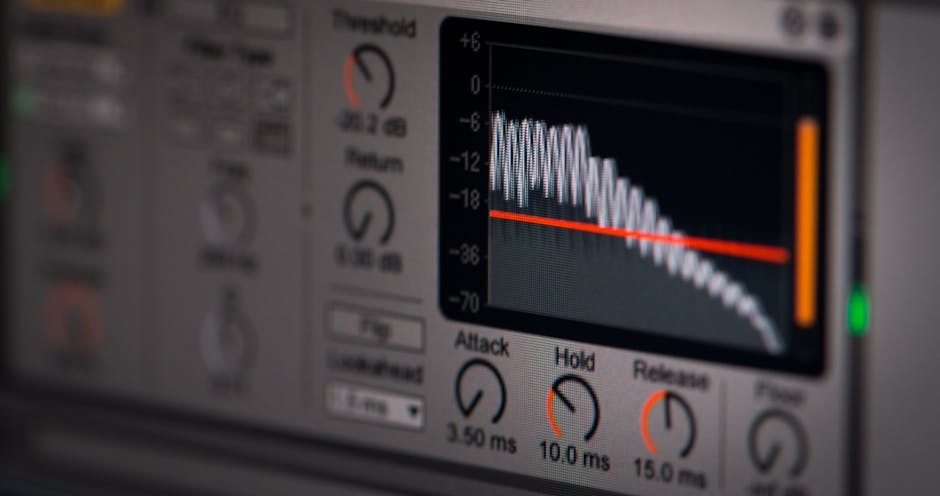
Analysis and Mitigation of Noise in Contemporary Music Production: Fundamentals and Advanced Techniques
Identifying diverse noise sources and applying preventive and corrective strategies to optimize sound fidelity.