Brass Instrument Sound Engineering: Transducers, Acoustics, and Signal Processing
Optimizing brass instrument capture through transducer selection, acoustic management, and post-production techniques.

Transducer Selection for Brass Instruments
Capturing brass instruments, with their expansive dynamic range and complex harmonic spectrum, presents one of the most rewarding challenges in sound engineering. The resonance of a trumpet, the power of a trombone, or the depth of a tuba demands a meticulous approach that considers both transducer choice and interaction with the acoustic environment. The synergy between appropriate miking and an understanding of space is fundamental to preserving the timbral integrity and energy of these sound sources.
The choice of microphone forms the first pillar in recording brass. Large-diaphragm condenser microphones, known for their extended frequency response and ability to capture subtle details, are frequently employed for a full and airy capture. However, their sensitivity may necessitate pad attenuators to handle the high sound pressure levels (SPL) characteristic of these instruments. Alternatively, dynamic microphones, being robust and offering excellent tolerance to high SPLs, provide a more focused response, ideal for isolating the instrument in dense mixes or for achieving a more direct sound. Ribbon microphones, on the other hand, impart a warmth and a smoothness in the high frequencies that can temper the inherent brilliance of brass, offering a distinctive and musical sonic coloration. The choice of polar pattern also significantly impacts the result: a cardioid pattern is useful for isolation, while an omnidirectional pattern can capture more of the room’s ambiance, and a bidirectional (figure-eight) pattern is advantageous in stereo recording configurations or for rejecting unwanted side sounds. Innovation in high-end preamplifiers, such as those incorporating classic transformer emulations, enhances the capability of these microphones to deliver a sound with character and presence from the initial stage of the signal chain.
Influence of the Acoustic Environment on Sound Capture
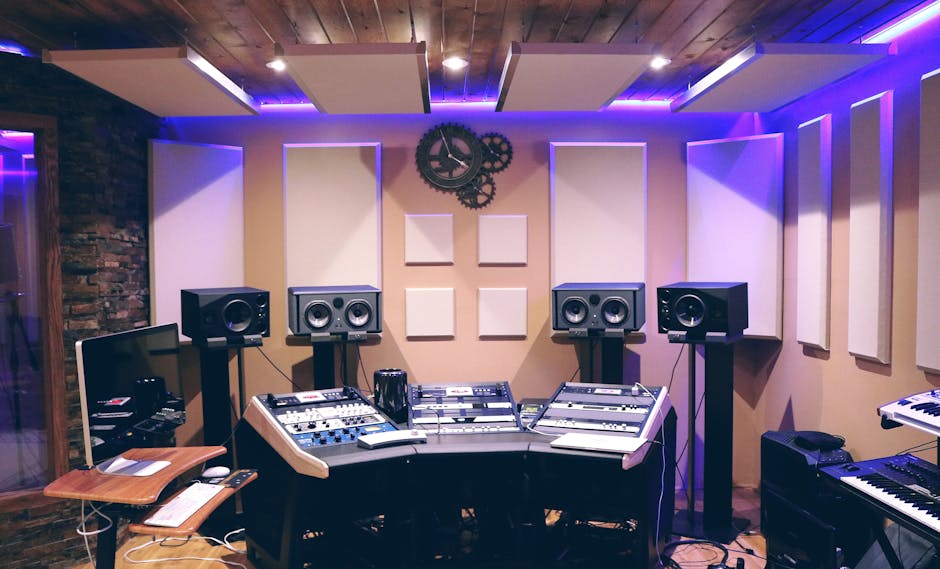
Beyond the transducer, the acoustic environment in which the recording takes place exerts an undeniable influence on the final outcome. A well-treated space, with a balance between absorption and diffusion, allows the instrument to “breathe” and its harmonics to develop fully. The distance to the microphone is a critical variable: close-miking highlights articulation and attack, minimizing the room’s impact, while distant miking incorporates the natural reverberation of the space, imbuing the sound with a sense of spaciousness and realism. For stereo configurations, techniques such as spaced pair (A/B), XY, or ORTF allow for the construction of a coherent sound image, each with its particularities regarding width and phase coherence. The incorporation of room microphones, strategically placed to capture the ambiance of the environment, is a common practice in professional studios. These ambient microphones, subtly blended with the close-up takes, enrich the spatial perception. In home studio contexts, where acoustic treatment may be limited, the use of portable absorption panels and diffusers can mitigate unwanted reflections, optimizing the clarity of the take. Likewise, acoustic simulation technologies using impulse responses (IRs) or advanced reverb plugins allow for the recreation of complex environments in the post-production stage, offering flexibility when the physical space is not ideal.
Once captured, subsequent processing enhances the quality of brass recordings. Equalization (EQ) is essential for refining the timbre, attenuating problematic resonant frequencies or enhancing brilliance and body. Compression, applied with discernment, helps control the wide dynamic range, adding sustain and cohesion without nullifying expressiveness. Current trends incorporate increasingly sophisticated processing tools. AI-powered plugins, for example, assist in identifying and correcting resonances or managing unwanted reverberation, streamlining workflows and perfecting sound with astonishing precision. Immersive music production, for formats like Dolby Atmos, has redefined the spatialization of brass, allowing these instruments to occupy three-dimensional positions in the mix, generating an enveloping auditory experience. Remote collaborative production, facilitated by online platforms, represents another significant advancement, where musicians in different locations can contribute their brass recordings, requiring standardization of capture techniques to ensure sonic coherence. Furthermore, the emulation of classic analog gear through high-fidelity plugins offers producers the ability to infuse their recordings with the warm, saturated character of legendary preamplifiers and compressors, merging the best of both worlds: digital flexibility and analog sound.
Processing and Current Trends in Brass Recording
Recording brass instruments demands a combination of technical knowledge and artistic sensibility. The careful selection of miking, a deep understanding of the space’s acoustics, and the strategic application of post-recording processing are irreplaceable pillars. By integrating contemporary tools and methodologies, from intelligent plugins to approaches for immersive audio, engineers and producers can ensure that the formidable presence of brass is manifested with the utmost quality and lasting sonic impact. Constant experimentation and adaptation to new technologies define the path to excellence in this specialty.
Related Posts

Mastering Melody: Unpacking Conociendo Rusia's Iconic Guitar Riffs
Explore the signature guitar riffs of Argentinian sensation Conociendo Rusia, analyzing their melodic impact and production nuances for aspiring musicians.
Logic Pro: Historical Evolution and Technological Adaptation in Digital Music Production
Tracing Logic Pro's trajectory from its origins to innovations in spatial audio and AI.

Chase Bliss Audio: Analog-Digital Fusion in Signal Processing for Melodic Instruments and Synthesizers
An analysis of Chase Bliss Audio's hybrid architecture, integrating analog circuits with digital control for advanced sonic textures.

Skank's Enduring Groove: Unpacking the Craft of Their Ballads and Mid-Tempo Masterpieces
Explore the sophisticated musicality and emotional depth behind Skank's iconic ballads and mid-tempo tracks, offering insights for Latin American producers.