Modern Drum Processing: EQ, Dynamics, and Spatiality in Digital Audio
Contemporary EQ, compression, and reverb strategies for integrating powerful, defined drums in music productions.
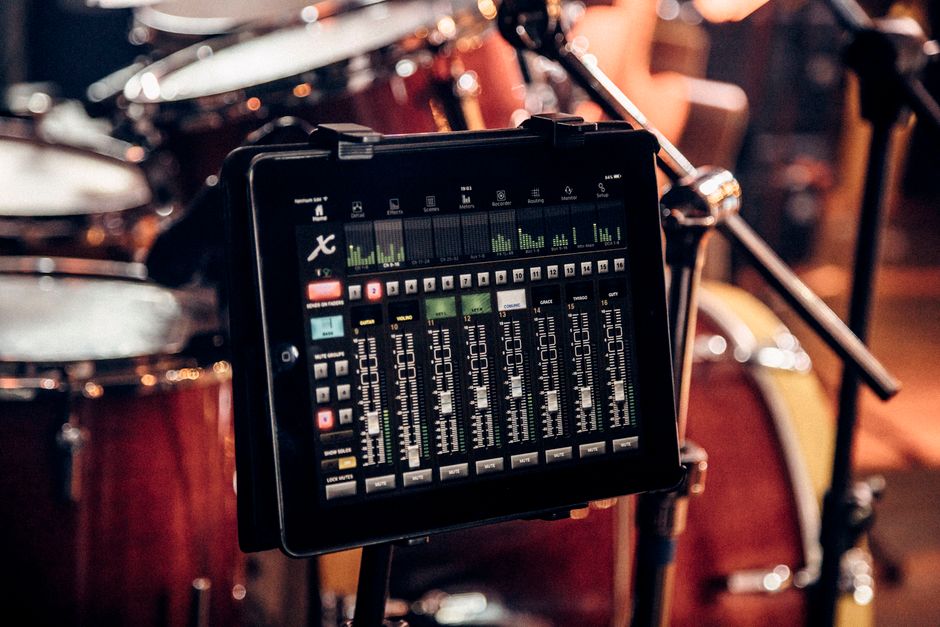
EQ and Dynamic Processing for Percussive Definition
Drums form the rhythmic foundation of almost any modern musical composition, lending energy and direction to the ensemble. Their proper treatment in the mix is fundamental to the overall sonic coherence of the track. Well-processed drums not only provide punch and clarity but also establish the desired groove and atmosphere. Technological evolution in digital audio has transformed processing methodologies, introducing advanced tools and innovative approaches that allow engineers and producers to achieve previously unattainable results. This article examines various contemporary strategies and tools for integrating powerful, defined drums into any music production.
Equalization (EQ) is a cornerstone in articulating each percussive element. Precise frequency discrimination allows for enhancing a kick drum’s attack, a snare’s resonance, or the cymbals’ brightness. For instance, a high-pass filter on toms can eliminate low-frequency mud, while a slight dip in the mid-range of a snare can prevent nasality. Parametric and dynamic tools, such as linear-phase equalizers or dynamic EQs, offer surgical manipulation, adapting to the signal in real-time. An example of effective implementation is using a low-cut EQ on the kick drum around 30-40 Hz to clean up headroom, reserving those sub-harmonic frequencies for the bass.
In parallel, compression shapes the drums’ dynamics, generating punch and control. Traditional “downward” compression reduces the dynamic range of transients, while parallel or “New York” compression preserves the original dynamics by blending a processed signal with the dry signal, adding density and body without crushing the attack. Modern plugins, such as those incorporating AI-based transient detection algorithms, facilitate peak management with exceptional transparency. Multiband compression can be particularly useful on cymbals, attenuating harsh high frequencies only when they exceed a specific threshold, maintaining the sound’s naturalness at other times. For kick drums and snares, compressors with fast attack times and medium to slow release settings often enhance impact.
Applying Reverb and Delay for Spatial Cohesion
Building a coherent space for the drums is vital for listener immersion. The strategic use of reverb and delay can position percussive elements in a believable sonic environment. For the full drum kit, a short, dense room reverb can simulate a natural recording space, blending the various elements. Conversely, short delays or micro-delays applied to individual elements, like the snare, can widen their stereo presence without resorting to excessive panning. The implementation of convolution reverbs, which simulate real acoustic spaces using impulse responses, offers a highly versatile palette of ambiences. New trends in immersive audio, such as production for Dolby Atmos, require a three-dimensional consideration of space, where drums can be distributed across an expanded sound field, creating an enveloping auditory experience. Platforms like Spotify and Apple Music already support these formats, driving producers to adapt their spatial mixing techniques.
Furthermore, subtle modulation effects, such as chorus or flanger on an auxiliary send, can add texture and movement to specific elements like hi-hats or cymbals without saturating the main mix. It is crucial to maintain low-frequency mono for the kick drum to ensure solid impact across varied playback systems, from headphones to PA systems.
The integration of drums into the overall mix demands meticulous attention to cohesion and phase alignment. Phase issues between snare and overhead mics, or between the kick and room mics, can result in frequency cancellations and a lack of punch. Phase adjustment tools, both in plugins and within the DAW (Digital Audio Workstation), are indispensable for correcting these inconsistencies. Many current plugins incorporate visual phase analyzers that facilitate this task. For example, Universal Audio’s Little Labs IBP plugin is a benchmark in this area.
Advanced Techniques and Trends in Drum Mixing
Drum bus compression is an advanced technique that amalgamates all percussive elements, giving them a “glue” and unified feel. A classic VCA or FET compressor on the drum bus can add cohesive energy that makes the drums sound like a single instrument. Automation is another powerful tool for injecting dynamism. Subtle variations in volume, EQ, or effect sends throughout the song can enhance specific sections, such as a chorus or a breakdown. Sidechaining, for instance, to slightly compress the bass every time the kick drum hits, ensures both instruments have their space in the low frequencies without competing.
Recent innovations include AI-assisted “drum replacement” or “drum enhancement” plugins, which can improve the quality of existing drum recordings or even generate realistic drum parts from MIDI, offering unprecedented flexibility. Online collaborative production, through platforms like Splice or Landr, is also transforming how producers share and refine their drum mixes, enabling rapid iterations and real-time feedback.
Drum mixing is a multifaceted process that combines technical knowledge with artistic vision. The informed application of EQ, dynamic processing, spatial techniques, and attention to phase are crucial for achieving impactful and professional sound. Integrating innovative tools and following trends in music production, from immersive audio to artificial intelligence, empowers engineers and producers to elevate the standard of their mixes. Constant experimentation with new tools and approaches is key to perfecting the art of drum processing, ensuring that the rhythm of each piece resonates with maximum clarity and power.
Related Posts

Eastcote Studios: Analog to Digital Evolution and its Legacy in Music Production
Eastcote Studios' trajectory, blending analog and digital techniques to define the sound of iconic recordings.

Automated Musical Texture Characterization via Signal Processing and Machine Learning
Objective quantification of musical texture: signal processing and ML methods for analysis, composition, and audio production.

Pyramix: Processing Architecture and Tools for High-Fidelity Professional Audio
Analysis of Pyramix architecture for high-resolution audio, advanced editing, and efficient critical production workflows.

Sunset Sound: Acoustic Legacy and Technological Evolution in Music Recording Engineering
Sunset Sound's influence on popular music, its acoustic design, and the integration of analog and digital technologies.