Tape Echo and Analog Delay: Mechanisms, Evolution, and Impact on Modern Music Production
A technical analysis of the warmth, harmonic complexity, and creative applications of tape echo and analog delay in contemporary music.
Fundamental Mechanisms of Analog Tape Echo
Tape echo and analog delay represent fundamental pillars in the sonic architecture of contemporary music. Their imprint, characterized by a unique warmth and harmonic complexity, endures in countless recordings that have defined genres and styles. Despite the ubiquity of digital tools and technological advancements, the pursuit of the organic qualities of these vintage processors remains relevant, a constant in studios worldwide, from Buenos Aires to Madrid. This analysis traces the trajectory of these effects, from their original mechanisms to their persistent impact on current production trends.
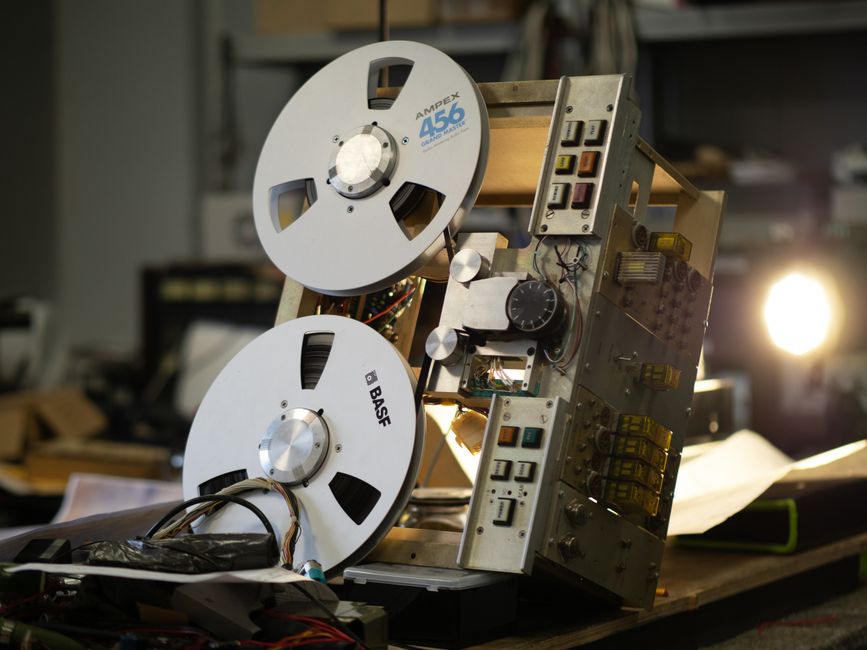
The mechanical principle underlying early tape echoes involved a magnetic tape moving in a continuous loop. A recording head imprinted the audio signal, while one or more subsequent playback heads read it with a time delay. The distance between the heads and the tape speed determined the delay time. An erase head removed the old signal to allow for new recordings, creating a perpetual cycle. Iconic units like Maestro’s Echoplex or Roland’s RE-201 Space Echo are distinguished by their unique sonic qualities: a slight intrinsic modulation, harmonic saturation when exciting the tape, and a natural degradation of repeats. Sound engineers of the era valued these machines’ ability to generate a particular resonance, often with a slight ‘wow and flutter’ inherent to the tape’s movement, which added a dimension of organic motion that later digital effects could not replicate with the same authenticity. Extreme feedback, an sometimes uncontrollable feature, became a creative tool for generating drones and abstract textures, elements still sought today in sonic experimentation. Pioneering dub artists like King Tubby in Jamaica or progressive rock bands like Pink Floyd in the UK integrated tape echo as an essential component of their sonic identity, shaping expansive and ethereal soundscapes. To learn more about the Space Echo, you can visit Roland’s official site: https://www.roland.com/latinamerica/products/re-201/.
BBD Technology: Compactness and Character of Analog Delay
The 1970s witnessed a significant advancement with the introduction of Bucket Brigade Devices (BBDs). This technology enabled the creation of analog delay units that were more compact and required less maintenance than their tape-based predecessors. BBDs operate by shifting small electrical charges through a series of capacitors, emulating tape’s time delay without moving parts. Each ‘bucket’ or capacitor stage holds a sample of the audio for an instant, passing it to the next in a sequence. This process introduces a natural attenuation of high frequencies with each repeat, lending BBD analog delay a darker, warmer sound, often perceived as more musical or ‘vintage’ than pristine digital delays. This progressive attenuation of high frequencies with each repeat is one of the primary reasons BBD delays are perceived as ‘warmer’ or ‘darker’ than their digital counterparts. The lack of perfect clarity in the repeats often translates to better integration within the mix, preventing the effect from competing with the original signal. Furthermore, the analog nature of these circuits imparts a dynamic response and interactivity with the input signal that many musicians find more musical. Legendary pedals like the Electro-Harmonix Memory Man or Boss’s DM series exemplify this technological transition and its tonal impact. A reference to one of these classics is the Electro-Harmonix Memory Man: https://www.ehx.com/products/memory-man-deluxe-1100tt/. Beyond the mentioned examples, a variety of units such as the Boss CE-2 Chorus (which uses BBDs for a very short delay effect), or pedals from MXR and DOD, attest to the versatility and success of this technology in shaping the sound of electric guitars and synthesizers in the 70s and 80s.
The sonic imprint of these effects is distinguished by harmonic warmth and subtle modulation, often described as ‘organic.’ Unlike digital delays, which offer clean and precise repeats, analog ones introduce inherent tonal coloration, slight distortion, and a decay that integrates more naturally into the mix. The ability of some of these devices to enter self-oscillation by feeding the signal back into its input allows for the generation of experimental sound textures and ambient soundscapes. In current music production, analog emulation via plugins has reached remarkable levels of fidelity. Software tools from Universal Audio, such as their Echoplex or Space Echo emulations, allow producers to incorporate these sonic qualities without the need to acquire or maintain vintage hardware. This phenomenon has facilitated the integration of classic sounds into contemporary genres like lo-fi hip-hop, electronic indie, and digital cumbia, where warmth and controlled imperfection are valued qualities. The range of UAD delay plugins can be found here: https://www.uaudio.com/uad-plugins/delay-modulation.html. Furthermore, the trend towards hybrid production, combining the best of the analog and digital domains, is a constant. In professional studios from Buenos Aires to Bogotá, it’s not uncommon to find a combination of processors. A producer might use a digital delay for precise rhythmic repeats and then send that signal to an analog pedal, or even a re-amp connected to a real tape head, to infuse it with character and saturation. This synergy between digital and analog allows for a vast sonic palette and granular control over textures. Artificial intelligence and machine learning are driving a new era in emulation. Modern algorithms not only model frequency response and delay time but also analyze the non-linearities, subtle saturation, and harmonic imperfections that give each analog unit its unique voice. This means producers can access the sonic essence of vintage units from decades past with unprecedented fidelity, directly from their digital audio workstations (DAWs), opening up a spectrum of creative possibilities. To delve deeper into mixing techniques with delay effects, Sound on Sound offers valuable resources: https://www.soundonsound.com/techniques/mixing-delay-effects.
Digital Emulation and Hybrid Trends in Delay Processing
From the intricate tape mechanisms to sophisticated BBD circuits, analog delay has traced an uninterrupted trajectory in shaping modern sound. Its legacy, cemented in a distinctive sonic aesthetic and creative versatility, continues to inspire new generations of producers and musicians. The coexistence of vintage hardware, precise digital emulations, and new innovations ensures that the unique resonance of tape echo and analog delay will remain an essential resource in the sonic lexicon, transcending technological and aesthetic barriers in music creation.
Related Posts

Audio Mastering for Streaming: LUFS Standards, Dynamic Processing, and Codec Optimization
Explore the technical fundamentals of audio mastering for streaming platforms, covering LUFS, dynamic processing, and codec selection.
Sound Design and Signal Processing for Immersive Meditative Music
Harmonic foundations, granular textures, and advanced reverb to create serene, effective soundscapes.

Algorithmic vs. Convolution Reverb: Principles, Applications, and Technical Optimization
Technical exploration of algorithmic and convolution reverb: differences, operation, and application for audio engineers.
Sonic Capture of Exotic Resonant Instruments: Physics, Microphony, and Advanced Processing
Technical analysis of recording and processing techniques for exotic instruments, preserving their harmonic richness and unique resonance.