Cubase: Architecture and Workflow for Contemporary Music Production
Technical analysis of Cubase's capabilities for MIDI, audio editing, mixing, and immersive audio, optimizing sound production.
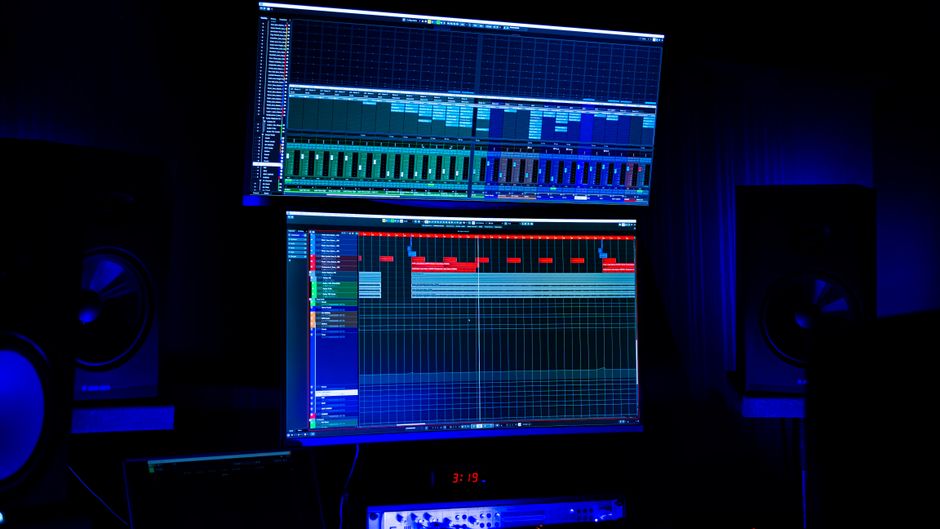
Fundamental Architecture and Workflow in Cubase
Cubase has cemented its position as a cornerstone digital audio workstation (DAW) in the global music industry, with significant adoption among producers and musicians worldwide. Its robust architecture and comprehensive toolset make it an ideal platform for creating, recording, editing, mixing, and mastering sound projects of all scales. From initial composition to the post-production phase, this software offers a versatile environment that adapts to the demands of contemporary production. For an overview of its capabilities, you can consult the official Cubase page.
The efficiency within the Cubase environment begins with understanding its workflow. The management of MIDI and audio tracks forms the core of any project. For MIDI sequencing, the Key Editor and Drum Editor enable precise articulation of performances. Advanced quantization and tempo detection functions are crucial for synchronizing rhythmic elements. Regarding audio, non-destructive editing allows for fine adjustments without altering the original material, a considerable advantage for experimentation. The VariAudio 3 tool, exclusive to Cubase Pro, facilitates precise melodic and temporal manipulation of vocals and monophonic instruments with surgical accuracy, comparable to dedicated pitch correction solutions. The MixConsole is central, offering detailed control over levels, panning, and signal routing. Implementing logical organization of tracks and groups greatly simplifies complex sessions.
Audio and MIDI Processing: Key Tools
Cubase is distinguished by its comprehensive support for the VST (Virtual Studio Technology) standard, an innovation developed by Steinberg. This enables the integration of a vast library of virtual instruments (VSTi) and effects (VST FX). Synthesizers like Retrologue 2 or Padshop 2, along with samplers like Halion Sonic SE, provide a broad sonic palette for composition. Cubase’s signal chain allows for inserting multiple effects on each channel, from parametric equalizers to compressors and reverbs. The Channel Strip, integrated into each channel of the MixConsole, offers high-quality processing modules such as compression, gating, saturation, and filters, optimizing resource usage and workflow. For sound sculpting, the use of third-party plugins from companies like Waves or FabFilter complements the native tools, allowing for deep timbral customization. The strategic application of these processors is vital for achieving clear and dynamic mixes.
Modern music production with Cubase transcends basic operations, incorporating cutting-edge techniques and technologies. Precise automation of parameters, from volume to effects, adds movement and life to mixes. Sidechain compression, for example, is fundamental for bass ducking in response to the kick drum, a prevalent technique in genres like electronic music and pop. The use of group tracks and effect buses enables global processing and efficient mix management.
VST Integration and Signal Processing in Cubase
Recently, the industry has witnessed an evolution towards immersive music. Cubase Pro 12 and later versions offer robust capabilities for producing audio in formats like Dolby Atmos, a growing trend on streaming platforms such as Apple Music and Amazon Music HD. This functionality allows producers to design three-dimensional soundscapes, an innovation that redefines the listening experience. The integration of artificial intelligence (AI) into processing plugins, such as the mixing or mastering assistants from iZotope or Sonible, also represents a significant advancement, streamlining processes and offering suggestions based on spectral analysis.
Furthermore, remote collaboration has solidified as a pillar in global production. Cubase includes VST Connect SE, a solution that facilitates the recording of musicians remotely with synchronization and low latency, an invaluable resource for international projects or those involving geographically distributed talent. Cubase’s adaptability to these trends positions it as a relevant tool for contemporary music content creation, from singer-songwriter material to film scores.
Advanced Trends: Immersive Audio and Remote Collaboration
In summary, Cubase stands as an exceptionally versatile and powerful music production environment. Its continuous evolution, incorporating advanced tools and aligning with technological trends like AI and immersive audio, ensures its relevance in the dynamic soundscape. Those who delve into its functionalities, from MIDI editing to Dolby Atmos mixing, will find a robust platform for materializing artistic and technical visions with professional quality. Investing in learning this DAW is a solid strategy for any producer or musician aspiring to excellence in sound creation.
Related Posts

Graphic vs. Parametric Equalizers: Features and Applications in Audio Production
Technical comparative analysis of graphic and parametric equalizers: their fundamentals, optimal uses, and application in music production.

Creative Sidechaining: Beyond Ducking to Sculpt Sonic Identity
Explore the evolution of sidechaining from a corrective tool to a creative engine for textures, rhythms, and sonic ambiences.
Artificial Intelligence in Sound Design: Innovations in Timbre, Processing, and Immersive Experiences
Explore how AI redefines texture creation, optimizes mixes, and enhances spatial audio, driving sonic creativity.

Stochastic Synthesis: Probabilistic Sound Generation and its Integration with AI
Exploring the generation of organic, evolving acoustic textures via probabilistic algorithms and their synergy with artificial intelligence.