Principles and Applications of Equalization in Modern Audio Engineering
Explore the fundamentals, types, and advanced strategies of equalization to optimize clarity and sonic character in music productions.
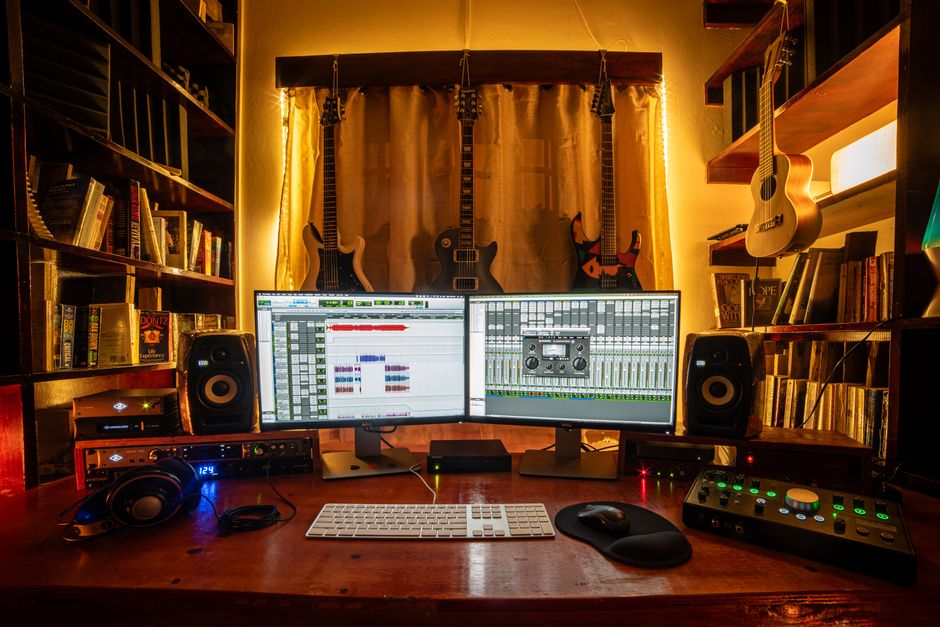
Fundamental Principles of Equalization
Equalization stands as a cornerstone in audio engineering, indispensable for shaping the sonic profile of any music production. Beyond merely adjusting frequencies, this technique allows for the sculpting of the character of individual elements within a mix, optimizing their cohesion and spectral clarity. Its application transcends simple correction of deficiencies, transforming into a creative tool for enhancing tonal attributes and creating space between instruments. A deep understanding of its mechanical principles and effective applications is essential for achieving professional sound quality.
The study of equalization involves comprehending various processor types and their parameters. Parametric equalizers, for instance, offer granular control over the center frequency, gain, and bandwidth (Q), enabling surgical adjustments or broad tonal shaping. Graphic equalizers, on the other hand, feature fixed bands, ideal for quick adjustments in live environments or for establishing an overall contour. Other types include shelving filters, which boost or cut all frequencies above or below a given point, and high-pass/low-pass filters, essential for removing unwanted information at the extremes of the audible spectrum. The distinction between subtractive equalization – removing problematic frequencies – and additive equalization – boosting desired frequencies – constitutes a basic principle; the former is usually the preferred option for maintaining integrity and preventing the accumulation of resonances.
Types of Equalization Processors and Their Parameters
Developing advanced application strategies is crucial for elevating production quality. For instrument separation, strategic cuts at specific frequencies are used to reduce masking, allowing each element to occupy its own place in the sonic landscape. For example, attenuating the low frequencies of a guitar can free up space for the bass, while a slight boost in the mid-high frequencies can give a vocal presence without it competing with other instruments. Tonal shaping and the addition of character involve the creative use of equalization to impart a particular sonic signature, mimicking the response of classic analog gear or creating novel textures. An advanced technique is dynamic equalization, where a boost or cut is applied only when the signal exceeds a specific threshold, ideal for managing transient or sporadically appearing resonances. In the mastering stage, equalization is applied with extreme subtlety, aiming for overall balance and tonal consistency that optimizes playback across diverse sound systems, without drastically altering the original mix.
The current landscape of music production benefits from constant innovations in the field of equalization. Artificial intelligence-assisted plugins, such as iZotope Neutron or Soundtheory Gullfoss, offer intelligent suggestions for spectral balancing, learning from the audio signal to identify areas for improvement. These tools can accelerate workflows and provide insights that complement human listening. Advanced spectrum analyzers, integrated into plugins like FabFilter Pro-Q 3, provide a detailed visual representation of frequency distribution, assisting engineers in making precise decisions. Emulation of analog hardware, offered by companies like Universal Audio, provides access to the sonic characteristics of classic equalizers, imparting warmth and musicality to digital recordings. In the context of immersive audio, such as Dolby Atmos, equalization also plays a role in sound spatialization by influencing how we perceive the location and depth of sonic elements. Remote and collaborative production platforms increasingly integrate these tools, allowing audio engineers in different locations to share and adjust equalization settings in real-time.
Advanced Strategies for Separation and Sonic Character
In essence, equalization is a skill refined through constant practice and critical listening. It goes beyond the technical manipulation of frequencies; it represents an art form that seeks clarity, balance, and emotional expression in music. Adopting new technologies and understanding their robust fundamentals enhance a producer’s ability to create works with significant sonic impact. The evolution of digital tools and the integration of artificial intelligence offer novel pathways for optimizing this process, but human expertise and a trained ear remain irreplaceable in achieving an exceptional mix. Tags: Equalization, Music Production, Audio Engineering, Mixing, Mastering, Spectral Analysis, Audio Plugins, Professional Sound Category: Music Production
Related Posts

Recording Methodologies at Hitsville U.S.A.: Engineering and Legacy of the Motown Sound
An analysis of Motown's innovative sound engineering techniques and their lasting influence on modern music production.
Studio One: Workflow Evolution and Capabilities in Modern DAWs
Technical analysis of Studio One, highlighting its interface, innovative tools, and adaptation to spatial audio and collaboration.

Auratone Monitors: The Mid-Frequency Perspective and Their Legacy in Mix Validation
An analysis of Auratone's design philosophy and its lasting impact on verifying mix compatibility across playback systems.

Blackbird Studios: Acoustic Architecture and Analog Gear in Contemporary Music Production
Exploring Blackbird Studios' acoustic design, vintage equipment, and immersive technology, setting sound quality standards.