Parameter Automation in Music Production: From Mixing to Immersive Sound Experiences
Automation evolves beyond basic adjustments, sculpting complex soundscapes and three-dimensional auditory experiences.
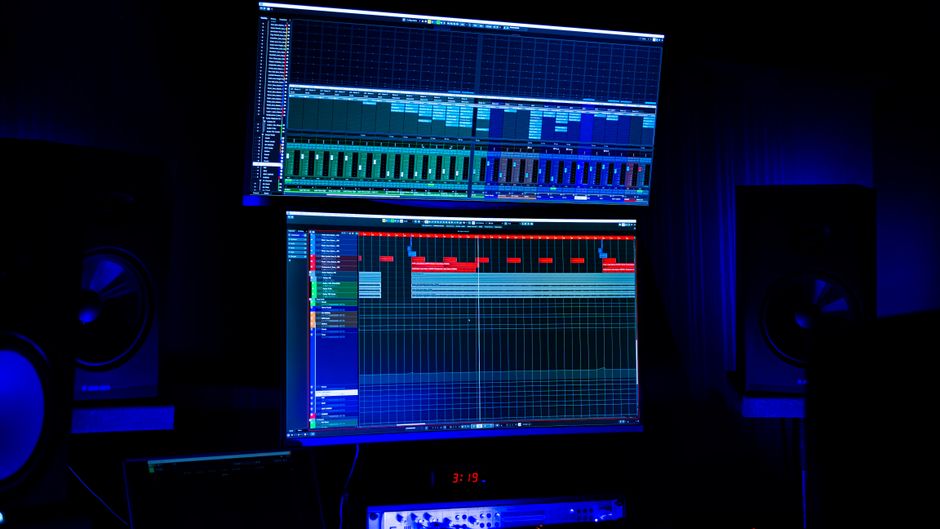
The Evolution of Automation in Music Production
Automation in music production has transcended its initial function of mere volume or panning adjustments. It now constitutes a fundamental tool for artistic expression and the creation of complex soundscapes. Its strategic implementation allows engineers and producers to infuse life and movement into mixes, generating dynamic transitions and evolving textures that capture the listener’s attention. Far from being a monotonous task, this technical process has solidified its position as a pillar of modern sound design, offering a vast spectrum of creative possibilities for those seeking a distinctive sonic signature.
Historically, real-time manipulation of audio parameters required multiple operators or complex analog consoles with limited memory. The advent of Digital Audio Workstations (DAWs) such as Ableton Live, Logic Pro X, or Pro Tools revolutionized this paradigm. These digital environments provide an intuitive graphical interface for drawing or recording MIDI controller movements, allowing for millimeter-precise control over any plugin or channel parameter. From equalization filters that progressively open up to delay modulations that create spatial effects, the evolution of automation has transformed how we conceive of interacting with sound. A deep understanding of these capabilities is crucial for any audio professional aiming to optimize their workflows and enrich their productions.
DAWs and Precision in Parameter Manipulation
Beyond the obvious applications, advanced automation techniques pave the way for sophisticated sonic character. A common practice is the non-linear modulation of effect parameters. For instance, rhythmic variation of ‘feedback’ in a delay can generate textures that fade unpredictably, or gradual alteration of a reverb’s ‘decay’ can simulate changes in space, adding a spatial dimension that evolves with the music. Another valuable method involves automating distortion or saturation, applying these effects only at specific peaks or key instrumental passages to add aggression, harmonic warmth, or even a sense of organic growth to the sound. Precise control of the ‘mix’ knob in parallel compression, varying its intensity in different sections, can impart punch and energy only where needed, while maintaining the overall dynamics of the track. Likewise, manipulating the ‘formant’ or ‘pitch’ of a voice or synthesizer over time can produce robotic vocal effects, alien textures, or ethereal soundscapes that add a layer of originality to the composition. These implementations require experimentation, a clear vision of the desired sonic outcome, and often, observation of how multiple automated parameters interact to forge a cohesive and captivating sonic impact.
The current landscape of music production benefits from innovations that enhance automation, taking it to new heights of complexity and efficiency. Artificial intelligence (AI) is beginning to play a significant role, with plugins that suggest or even generate automation curves based on audio analysis. Tools from companies like iZotope or FabFilter https://www.fabfilter.com/ offer features that allow algorithms to identify dynamic or frequency patterns and apply subtle movements to improve timbral coherence or mix energy, representing a considerable advance in the efficiency of the creative process. These systems can, for example, automate a high-pass filter to clean up the low frequencies of an instrument only when another element in the low-frequency range enters the scene, intelligently avoiding frequency collisions. Additionally, the production of immersive music, exemplified by formats like Dolby Atmos, intensifies the relevance of spatial automation. Orchestrating sound movements in a three-dimensional environment, shifting elements from one speaker to another or modifying their perceived distance, is entirely managed through complex automations that define the auditory experience. This field represents a frontier for innovation, where producers from Argentina and the region are beginning to venture, adapting their workflows to these new mixing and mastering demands. The interconnection of advanced MIDI controllers with automation parameters, via high-end control surfaces such as those offered by SSL https://www.solidstatelogic.com/ or Universal Audio https://www.uaudio.com/, also streamlines real-time interaction. This transforms automation from an editing task into a performance in itself, allowing for more organic expression. The official documentation for Ableton Live https://www.ableton.com/es/live/ or Logic Pro X https://www.apple.com/es/logic-pro/ offers detailed resources for delving deeper into these capabilities, underscoring the importance of staying updated with the tools available in the industry.
Advanced Modulation and Processing Techniques
In synthesis, creative automation has established itself as an indispensable component in contemporary music production. Its correct application not only optimizes workflow efficiency but also fosters sonic experimentation, enabling creators to sculpt sound with a depth and dynamism unattainable by other means. By integrating these advanced techniques and staying abreast of the latest tools and trends, producers can significantly elevate the quality and originality of their works, forging memorable auditory experiences for their audience.
Related Posts

Acoustic and Digital Innovation in Contemporary Classical Music Production
Exploring the synergy between classical instrumentation and digital audio for immersive, high-fidelity sound experiences.
Budget Home Studio Setup: Components and Acoustics for Music Production in Latin America
Resource optimization for home studios. Selecting affordable hardware, acoustics, and software for quality music production.

Kinetic Sound Design: Modulation, Spatialization, and Granular Synthesis for Immersive Audio
Fundamentals of kinetic sound design: modulation, automation, 3D spatiality, and granular synthesis for dynamic audio experiences.

Electric Guitar Capture: Mic'd Amp vs. Direct Injection (DI)
Technical comparison of mic'd amp and DI guitar recording, optimizing texture and sonic flexibility.