Chorus and Flanger: Evolution, Technical Principles, and Contemporary Sound Design Applications
Technical analysis of delay modulation: principles, historical legacy, and advanced use of chorus and flanger in music production.
Origins and Principles of Chorus: Simulating Multiple Sound Sources
Temporal modulation has been a cornerstone in the evolution of music production, empowering engineers and artists to expand their sonic palette. Among the most iconic effects that manipulate delay time to forge new auditory textures, chorus and flanger stand out for their distinct ability to generate movement and depth. These processes, initially conceived through mechanical ingenuity and analog manipulation, have transcended generations, adapting to technological innovations while retaining their relevance in contemporary sound design.
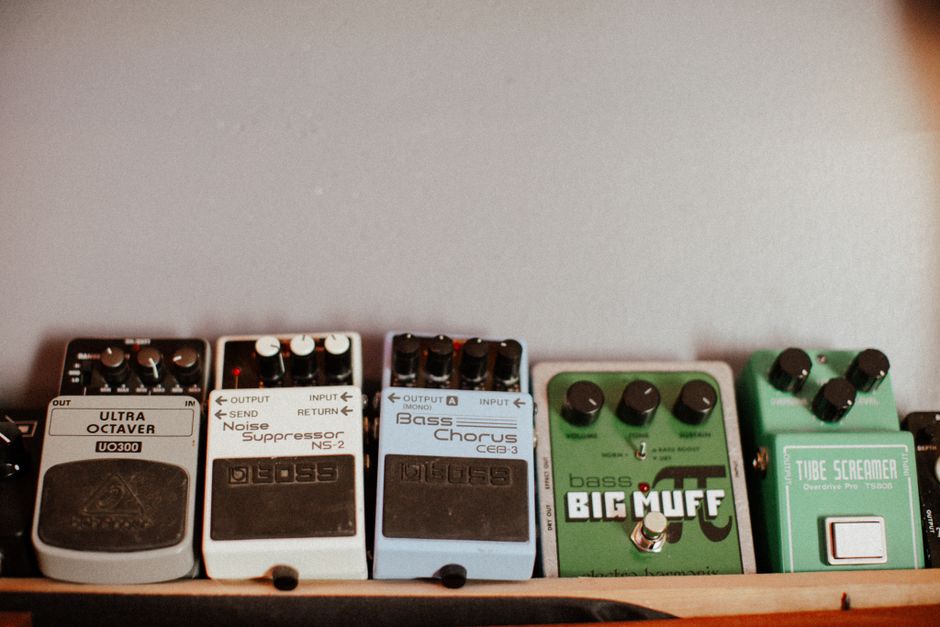
The chorus effect simulates the presence of multiple, slightly detuned and out-of-phase instruments or voices, creating a sense of fullness and width. Its genesis is closely linked to the Leslie rotary speaker system, famously used with Hammond organs, which imparted a characteristic vibrato and tremolo. The translation of this concept into studio effects and guitar pedals materialized with iconic units like the Boss CE-1 Chorus Ensemble, released in 1976. This analog device utilized a Bucket Brigade Device (BBD) delay line to generate a duplicated signal, slightly phase-shifted and pitch-modulated, which was then mixed with the original. Its application quickly extended to electric guitars, keyboards, and vocals, providing harmonic richness and an ethereal character. Artists such as Andy Summers of The Police and Robert Smith of The Cure incorporated chorus as a signature element in their tones. Today, chorus plugins offer unprecedented versatility. Digital tools allow precise manipulation of parameters like modulation depth, rate, and delay, and even the implementation of multiband chorus, which applies the effect selectively to specific frequency ranges. This enables the creation of complex textures, from subtle thickening to extreme ‘detune’ effects, employed in genres ranging from synthwave to experimental ambient. A relevant example of its legacy can be explored on the official Boss CE-1 page.
The Flanger: Generating Phase Sweeps via Delay and Feedback
The flanger, on the other hand, produces a more distinctive and often more dramatic sound. It is generated by mixing an original signal with a copy of itself that is delayed by a very brief and continuously variable period, typically between 0.1 and 10 milliseconds. The most notable characteristic of the flanger is the feedback of the delayed signal, which accentuates the phase peaks and troughs, creating a characteristic ‘sweep’ or ‘jet engine’ effect. Its origin dates back to 1960s studio techniques, where engineers like Ken Townsend—and popularly attributed to John Lennon and George Martin at Abbey Road Studios—manually manipulated the ‘flange’ of identical tape reels, slightly altering their speed to create the phasing effect. The electronic emulation of this process arrived with units like the MXR Flanger or Electro-Harmonix’s Electric Mistress, transforming it into a staple for guitarists and producers. Its resonant sound and ability to create movement across the frequency spectrum made it popular in psychedelic rock, funk, and hard rock. From the drums in Led Zeppelin’s ‘Kashmir’ to Eddie Van Halen’s guitars, the flanger has defined iconic sonic moments. In the modern digital realm, flanger plugins go beyond classic emulation. They feature advanced LFO modulation options, independent stereo control, and the ability to sync the sweep to project tempo. This facilitates integration into electronic productions, sound design for film and video games, and even immersive audio, where the effect’s spatial movement can be precisely mapped. A modern version of the MXR Flanger can be observed on the manufacturer’s site.
While both effects are based on delay modulation, their sonic character differs substantially. Chorus tends to be more subtle, generating a sense of thickening and width, whereas flanger is more aggressive, with its characteristic phase sweep and resonance. In today’s production environment, the choice between chorus and flanger is not limited to vintage hardware emulation. Producers employ modern versions of these effects to sculpt unique textures, from subtle animations on synthesizer pads to drastic transition effects in electronic music mixes. The ability to automate their parameters in DAWs like Ableton Live or Logic Pro X allows for dynamic integration into complex arrangements. Artificial intelligence is beginning to influence effect design, with plugins suggesting optimal parameters or even generating creative variations based on audio analysis. Furthermore, immersive audio production for formats like Dolby Atmos greatly benefits from these effects’ ability to generate spatial movement, allowing textures to modulate not only in pitch and time but also in three-dimensional location. An example of high-quality emulation can be found in Universal Audio’s plugins, such as the Boss CE-1 Chorus Ensemble.
Technical Comparison: Chorus vs. Flanger in Contemporary Sound Design
The trajectory of chorus and flanger underscores the constant pursuit of new sonic territories in music production. From their analog and mechanical origins to their sophisticated digital implementation and integration into paradigms like immersive audio and artificial intelligence, these effects persist as essential tools. Their capacity to infuse life, movement, and a unique spatial depth ensures their permanence as indispensable creative elements in any producer’s or musician’s arsenal.
Related Posts
Microtiming and Percussive Layers: Foundations for Distinctive Groove Construction
Delve into rhythmic articulation, microtiming, percussive layer design, and instrumental interaction for unique groove creation.

Audio Transient Response: Capturing, Processing, and Perceiving Sonic Dynamics
Technical analysis of transient integrity, its influence on clarity and impact, and its management in modern music production.

The Historical Evolution of Logic Pro: From MIDI Sequencer to Comprehensive DAW with Spatial Audio
Technical analysis of Logic Pro's evolutionary path, highlighting its technological adaptation and key functionalities for modern music production.

Machine Learning in Audio Mastering: Adaptive Optimization and Productive Efficiency
Analysis of how machine learning is redefining music mastering, bringing adaptive sonic optimization and precision to production.