Dolby Atmos for Music Production: Fundamentals, Sound Objects, and Studio Setup
Master immersive mixing with Dolby Atmos: objects, beds, and 7.1.4 studio configurations for 3D audio experiences.
Fundamentals of Immersive Mixing and Dolby Atmos
The evolution of audio has taken a fascinating journey, from mono to stereo, and now firmly resides in the realm of immersive sound. In this context, Dolby Atmos emerges as a transcendental standard that redefines the listening experience, placing the listener at the center of a three-dimensional sound sphere. This technology, which initially revolutionized cinema, has powerfully permeated the music industry, offering producers the ability to position sound elements with unprecedented precision in an enveloping space. Global streaming platforms like Apple Music and Tidal already extensively incorporate spatial audio, driving the community of producers and artists, from Buenos Aires to all of Latin America, to delve into these innovative creation methodologies.
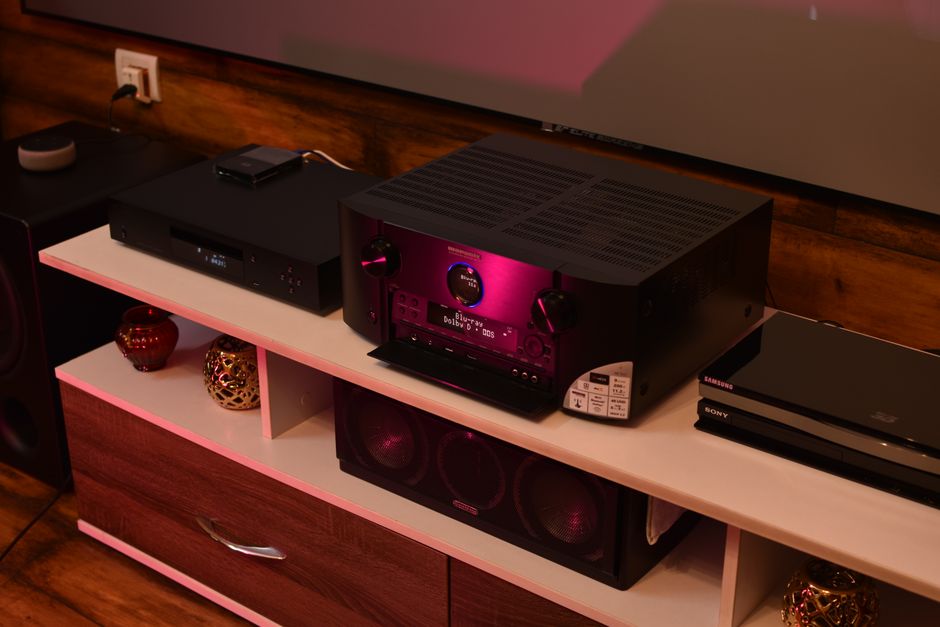
Implementing an immersive mixing environment requires a clear understanding of its fundamentals. Unlike stereo mixing, which operates on a two-dimensional plane, Dolby Atmos works with audio ‘objects’ and ‘beds’. Objects are discrete elements that can move freely in three-dimensional space, while beds are traditional channels (like 7.1 or 5.1) that provide an enveloping foundation. The physical studio setup is vital; a typical configuration might be 7.1.4, which implies seven ear-level speakers, one subwoofer, and four height speakers. Precise calibration of this system, along with the use of a Dolby Atmos Renderer (whether hardware or software like the Dolby Atmos Production Suite), is fundamental to ensure that the spatialization translates faithfully across different playback systems. This process ensures auditory coherence, allowing sound engineers to work confidently in a three-dimensional soundscape.
Studio Setup and Calibration for 3D Audio
Strategies for positioning and manipulating sound objects in Dolby Atmos open a universe of creative possibilities. Space can be employed as an additional expressive tool, locating vocals, instruments, or effects at any point on the X, Y, or Z axis. For instance, a lead vocal can be anchored to the front and center, while backing vocals expand across the sides and heights, generating a sense of spaciousness and intimacy. Delay or reverb effects can be configured to simulate real acoustic spaces that envelop the listener. Three-dimensional panning automation allows for dynamic movement of sounds, which can intensify the musical narrative or emphasize specific passages. Furthermore, binauralization is a crucial aspect; the Renderer converts the immersive mix into an optimized version for headphones, ensuring that the spatial experience is preserved for the majority of listeners consuming music on mobile devices. This adaptability underscores the technology’s versatility.
Regarding technical considerations, managing depth and reverb in an immersive environment differs from stereo. Meticulous management of sound planes is required to avoid spatial saturation and maintain clarity. The loudness standard for Dolby Atmos, measured in LUFS (Loudness Units Full Scale), is a critical parameter that engineers must respect to ensure mixes play back correctly on various streaming platforms. Distributing these mixes also involves generating specific files (like ADM BWF) that contain all the spatial information. It is important to consider backward compatibility (downmix), ensuring that the immersive mix translates coherently to stereo or mono formats without losing artistic intent. Innovations in plugins and direct integration into modern DAWs like Logic Pro or Pro Tools simplify these workflows, allowing creators to integrate spatial audio more efficiently into their production processes. The constant evolution of AI-based tools promises even more facilities for mix conversion and optimization.
Sound Object Positioning and Binauralization Strategies
In summary, immersive mixing with Dolby Atmos represents an exciting frontier in music production. It allows creators to go beyond two-dimensional limits, crafting auditory experiences that envelop and captivate. Familiarizing oneself with these techniques and tools is not just a competitive advantage, but an imperative necessity for those seeking to innovate in the contemporary music scene and offer their audience a deeper connection with sonic art. Adopting these methodologies positions sound engineers and producers at the forefront of the industry, prepared for the future of audio.
Related Posts
Managing Signal Bleed in Live Recordings: Techniques and Equipment
Strategies and equipment to mitigate signal bleed in live recordings, optimizing clarity and post-production.

Genesis and Evolution of VST: An Analysis of Digital Music Production Impact
The advent of VST revolutionized sound creation, democratizing the studio and laying the foundation for modern music production.

Audio Format Conversion: Sound Quality and Compatibility in Digital Music Production
Technical analysis of lossy/lossless formats, sample rate, bit depth, and tools for preserving audio integrity.

Studio One: Audio Architecture, Immersive Workflow, and Remote Collaboration in Music Production
Technical analysis of Studio One: creative optimization, high-fidelity audio processing, and tools for digital distribution and immersive production.