The MIDI Protocol: Genesis, Technical Architecture, and Transformative Scope in Digital Music Production
An analysis of the MIDI protocol's evolution, technical architecture, and its lasting impact on contemporary music creation.
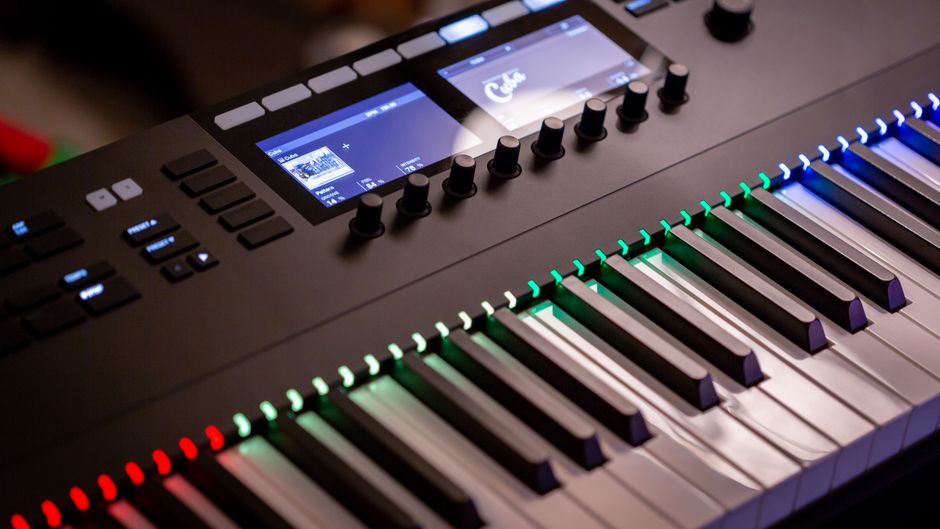
Genesis and Adoption of the MIDI Standard
The interaction between electronic musical instruments and digital production systems has been built upon a technological cornerstone that, despite its origins in the 1980s, maintains undeniable relevance: the MIDI protocol. This communication standard has enabled unprecedented synergy between hardware and software, shaping the landscape of contemporary music creation. Daily, producers and musicians in studios worldwide manipulate sonic parameters, trigger samples, or articulate melodic sequences, often without perceiving the underlying engineering that facilitates each of these operations. Understanding its genesis and evolution is fundamental to appreciating its enduring impact on the industry.
The Dawn of Universal Connection
Before MIDI’s advent, the proliferation of synthesizers and drum machines in the music scene presented considerable technical challenges. Each manufacturer developed its own control systems, leading to inherent incompatibility between devices from different brands. A musician using a Roland synthesizer and wishing to synchronize it with a Korg drum machine would encounter insurmountable barriers. This fragmentation limited creativity and studio efficiency. The need for a common language was palpable. In 1981, Dave Smith of Sequential Circuits and Chet Wood of Oberheim proposed a universal standard for interconnecting musical instruments. This vision materialized in 1982 with the official presentation of the MIDI (Musical Instrument Digital Interface) protocol at the Audio Engineering Society (AES) convention. Key manufacturers like Roland and Yamaha quickly adopted the standard, consolidating its acceptance and laying the groundwork for a new era of music production. This initial consensus was crucial for its mass adoption, allowing artists to combine equipment from diverse origins with revolutionary ease.
MIDI Protocol: Technical Architecture and Evolution
Architecture and Technical Evolution of the Protocol
MIDI operates by sending digital messages that convey information about musical events, not audio itself. These messages include data such as ‘Note On,’ ‘Note Off,’ ‘Program Change,’ ‘Modulation Wheel,’ or ‘Note Velocity.’ The simplicity and robustness of the original protocol (MIDI 1.0), which uses a 5-pin DIN cable and a speed of 31.25 kbaud, facilitated its widespread implementation. Over the decades, MIDI underwent significant adaptations. The integration of MIDI over USB simplified connectivity with computers, eliminating the need for dedicated interfaces. Subsequently, the MIDI Show Control protocol expanded its application to lighting and live show automation. The most recent innovation is MIDI 2.0, introduced in 2020. This revision drastically increases message resolution (from 7 to 32 bits), introduces bidirectional communication (MIDI-CI, Capability Inquiry), and greater polyphonic expressiveness. These improvements open new possibilities for detailed interaction with virtual instruments and advanced controllers, meeting the demands of contemporary productions that require greater subtlety and realism in performance.
Transformative Impact and Current Scope
Impact and Contemporary Applications of MIDI
MIDI’s legacy is vast and multifaceted. It forms the invisible engine driving most music production studios, from home setups to complex professional environments. It allows producers to sequence tracks in DAWs like Ableton Live or Logic Pro, control high-quality virtual instruments (such as those from Native Instruments or Arturia), and map functions to physical MIDI controllers, customizing workflows with remarkable flexibility. In the realm of current trends, MIDI is essential for collaborative online music production, where performance data can be shared and edited globally. It also facilitates the development of immersive music by enabling precise control over spatialization and parameter automation in environments like Dolby Atmos. Integration with artificial intelligence represents another frontier, where music generation algorithms can output MIDI data to control synthesizers or samplers, opening avenues for sonic experimentation. MIDI’s longevity lies in its ability to adapt and expand, maintaining its relevance in a constantly evolving technological ecosystem. It is estimated that millions of devices worldwide continue to employ this standard, confirming its role as a cornerstone in sound design and musical composition.
Future Perspectives and Conclusion
The trajectory of the MIDI protocol, from its conception as a solution to an incompatibility problem to its evolution into MIDI 2.0, is a testament to its brilliant engineering and adaptability. Its initial simplicity, combined with a capacity for expansion and refinement, has secured its position as an indispensable component in the music production chain. Musicians and producers continue to benefit from a standard that not only allows equipment interconnection but also stimulates innovation in artistic expression. The introduction of MIDI 2.0 promises an era of greater expressiveness and control, aligning with the demands of emerging technologies and advanced production methodologies. The protocol is not merely a historical artifact but a living technology that continues to shape the future of digital music. Understanding it is essential for any professional seeking to optimize their creative and technical processes in the dynamic world of audio production. For further technical information, consult the official documentation at midi.org.
Related Posts

Temporal Granular Synthesis: Microscopic Architecture of Advanced Sound Textures
Delve into microscopic sound deconstruction and reconstruction. Explore grain manipulation for unprecedented timbres and sonic landscapes.

Mastering for Streaming: Loudness, True Peaks, and Codec Transcoding Management
Optimizing spectral and dynamic balance for digital platforms, considering LUFS, True Peaks, and codec transcoding.

Mastering Spatial Audio: From Stereo to 3D Immersion and Technical Implications
Detailed exploration of spatial audio mastering techniques, metadata optimization, and tools for immersive delivery.
Eastcote Studios: Sonic Legacy and the Evolution of British Audio Engineering
A technical analysis of Eastcote Studios' impact on modern music, from analog roots to contemporary hybrid practices.