Automation in DAWs: Sound Sculpting and Dynamic Evolution in Music Production
Explore how DAW automation sculpts sound, infuses dynamism, and crafts evolving soundscapes in modern productions.
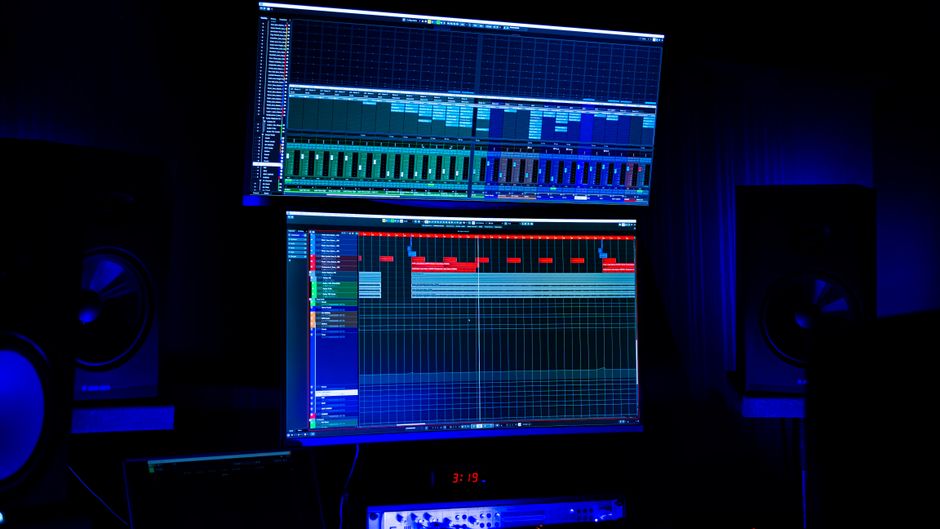
Fundamentals of Automation in DAWs
Parameter manipulation over time is an essential pillar in modern music production. Automation within Digital Audio Workstations (DAWs) empowers engineers and artists to sculpt sound with a precision that transcends the limitations of manual performance. This process not only infuses tracks with dynamism and life but also enables the creation of complex, evolving soundscapes, which are fundamental in contemporary productions aiming for an immersive and detailed listening experience.
Automation refers to the recording or drawing of changes to any parameter within a DAW along a song’s timeline. From volume and panning to intricate effect settings and synthesizer parameters, virtually any control within the digital environment is susceptible to automation. The primary purpose is to generate movement and evolution within a mix, preventing stasis. For instance, a volume fader can subtly increase an instrument’s presence at a key moment, or a filter can gradually open to build tension. Automation modes vary between “Read,” which plays back recorded movements; “Touch,” which allows temporary adjustments that revert to pre-existing values; “Latch,” which sustains new values until the control is released; and “Write,” which completely overwrites existing automation. Understanding these modes is crucial for efficient workflow management and for avoiding common pitfalls that can drastically alter a mix.
Basic Automation Modes and Applications
Beyond basic mixing applications, automation offers a vast landscape for creative experimentation. In sound design, it’s employed to modulate synthesizer parameters, generating constantly shifting textures or sweeping effects that add depth and originality. For example, automating the cutoff frequency of a resonant filter on a synthesizer can produce a dramatic “wah” effect, widely used in electronic genres. In mixing, automating panning can create spatial movement that guides the listener’s attention through the arrangement, or automating sends to effects like reverb and delay can generate sonic spaces that dynamically expand and contract. Producers globally implement these strategies to imbue their productions with a distinctive character. The implementation of physical MIDI controllers for real-time automation recording offers a tactile and organic feel, often resulting in more natural and musically coherent movements than drawing with a mouse. This allows for a more intuitive interaction with the sound, almost as if one is “performing” the mix.
The relevance of automation has amplified with the emergence of new trends in music production. In the realm of immersive audio, such as Dolby Atmos, automating the position and movement of sound objects is fundamental to constructing three-dimensional spatial experiences. Engineers extensively use automation to guide elements through space, generating an enveloping sensation for the listener. Likewise, the integration of artificial intelligence into modern plugins is redefining how we interact with automation. Tools like “smart EQs” or adaptive compressors can learn from automation patterns to intelligently adjust their own parameters, optimizing dynamic and spectral processing. This doesn’t replace the need for manual automation but complements it, allowing producers to focus on high-level creative decisions. Online collaborative production also benefits immensely from automation, as recorded movements can be easily shared and adjusted among different collaborators, maintaining project coherence and artistic vision. The capability of current DAWs to handle thousands of automation points without significant computational strain opens up a spectrum of possibilities for complexity and detail in production. For further insights into specific techniques in Ableton Live, one can consult its official automation manual.
Automation for Sound Design and Spatial Movement
Automation is more than a mere tool; it represents a sound design philosophy that emphasizes movement and evolution. From technical precision in mixing to creative exploration in sound design and adaptation to immersive formats, its mastery is indispensable for any producer or audio engineer aspiring to create works with depth, dynamism, and relevance in today’s musical landscape. Perfecting these techniques not only enhances sonic quality but also significantly broadens the creative horizon of any project.
Related Posts
Organic Vocal Tuning Management: Integrating Technology and Artistic Expression
Preserving vocal emotional nuance with natural pitch correction. Software techniques and acoustic principles for authentic performance.
Capturing and Processing Primitive Aerophones: Didgeridoo and Ancestral Sounds in the Studio
Technical analysis for recording and mixing didgeridoos and primitive aerophones, preserving their ancestral character in modern productions.

WaveLab: High-Precision Audio Editing, Mastering, and Restoration
Technical analysis of WaveLab's capabilities for spectral editing, LUFS-based mastering, and digital distribution preparation.
Bitwig Studio: Modular Architecture and Technical Evolution in Contemporary Music Production
A technical analysis of Bitwig Studio's modular architecture, feature evolution, and impact on sound design and production.