Corrective EQ: Fundamentals, Techniques, and Advanced Tools for Sonic Clarity
Applying filters, parametric EQ, and dynamics to solve frequency issues and achieve transparent mixes.
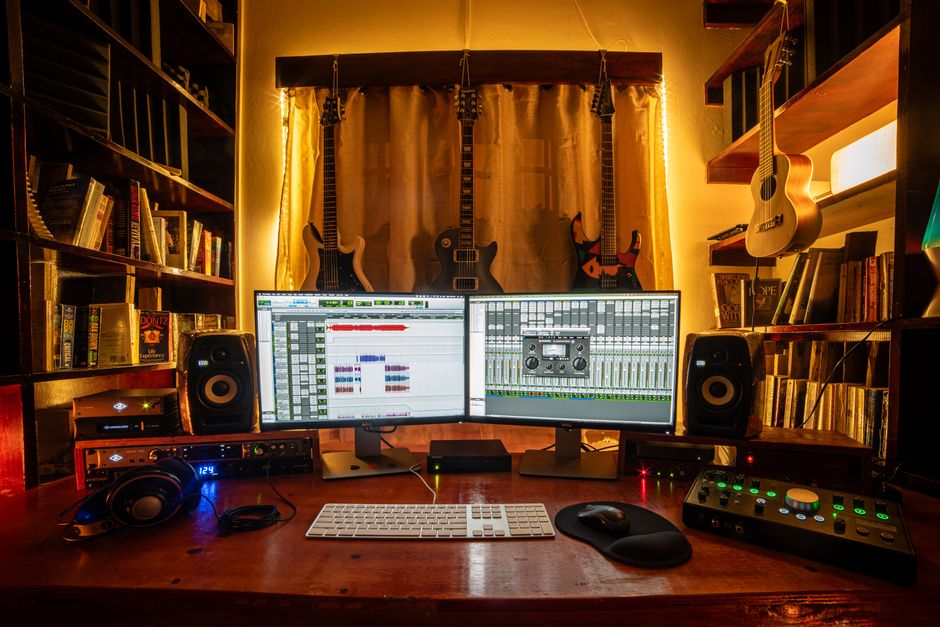
Fundamentals of Corrective Equalization: Mitigating Frequency Problems
Corrective equalization is a fundamental pillar in sound engineering, distinguished from creative equalization by its primary objective: the mitigation of frequency problems. Its application is essential for achieving transparent and well-defined mixes, where each sonic element occupies its space without generating conflicts. This technical discipline focuses on identifying and attenuating unwanted resonances, eliminating muddiness in the low frequencies or harshness in the highs, and resolving spectral overlaps that compromise intelligibility and the overall dynamics of a production. A deep understanding of frequency bands and their impact on auditory perception forms the basis for implementing effective correction strategies, transforming problematic recordings into polished components ready for the final mix.
The first step in corrective equalization involves a meticulous analysis of the sonic spectrum to locate anomalies. Tools such as spectrum analyzers, present in most modern DAWs or as dedicated plugins (e.g., FabFilter Pro-Q 3, iZotope Insight), provide a detailed visual representation of energy distribution across different frequencies. However, critical listening remains irreplaceable. It is advisable to train the ear to perceive “frequency clutter”: the low-mid frequencies (approximately 200-500 Hz) often contribute to muddiness or “boominess,” while the high-mid frequencies (2-5 kHz) can generate a sense of harshness or listening fatigue. A common procedure involves “sweeping” the spectrum with a narrow EQ peak (high Q) and elevated gain to identify bothersome resonances, and then precisely attenuating them. The premise “cut before boost” is crucial: removing problematic frequencies is often more effective than boosting others to compensate, thereby preserving headroom and the naturalness of the sound.
Spectral Analysis and Critical Listening: Identifying Sonic Anomalies
Once critical points are identified, various techniques are applied for their correction. High-pass filters (HPF) and low-pass filters (LPF) are essential tools for defining an instrument’s frequency range, suppressing inaudible or detrimental information at the extremes of the spectrum. For example, a high-pass filter can eliminate low-frequency noise or microphone “rattle” on a vocal, while a low-pass filter can smooth out the harshness of high frequencies in a synthesizer. Parametric equalization offers granular control over the center frequency, bandwidth (Q), and gain, allowing for surgical attenuation of specific resonances. For problems that emerge only at certain moments or with particular volume levels, dynamic equalization presents an advanced solution. Plugins like FabFilter Pro-Q 3 or TDR Nova integrate this functionality, applying attenuations only when the energy in a predefined frequency band exceeds a threshold, which is ideal for controlling vocal sibilance or the transient harshness of certain instruments without affecting the rest of the signal. This modality ensures non-invasive intervention, maintaining tonal coherence. To delve deeper into these techniques, consult the documentation from manufacturers like FabFilter on their official website: https://www.fabfilter.com/products/pro-q-3-equalizer-plug-in.
The current landscape of music production incorporates increasingly sophisticated tools for corrective equalization. Artificial intelligence (AI)-assisted equalizers, such as those found in iZotope Neutron or the algorithms of Gullfoss, automatically analyze a track’s spectrum and suggest or apply corrections to improve clarity and balance. These systems can identify frequency masking between instruments and propose solutions, significantly accelerating the process. The choice between linear-phase and minimum-phase equalizers is another relevant technical consideration; while linear-phase EQs are preferable in mastering to avoid phase shifts, minimum-phase EQs are common in mixing for their lower latency and lesser impact on transients. Corrective equalization also gains particular relevance in emerging formats like immersive mixing (e.g., Dolby Atmos), where the cleanliness and spatial separation of sonic elements are fundamental for a coherent three-dimensional listening experience. An engineer’s ability to polish source material through corrective techniques directly translates to the final quality of the spatial experience. For more information on these technologies, visit iZotope’s website: https://www.izotope.com/en/products/neutron.html or the Dolby Atmos development section: https://developer.dolby.com/tools-sdks/dolby-atmos-tools/dolby-atmos-music/.
Corrective Techniques: Filters, Parametric, and Dynamic Equalization
Corrective equalization is an indispensable skill that transcends the mere application of plugins; it represents a methodical approach to resolving sonic challenges. From the precise identification of resonances to the implementation of filters and dynamic equalization, each step contributes to a solid foundation for any mix. The integration of recent technologies, such as AI in equalizers, optimizes these processes, allowing producers and engineers to concentrate on creative expression. Continuous refinement of these methodologies ensures that every production maintains the clarity, impact, and fidelity expected in the demanding environment of the contemporary music industry.
Related Posts

The Mid-Side Technique: Advanced Spatial Control and Flexibility in Stereo Recording
Delve into M-S setup and processing for precise soundstage manipulation and creative audio applications.

Harmonic and Textural Analysis of Raimundos' Ballads: Stylistic Adaptation in Music Production
Technical exploration of Raimundos' ballads and mid-tempo songs, revealing their harmonic, textural, and production versatility.

Synthesis and Digital Processing in Contemporary New Age Production
Technical analysis of virtual instruments, field recordings, and immersive audio in New Age creation.

Chorus and Flanger: Technical Evolution and Contemporary Sound Design Applications
From tape manipulation to digital algorithms, explore the principles and creative use of chorus and flanger effects.