Budget Home Studio Setup: Components and Acoustics for Music Production in Latin America
Resource optimization for home studios. Selecting affordable hardware, acoustics, and software for quality music production.
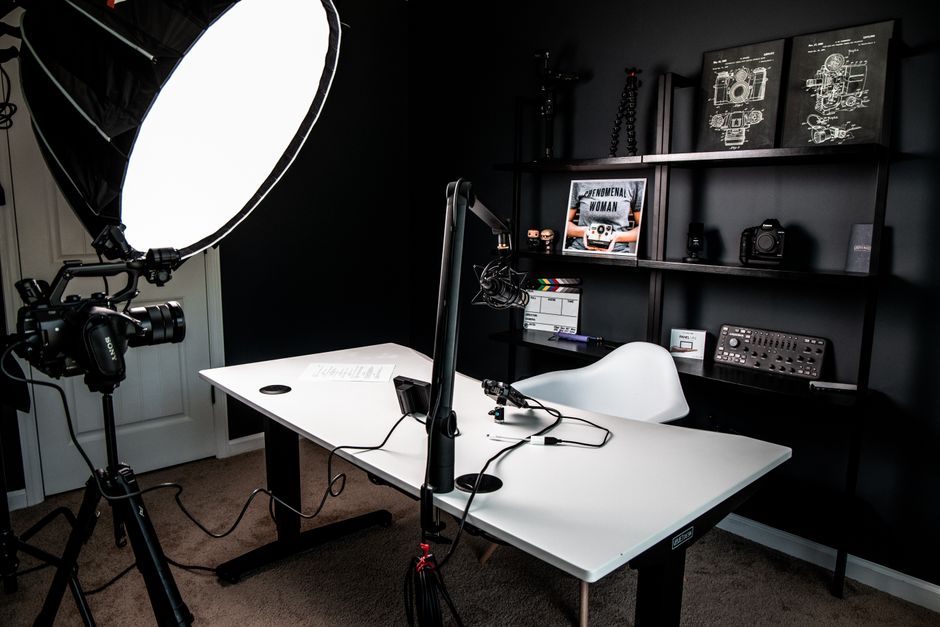
Acoustic Optimization and Monitoring for Home Studios
Professional music creation is no longer an exclusive privilege of million-dollar studios. Technological advancements have democratized access to high-quality tools, enabling artists and producers to establish an effective workspace with controlled investment. This technical analysis addresses fundamental strategies for setting up a functional home studio in Buenos Aires and Latin America, prioritizing budget efficiency without compromising sound quality. The key lies in intelligent component selection and optimizing available resources, integrating current industry innovations.
The acoustics of a space are a fundamental pillar in any studio, regardless of its size or budget. An untreated sound environment can severely distort the perception of a mix, leading to erroneous decisions. For compact studios, implementing handcrafted absorbent panels and diffusers, made with materials like rock wool or fiberglass, represents an economical and effective solution. Correct placement of these elements, especially at first reflection points, significantly improves room response. Likewise, the choice of monitoring system is crucial. Backup studio headphones, such as the Beyerdynamic DT 770 or Audio-Technica ATH-M50x, offer a reliable reference. For nearfield monitors, entry-level models like the PreSonus Eris E3.5 or JBL 104-BT provide a solid foundation. Room correction software calibration, such as Sonarworks SoundID Reference, can compensate for acoustic anomalies at a reasonable cost, optimizing listening accuracy for critical music production decisions. This approach minimizes initial investment while maximizing sonic clarity.
Audio Interface and Sound Capture Selection
The digital audio interface acts as the bridge between instruments and software. Models with two high-quality inputs, like the Focusrite Scarlett 2i2 or the Behringer UMC202HD, offer excellent value for basic recordings. These devices, compatible with various operating systems, enable precise analog-to-digital conversion. Regarding sound capture, a versatile large-diaphragm condenser microphone, such as the Audio-Technica AT2020 or the Rode NT1, is a smart investment for vocals and acoustic instruments. Complementarily, a dynamic microphone like the Shure SM57 or SM58 is indispensable for guitar amplifiers or percussion. In the software realm, the Digital Audio Workstation (DAW) is the core of the creative process. REAPER (https://www.reaper.fm/), with its affordable license and full functionality, is a powerful alternative to more expensive platforms. For beginners, free versions like GarageBand (macOS) or Cakewalk by BandLab (Windows) provide robust environments to familiarize oneself with the workflow. The integration of artificial intelligence tools for noise removal or spectral analysis is beginning to be a trend, offering new avenues for refining initial recordings.
The ecosystem of free and low-cost plugins has seen considerable expansion, providing producers with high-quality processing tools without incurring significant expenses. Dynamic processors like TDR Nova (dynamic equalizer) or Vladg/Sound’s Limiter No6, along with reverbs like Valhalla Supermassive (https://valhalladsp.com/demos-downloads/), are examples of resources that rival commercial options. The library of free virtual instruments, including synthesizers like Surge XT or sample libraries from Spitfire Audio LABS, enriches the sonic possibilities of any composition. Current trends indicate a growing adoption of online collaborative production. Platforms like Splice or Audiomovers (https://www.audiomovers.com/) facilitate remote interaction between musicians and producers, allowing for real-time session and mix sharing, overcoming geographical barriers. Additionally, the exploration of immersive audio formats, such as Dolby Atmos, although requiring a greater investment, is beginning its journey in the domestic sphere with binaural simulation tools. The constant evolution of software and the integration of advanced algorithms suggest a future where audio processing will be increasingly accessible and powerful, even for modest setups.
Digital Workstations and Accessible Audio Processing
Setting up a home studio with limited resources does not mean sacrificing creative ambition or the quality of the final product. Through informed decisions in hardware acquisition, acoustic space optimization, and strategic use of a vast repertoire of free or low-cost software, it is possible to establish a competitive workstation. The key lies in prioritizing functionality over luxury, a deep understanding of each tool, and adaptation to the dynamics of contemporary production, which favors efficiency and digital innovation. Smart investment, combined with continuous training, lays the foundation for successful music projects from any corner of Buenos Aires or Latin America.
Related Posts

Additive Synthesis: Fourier Fundamentals and Contemporary Sound Design Applications
Detailed analysis of Fourier's theorem and its application in timbre creation, from acoustic emulations to abstract soundscapes.

Rockfield's Residential Legacy: Acoustics, Immersion, and the Evolution of Music Recording
Rockfield Studios: immersive acoustics and influential recording legacy. Exploring its impact on modern music production.

Serial Compression in Audio: Advanced Dynamic Control and Progressive Tonal Shaping
Explore serial compression, an advanced technique for detailed dynamic control and sonic character in modern music productions.
Corrective EQ: Identifying and Reducing Frequency Problems in Mixes
Learn corrective EQ techniques to identify and mitigate frequency issues, achieving clear and defined mixes.