Data Sonification and Sound Synthesis: Tools for Computational Neural Models
Exploring music for brain simulations: sound design, AI, and BCI. Bridging creativity and science to understand the mind.

Data Sonification: Translating Neural Activity into Auditory Stimuli
The intersection of computational neuroscience and music production represents a field of research and development with transformative potential. Far from being a mere abstraction, creating music for neural simulations involves a meticulous focus on sound design, where each auditory element serves a specific function within a model or experiment. This domain challenges traditional notions of composition and mixing, fostering the emergence of methodologies that fuse artistic creativity with scientific precision. In Argentina and across the region, scholars and producers are beginning to pay attention to how sound can be a vector for understanding and manipulating complex, digitally modeled brain systems. This article delves into the foundations and techniques employed in this emerging discipline, outlining its relevance and future projections.
The design of audio for neural simulation environments is unlike traditional composition. Here, the primary objective is the creation of auditory stimuli that can interact in a controlled manner with computational models of neural networks, or even with brain-computer interfaces (BCIs). A fundamental technique is data sonification, where complex information streams are translated into musical parameters such as pitch, rhythm, timbre, or volume. For instance, the electrical activity of individual neurons or neuronal groups can be mapped to rhythmic patterns or melodic sequences, allowing researchers to “hear” the system’s behavior.
Precise Sound Synthesis and Psychoacoustics in Neural Models
To achieve this, precision in sound synthesis is crucial. Modular synthesizers, both physical and virtual (such as VCV Rack or Max/MSP), are utilized, offering granular control over every aspect of the sound. The choice of waveforms, envelope manipulation, and filter modulation are adjusted to generate signals with very specific spectral and temporal characteristics. Psychoacoustics plays a vital role, as human perception of sound can influence the interpretation of sonified data. The implementation of digital signal processing (DSP) algorithms allows for real-time manipulation, facilitating experimentation and iteration in the design of these functional soundscapes.
Music production geared towards neural simulations relies on an ecosystem of cutting-edge tools and methodologies. Conventional Digital Audio Workstations (DAWs) like Ableton Live or Logic Pro serve as starting points, but the true power lies in their integration with programming environments such as Python, MATLAB, or C++, which allow for algorithmic manipulation and direct connection with neural models. Libraries like SuperCollider or Pure Data are invaluable for granular synthesis and generative composition, enabling the creation of musical sequences that evolve in response to simulation data.
Integrating DAWs and Programming Environments for Neural Audio
A significant trend is the application of artificial intelligence (AI) in generating these sonic textures. Machine Learning (ML) algorithms, such as recurrent neural networks (RNNs) or transformers, are trained on vast musical datasets and then used to compose pieces that adapt dynamically. Projects like Google Magenta or open-source tools utilizing TensorFlow or PyTorch are at the forefront, facilitating exploration of how AI can generate music that not only sounds coherent but also responds to specific simulation parameters. This includes the creation of adaptive audio, where sound changes in real-time based on simulated activity, opening pathways for more immersive and responsive auditory interfaces. The implementation of neurofeedback techniques through EEG (electroencephalography) devices interacting with audio software, though nascent, is a frontier promising truly interactive and personalized music production.
The applications of music for neural simulations transcend the purely scientific realm. In research, it aids in understanding phenomena such as brain plasticity, auditory cognition, and memory mechanisms. In neurorehabilitation, specifically designed sound stimuli can be used to modulate brain activity and support therapies for neurological conditions. Beyond science, gaming and virtual reality are natural environments for AI-generated adaptive music that responds to player actions or simulated internal states.
Artificial Intelligence and Neurofeedback in Adaptive Audio Generation
The future of this discipline suggests an even greater convergence between sound, biology, and computation. We might see systems that generate music in real-time to optimize cognitive or emotional states in individuals, or to create immersive experiences where the soundscape adapts to the listener’s neural activity. However, this advancement also raises important ethical considerations regarding the privacy of neural data and control over the auditory experience. The community of music producers and scientists in the region has an opportunity to lead in defining these standards. For those wishing to delve deeper, resources such as Google AI’s research projects in music or specialized forums on generative audio offer a starting point for implementing these techniques. Documentation can be consulted on sites like Sound on Sound for advanced synthesis techniques, or by following developments on platforms like Spotify for Developers to understand data interaction with audio.
In summary, the production of music for neural simulations establishes a fascinating bridge between artistic creativity and scientific research. It requires a deep understanding of sound design principles, signal processing, and computational methodologies. As AI technologies and brain-computer interfaces continue to advance, the role of the music producer expands towards creating auditory experiences that not only entertain but also inform and shape our understanding of the mind. This field represents not only a new frontier for music production but also a powerful tool for the study of the human brain.
Related Posts
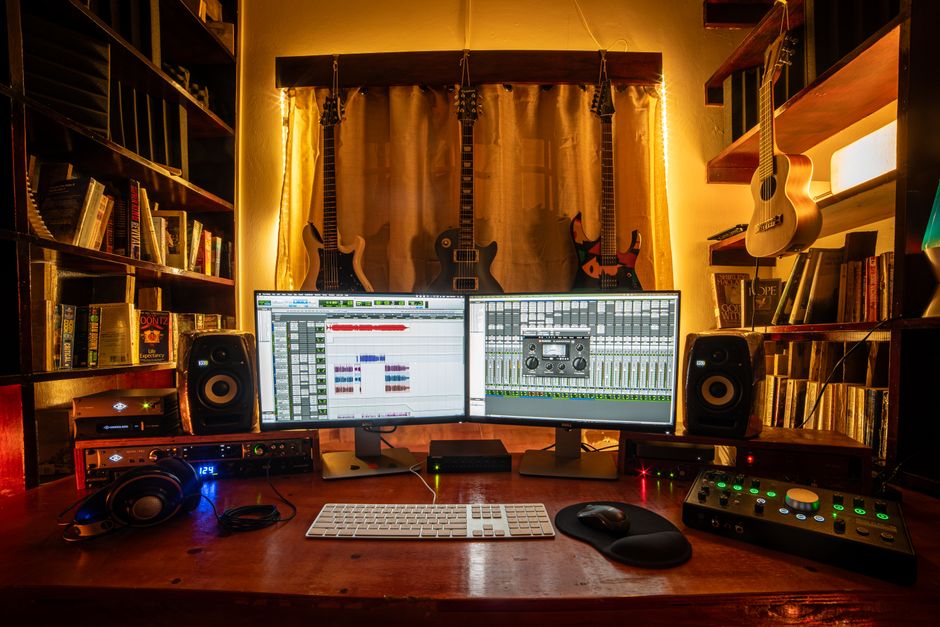
AI-Assisted Audio Compression: Mechanisms, Applications, and Perception in Sound Production
A technical examination of intelligent compressors, their machine learning algorithms, and their influence on modern mixing and mastering.
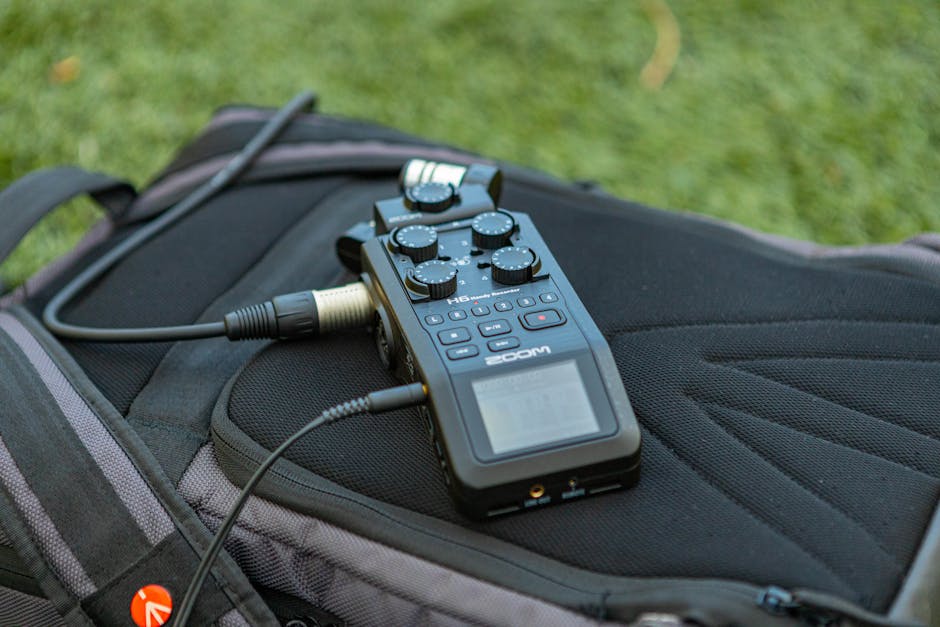
Organic Sound Design: From Field Recordings to Immersive Acoustic Environments
Methodologies for capturing, processing, and integrating natural sounds into advanced audio productions, creating rich, distinctive textures.

Reaper as a DAW: Architecture, Workflow, and Optimization for Contemporary Music Production
Analysis of Reaper's architecture, workflow optimization, and advanced tools for modern music production.

Chase Bliss Audio: Analog-Digital Fusion in Signal Processing for Melodic Instruments and Synthesizers
An analysis of Chase Bliss Audio's hybrid architecture, integrating analog circuits with digital control for advanced sonic textures.