Augmented Reality in Music Recording: Architecture, Processing, and Spatial Applications
Explore AR integration in music production, covering architecture, spatial signal capture, and processing methodologies.
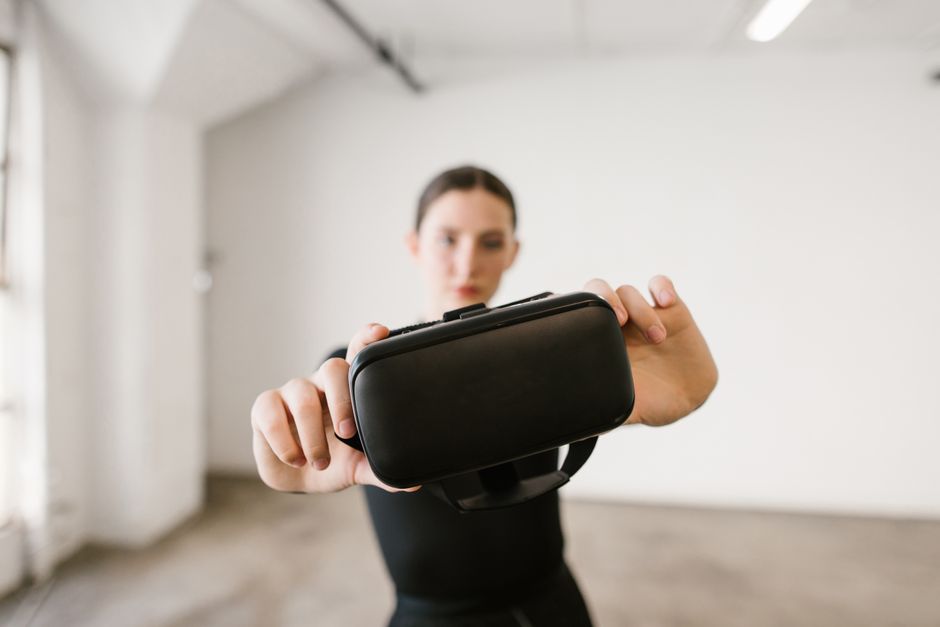
Augmented Reality Instrumental Recording Architecture
The integration of Augmented Reality (AR) into music production represents an innovative frontier, redefining interaction with instruments and recording processes. This technology allows for the overlay of virtual elements onto the physical environment, creating immersive experiences where musicians can manipulate sounds and interfaces that do not exist in real space. Far from being a mere novelty, AR in instrumental recording opens avenues for sonic experimentation and workflow optimization, offering a new paradigm for artistic creation.
The underlying architecture for AR instrumental recording involves a complex interplay of sensors, spatial tracking algorithms, and audio rendering engines. Devices such as smartphones, tablets, or specialized viewers act as windows into this augmented universe, projecting virtual instruments that can be “played” through gestures, movements, or even spatial positioning within the physical environment. Capturing these performances does not radically differ from recording any electronic instrument: the audio signal generated by the AR application is routed directly to a Digital Audio Workstation (DAW) via virtual or physical interfaces. This allows for seamless integration with existing mixes and the application of standard processing, from equalization to compression. The key lies in tracking precision, which must ensure real-time response and minimal latency for coherent musical execution. Applications like Spatial Sound Card or Voicemeeter Banana offer solutions for internal audio routing, facilitating multi-track capture of these virtual elements. Development on platforms such as Unity or Unreal Engine, along with libraries like ARCore and ARKit, has fostered the creation of increasingly sophisticated interactive environments for sound generation.
Signal Processing and Spatial Capture in Augmented Environments
Signal capture and processing methodologies in augmented environments require particular consideration of spatiality. AR instruments, by their nature, exist in three-dimensional space, and their sound can be designed to interact with the perceived acoustics of that virtual environment. This drives the adoption of spatial audio techniques, such as Ambisonics or object-based audio, to preserve the immersion of the experience. When recording these performances, producers must consider how the virtual positioning of the instrument affects the final perception in the mix. Spatial panning tools and convolution reverb plugins can emulate the interaction of sound with physical space, even when the original instrument is purely virtual. Synchronization is another fundamental pillar; the use of MIDI master clock or protocols like Ableton Link allows AR performances to be aligned with other track elements, ensuring rhythmic and harmonic cohesion. The current trend towards immersive production, evident in formats like Dolby Atmos, greatly benefits from AR’s ability to generate and manipulate sound sources in a three-dimensional space, suggesting a future where recordings are not just heard, but spatially experienced. For more information on spatial audio, consult Apple’s documentation on Spatial Audio at https://www.apple.com/apple-music/spatial-audio/.
The creative applications enabled by AR are vast and promising. From composing interactive soundscapes where musical elements come to life and move through the listener’s space, to realizing live performances where musicians interact with instruments invisible to the unaugmented eye. This fosters new forms of expression, allowing artists to transcend the limitations of physical instruments. An incipient example is the possibility of “orchestrating” a ensemble of virtual instruments in a real room, where each musician visualizes and manipulates their part in their own augmented space. However, significant challenges persist, including the computational demands of these systems, the ergonomics of AR devices, and the learning curve for users. Standardization of protocols and formats for interoperability between AR applications and DAWs is crucial for widespread adoption. The future points towards greater integration of artificial intelligence to generate adaptive AR instruments capable of responding more organically to the musician’s intent, and the expansion of haptic interfaces for more immersive physical feedback. This advancement redefines musical interaction and sonic perception, establishing a new horizon for production.
Creative Applications and Challenges of AR Music Production
In summary, recording instruments using Augmented Reality is not just a technological evolution, but a transformation in the methodology of musical creation. It offers producers and artists unprecedented tools for sonic experimentation, spatial composition, and immersive performance. By understanding its technical foundations and applying appropriate capture strategies, the music community can integrate these innovative resources, expanding creative boundaries and redefining what it means to record and produce music in the 21st century. The combination of the physical and virtual worlds promises an era of limitless sonic possibilities.
Related Posts
Adaptive Sound Design: Reactive Audio Architectures for Interactive Media
Explore adaptive sound design, its engines, techniques like layering and granular synthesis, and the role of AI in immersive audio.

Artificial Intelligence and Sound Design: Models, Applications, and Collaborative Challenges
Explore how AI is redefining audio creation, from algorithmic synthesis to collaborative production and future implications.

Digital Performer: From MIDI Sequencer to Comprehensive DAW for Audio and Video Production
A retrospective analysis of Digital Performer, tracing its journey from early MIDI sequencing to its current role as a versatile DAW for audio and post-production.

Capturing and Processing Ancestral Wind Instruments: A Technical Analysis
Microphony, EQ, and spatialization fundamentals for didgeridoos and primitive instruments in modern productions.