Virtual Acoustic Simulation: Reverberation, Processing, and Spatial Positioning Techniques
Exploring convolution reverb, spectral, and dynamic processing for realistic virtual audio spaces.
Fundamentals of Convolution Reverb in Virtual Spaces
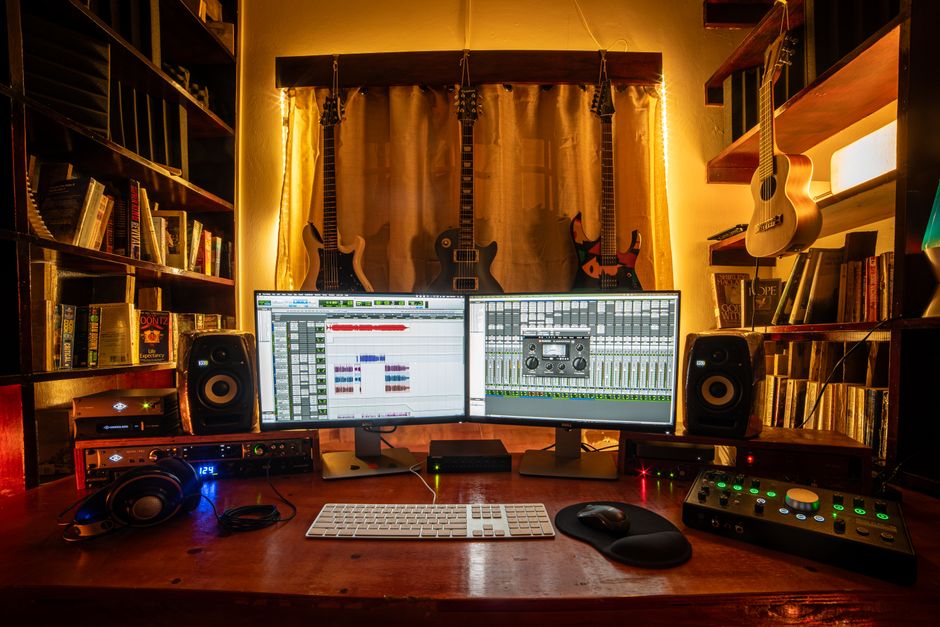
The creation of convincing soundscapes in contemporary music production environments demands a deep understanding of acoustics, even when working with virtual spaces. Simulating acoustic environments using digital tools is a fundamental pillar for bestowing depth, cohesion, and realism upon mixes. This technical approach goes beyond mere effect addition; it involves a precise articulation of how sonic elements interact with a simulated environment to generate an immersive auditory experience. Achieving believable spatiality, from a concert hall to a small studio, requires a rigorous methodology and the application of advanced techniques.
The starting point for constructing simulated acoustic environments often lies in convolution reverberation. This technique, based on capturing impulse responses (IRs) from real or synthetic spaces, allows for high-fidelity replication of those locations’ acoustic characteristics. The appropriate selection of IRs is crucial; a concert hall impulse will not be suitable for an intimate vocal, for example. Tools like Audio Ease’s Altiverb or the IRs included in modern DAWs (Ableton Live’s Convolution Reverb, Logic Pro’s Space Designer) offer a vast library of options. Manipulating these impulses, by adjusting their duration, pre-delay, and density, contributes to organically integrating sound into the space. Additionally, spectral processing of the reverberated signal is essential to prevent frequency buildup that can muddy the mix, particularly in the low and low-mid ranges. For more on this technology, you can visit Audio Ease’s site: https://www.audioease.com/altiverb/
Spectral and Dynamic Processing for Acoustic Integration
The interaction between dynamic and spectral processors with virtual reverberation is a critical aspect. Surgical equalization is indispensable both before and after applying the spatial effect. Before reverberation, it is recommended to filter problematic frequencies from the source audio so they do not propagate into the virtual space. Subsequently, the reverberated signal may require high-pass filtering to clean up the low end and cuts to resonant frequencies that can create muddiness. Sidechain compression of the reverberation, triggered by the dry signal, is an effective strategy for maintaining the clarity of the main source, allowing the reverb tail to emerge in the dynamic gaps. This is especially useful in genres where the lead vocal or instrument must remain upfront without losing its connection to the environment. Parallel compression can also enhance the presence of elements in the space without sacrificing their original dynamics. To delve deeper into the use of sidechain compression with reverberation, consulting specialized resources like Sound on Sound is suggested: https://www.soundonsound.com/techniques/sidechaining-reverbs-delays
The positioning of elements within the virtual space is achieved through a combination of panning, send levels to reverbs, and the manipulation of early reflections. Early reflections are key to perceiving the distance and size of the enclosure. Adjusting their volume and delay relative to the direct sound allows for more precise instrument “placement.” With the growing adoption of immersive audio formats like Dolby Atmos, the conception of space expands into a three-dimensional environment. New plugins and tools, such as the Dolby Atmos Production Suite or the 3D mixing environments that some DAWs already integrate, facilitate the creation of these soundscapes. The integration of artificial intelligence into reverb plugins, which can dynamically adapt the space’s behavior based on the source material, represents an innovative trend that optimizes immersion and spatial coherence. For more information on Dolby Atmos, you can visit their developer portal: https://developer.dolby.com/platforms/dolby-atmos/
Spatial Positioning and Trends in Immersive Audio
Effective implementation of mixing techniques for virtual acoustic spaces demands a combination of technical knowledge and artistic discernment. From the meticulous selection of impulse responses to the fine-tuning of dynamics and spectrum, every decision influences the perception of depth and realism. Adopting methodologies that consider the interaction between signal processing and the properties of the simulated space is fundamental. As technology advances, with innovations in immersive audio and AI-assisted tools, the possibilities for constructing increasingly complex and captivating sonic worlds expand, offering producers and artists worldwide new avenues to express their creativity.
Related Posts

Eastcote Studios: Analog to Digital Evolution and its Legacy in Music Production
Eastcote Studios' trajectory, blending analog and digital techniques to define the sound of iconic recordings.

Vocal Pitch Riding: Manipulating Tone for Artistic Expression and Tonal Perfection
Explore granular vocal pitch editing, specialized software, and creative applications for high-quality music production.
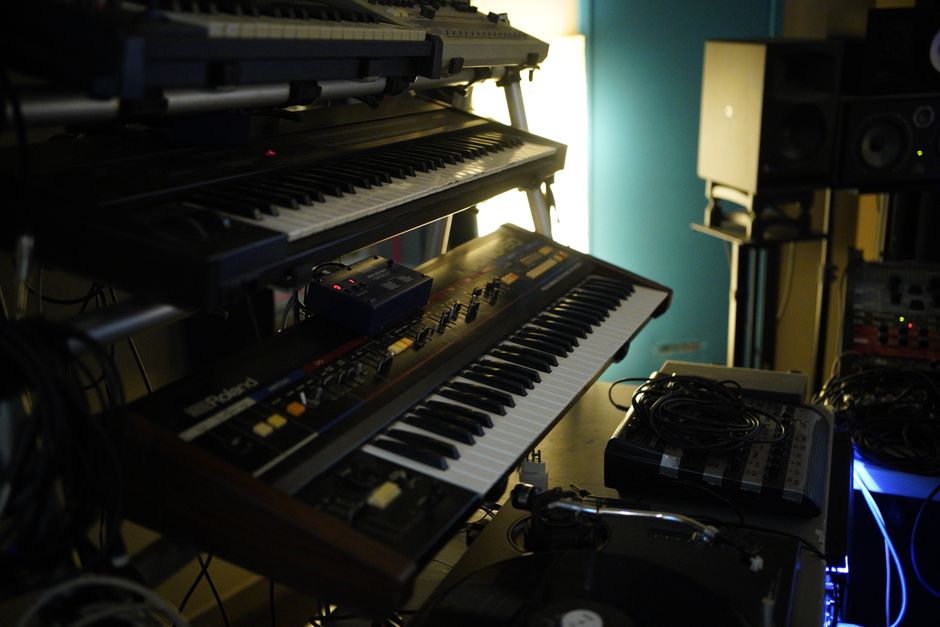
Integrating Vintage Electronic Instruments: Preparation, Capture, and Processing in Modern Workflows
Methodologies for capturing and processing vintage synthesizers and drum machines, ensuring sonic authenticity in current productions.

Bitwig Studio: Modular Architecture and Signal Processing for Advanced Sound Design
Exploring Bitwig Studio's modular architecture, synthesis engine, and expressive MPE capabilities for innovative production.