Studio One: Workflow Evolution and Capabilities in Modern DAWs
Technical analysis of Studio One, highlighting its interface, innovative tools, and adaptation to spatial audio and collaboration.
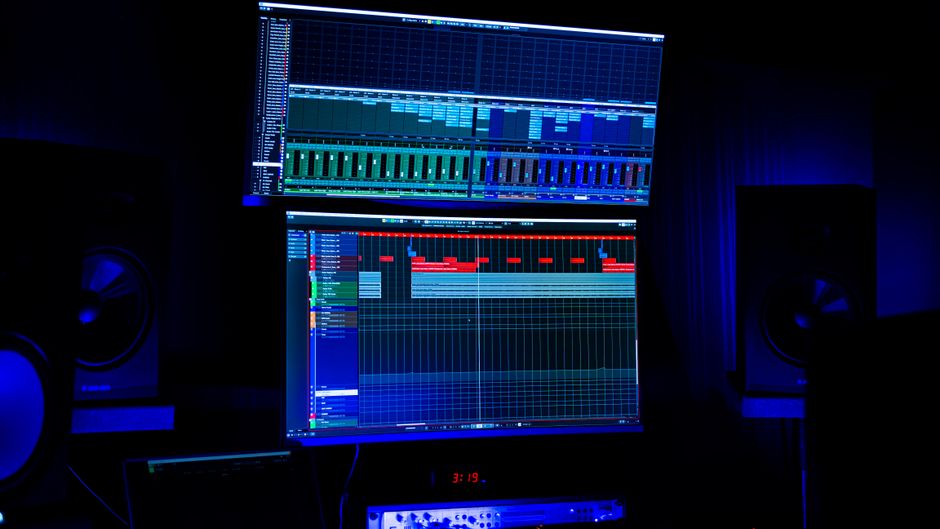
Design Fundamentals and Early Versions of Studio One
The advent of Studio One in the Digital Audio Workstation (DAW) landscape marked a significant disruption, redefining expectations for workflow efficiency and tool integration. From its inception, this software aimed to simplify the creative process without compromising functional depth, attracting a community of producers and engineers seeking an agile and powerful alternative to pre-existing solutions.
Foundational Pillars and Early Iterations
Studio One’s development began with the vision of a team of engineers and software designers with prior experience in some of the most recognized audio platforms. Their primary objective was to design a production environment that integrated composition, recording, mixing, and mastering stages within a unified interface: the celebrated ‘single-window’ philosophy. This approach, implemented from the initial version, streamlined user interaction, minimizing the need to switch between multiple windows or projects. Early versions, such as Studio One 1 and 2, established a solid foundation with their high-precision 64-bit audio engine and remarkable operational stability. The implementation of the drag-and-drop system became a hallmark, facilitating the organization of tracks, application of effects, and management of virtual instruments with a fluency previously uncommon.
Evolution of Functionalities and Industry Consolidation
Expansion of Capabilities and Industry Consolidation
With each new version, Studio One expanded its feature set, responding to the demands of a growing user base. Studio One 3 introduced the ‘Arranger Track,’ an innovative tool for easily reorganizing song sections, and the ‘Scratch Pad,’ which allowed experimentation with alternative ideas without altering the main arrangement. The native integration of Melodyne Essential, starting with Studio One 4, marked a significant milestone, providing advanced pitch correction and vocal manipulation capabilities directly within the DAW environment, optimizing workflows for producers who previously relied on external plugins. Furthermore, the Project Page for mastering, a feature present since the early versions but refined over time, enabled users to finalize their productions with professional analysis and processing tools, generating Disk Description Protocol (DDP) images and other industry-standard delivery formats. This comprehensive approach, from the first note to the final master, reinforced Studio One’s reputation as a complete solution for the music production cycle.
Continuous Innovation and Adaptation to Current Trends
Continuous Innovation and Support for Immersive Audio
The most recent versions of Studio One, particularly 5 and 6, demonstrate a continuous commitment to innovation and adaptation to emerging trends in music production. Studio One 5 introduced the ‘Show Page,’ a dedicated platform for live performances that integrates backing tracks, virtual instruments, and effects in a format optimized for the stage, reflecting the growing convergence between studio and live environments. In the realm of immersive production, Studio One 6 has taken a significant step by incorporating support for Dolby Atmos, allowing creators to mix and export spatial audio, a technology increasingly relevant on streaming platforms like Apple Music and Amazon Music. This functionality positions Studio One as a cutting-edge tool for creating three-dimensional auditory experiences. Additionally, the PreSonus Sphere initiative (https://www.presonus.com/products/PreSonus-Sphere), a subscription ecosystem, provides access to all software versions, a vast content library, and cloud collaboration tools, facilitating remote production and teamwork, crucial aspects in the contemporary music industry. The constant updating of its native plugins, along with compatibility with technologies such as advanced MIDI control and hardware integration, keeps Studio One at the forefront of DAW solutions, offering producers the tools needed to face the challenges and seize the opportunities of the current sonic landscape.
Final Considerations on its Trajectory
Studio One’s trajectory illustrates the evolution of a DAW that successfully identified user needs and responded with ingenious solutions. Its initial emphasis on workflow efficiency has evolved into a robust platform that not only addresses traditional production phases but also anticipates the demands of innovative formats like spatial audio and online collaboration methodologies. From its conception to its most recent updates, Studio One has maintained a creator-centric design philosophy, allowing it to solidify its position as a preferred choice for musicians and producers worldwide who value both its technical power and its ease of use in a constantly changing creative environment.
Related Posts
Studio One 6: Unified Architecture and Workflow for Modern Music Production
Analysis of Studio One's single interface, mix/mastering tools, and ARA2 support, optimizing sound creation.

Orchestral String Orchestration and Processing: Acoustics, Techniques, and Modern Workflows
Advanced strategies for recording and mixing string sections, integrating microphones, acoustics, and digital tools.

The Mid-Side Technique: Advanced Spatial Control and Flexibility in Stereo Recording
Delve into M-S setup and processing for precise soundstage manipulation and creative audio applications.
Vocal Pitch Riding: Detailed Editing for Expressiveness and Integration in Music Production
Exploring vocal pitch manipulation, its tools, advanced techniques, and AI's role in enhancing performance.