Evolution of the USB Audio Interface: Connectivity and Democratization in Latin American Music Production
Technical analysis of the USB audio interface: historical development, technological impact, and accessibility in contemporary sound.
Evolution of Digital Audio Connectivity Pre-USB
Contemporary music production is inseparable from digital technology, and at its core, the USB audio interface has been a fundamental pillar. These seemingly simple devices have radically transformed how musicians, producers, and technicians in Argentina and Latin America interact with their computers to create, record, and mix sound. Their evolution represents a saga of constant innovation, from their modest beginnings to the powerful units employed today in home and professional studios. This historical journey allows us to understand the impact of universal connectivity on the democratization of sonic art.
Before the ubiquity of USB, the landscape of digital audio connectivity with computers was fragmented and often expensive. In the late 1990s and early 2000s, prevailing solutions included internal PCI cards, which offered low latency but required physical installation within the computer, and the FireWire (IEEE 1394) standard, which provided a robust, high-speed external connection popularized by brands like MOTU and Digidesign (now Avid). While efficient, these options presented significant barriers to entry: PCI cards limited portability and laptop compatibility, while FireWire, though external, was not always present on all machines and required specific hardware. The promise of USB, a universal interface designed for a wide range of peripherals, was alluring: a standardized, easy-to-use solution compatible with almost any personal computer.
USB 1.0/1.1 Interfaces: First Steps and Limitations
The first USB 1.0 and 1.1 based audio interfaces appeared in the early 2000s. These initial units, such as some of the early offerings from M-Audio or Behringer, were limited by the standard’s bandwidth, which maxed out at 12 Mbps. This severely restricted the number of simultaneous audio channels and the sample rates and bit depths they could handle. Typically, they offered one stereo input and output (2x2) at 16-bit/44.1 kHz or 48 kHz, which was adequate for basic demo recordings, amateur DJing, or enhanced quality audio playback. Latency was a considerable challenge, often requiring complex buffer adjustments to minimize delays between audio input and output. Despite these limitations, their ‘plug-and-play’ ease of connection and more accessible pricing began to open the doors of digital music production to a wider audience, especially for those just starting in the home studio.
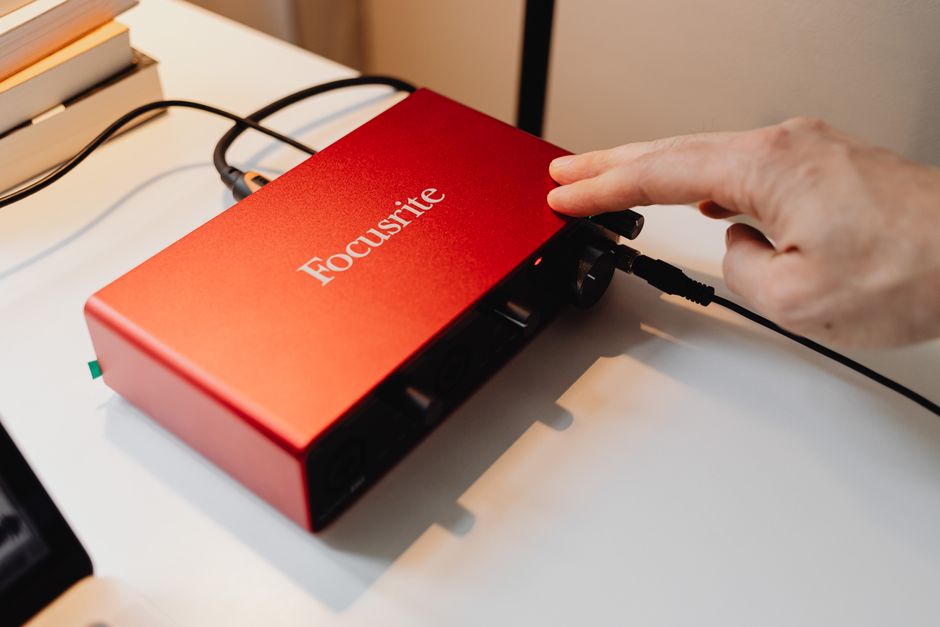
The true revolution for USB audio interfaces arrived with the USB 2.0 specification, released in the year 2000 but whose mass adoption in audio interfaces solidified in the mid-decade. With a bandwidth of 480 Mbps, USB 2.0 multiplied its predecessor’s speed by 40, eliminating much of the previous restrictions. This significant improvement enabled the transmission of multiple simultaneous audio channels at professional sample rates and bit depths (up to 24-bit/192 kHz), matching the performance of FireWire in many aspects. Brands like Focusrite, Steinberg, and Universal Audio launched USB 2.0 interfaces that offered quality microphone preamplifiers, multiple inputs and outputs, integrated MIDI capabilities, and significantly reduced latency, becoming the de facto standard for home and mobile project studios. Iconic models like Focusrite’s Scarlett series or Steinberg’s UR series exemplify this era, providing accessible and reliable tools that empowered countless musicians to produce their own music with professional quality.
USB 2.0: The Standard That Democratized Production
Development did not stop with USB 2.0. The arrival of USB 3.0 (SuperSpeed) and subsequent iterations like USB 3.1 and USB-C have continued to expand the capabilities of audio interfaces. USB 3.0, with 5 Gbps, and USB-C, offering reversibility and even greater versatility (including Power Delivery and support for Thunderbolt 3/4 in some cases), have enabled the creation of interfaces with an even greater number of inputs and outputs, integrated DSP for real-time effects processing, and improved stability. Currently, the industry is considering advances in integrating artificial intelligence into audio plugins, the proliferation of immersive audio formats like Dolby Atmos, and the rise of collaborative online production, where the reliability and performance of USB interfaces are more crucial than ever. Manufacturers like RME or Antelope Audio are at the forefront, offering USB-C interfaces that combine the low latency of Thunderbolt with the universal compatibility of USB. The evolution of these devices is a testament to the industry’s relentless pursuit of optimizing the interaction between human creativity and technological capability.
From their humble beginnings to today’s sophisticated units, the USB audio interface has traveled a remarkable path. Its history is one of democratizing music production, making it easier for artists in Buenos Aires, Córdoba, or any corner of Latin America to transform their ideas into high-fidelity recordings with reasonable investment. These devices have not only changed access to technology but have also redefined the recording studio, making it portable, adaptable, and accessible. The future promises even more innovations, but the legacy of the first USB interfaces as catalysts for digital creativity remains unaltered.
Related Posts

Creative Sampling: Sound Deconstruction and Reconfiguration in Modern Music Production
Exploring decontextualization, manipulation, and audio reconfiguration for novel sonic textures and soundscapes.

Advanced Vocal Engineering: Formant and Vibrato Manipulation for Contemporary Music Production
Analysis of advanced vocal tuning techniques, from formant manipulation to vibrato control, for modern music production.

Mastering the Stage: Unpacking Chitãozinho & Xororó's Enduring Live Performance Magic
Explore the artistry behind Chitãozinho & Xororó's iconic live performances, offering insights for Latin American musicians and producers on stagecraft, sound, and legacy.

Advanced Timbral Sculpting: Synthesis, Space, and AI in Sound Texture Creation
Research on granular synthesis, spatialization, and AI for generating complex, immersive soundscapes in contemporary music.