Sympathetic Resonance in Recording: Physical Principles and Technical Applications for Sound Engineers
Capturing and processing secondary vibrations in acoustic instruments to enrich sonic textures and auditory experience.
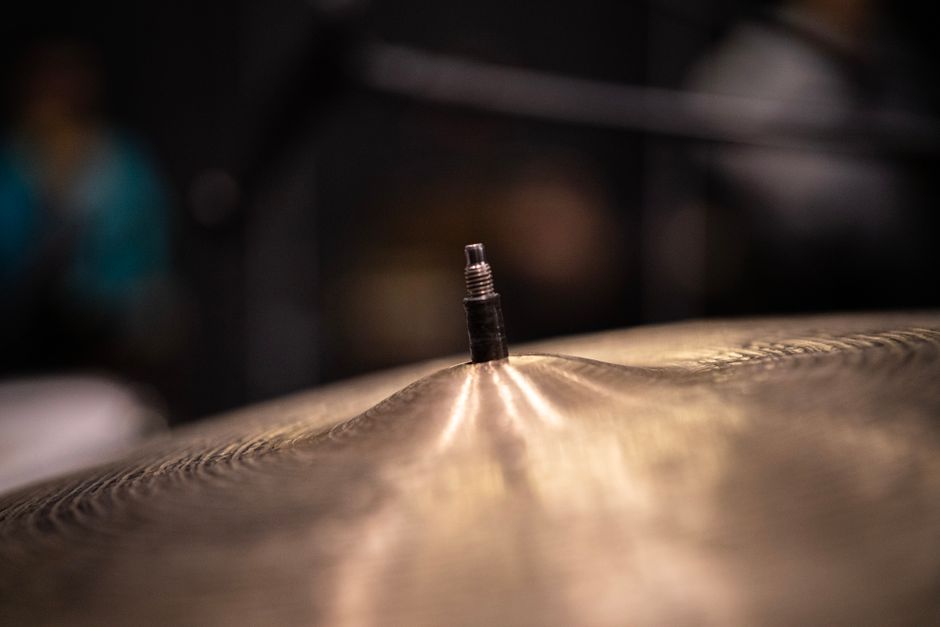
Physical Principles of Sympathetic Resonance in Acoustic Instruments
The phenomenon of sympathetic resonance, inherent in numerous acoustic instruments, presents both a challenge and an opportunity in contemporary sound production. This vibratory interaction, where untouched strings or components of an instrument resonate in response to other sounds, adds harmonic complexity and tonal depth. From grand pianos to sitars and harps, effectively capturing these secondary vibrations is crucial for preserving the textural richness of a performance. Understanding its physical principles and applying advanced recording techniques allows engineers and producers to integrate these subtleties into modern mixes, enriching the listening experience. In today’s music production era, where fidelity and immersion are paramount, precise management of sympathetic resonance constitutes a significant differentiator.
Sympathetic resonance arises when sound waves from a vibrating string or body induce vibrations in another that possesses a similar natural frequency. This effect not only amplifies existing harmonics but also introduces new tonal layers, often subtle yet essential to the instrument’s character. In a piano, for instance, unplayed strings resonate alongside those being played, contributing a characteristic harmonic “body.” For its capture, it is fundamental to consider both the primary sound source and the secondary sound field generated by the resonance. Traditional methods focused on room miking to encompass these interactions, but current technologies offer more granular control. Selecting transducers with an extended frequency response and sensitive capture of low amplitudes is a first step. Furthermore, experimenting with small or large-diaphragm condenser microphones, or even ribbon microphones, can reveal distinct nuances of this phenomenon.
Microphone Techniques for Capturing Secondary Vibrations
The strategic placement of microphones is decisive for adequate capture. For instruments like the piano, a combination of close miking (for direct articulation of the strings) and ambient miking (for the resonance of the body and pedal) typically yields optimal results. A stereo pair placed at a medium distance, such as an ORTF or AB configuration, can record the spatial interaction of resonances. On bowed or plucked string instruments with resonators (like the sitar or sarod), a directional microphone focused on the main soundboard, complemented by an omnidirectional one capturing the sympathetic strings not being played, can distinguish and enhance these layers. It is vital to pay attention to phase relationships between microphones to avoid unwanted cancellations that would degrade tonal coherence. Phase analysis tools in the DAW can assist in this adjustment, allowing for precise temporal alignment of signals. For a deeper dive into optimizing phase coherence, specialized resources such as the technical articles from Sound on Sound can be consulted. Experimenting with reflective or absorbent surfaces in the recording environment can also modify how resonance propagates and is captured.
Once signals are captured, digital processing offers opportunities to refine and manipulate sympathetic resonance. The use of high-resolution parametric equalizers allows for the enhancement or attenuation of specific frequency ranges where these secondary vibrations are most prominent. For example, a slight boost in the low-mids can accentuate the warmth of a piano with resonance. Multiband compressors can apply selective dynamic control, allowing the resonance to “breathe” without overwhelming the mix. Innovations in spectral processing plugins, such as those based on artificial intelligence (AI) or granular synthesis algorithms, open new avenues for isolating and modulating harmonic components of the resonance. Companies like FabFilter offer parametric EQ tools with highly advanced spectral analysis capabilities. Convolution reverb tools, which emulate real acoustic spaces, can blend the captured resonance with a virtual environment, giving the instrument an immersive presence. Spatial audio platforms, such as Dolby Atmos, also offer the possibility of positioning these resonances in a three-dimensional sound field, granting unprecedented depth. Remote production and collaborative work on online platforms have driven the development of interfaces and DAWs with reduced latency, facilitating real-time experimentation with these techniques, even remotely. Manufacturers like Universal Audio continue to innovate in this field with their real-time processing interfaces and plugins.
Digital Processing and Manipulation of Captured Resonances
Conscious management of sympathetic resonance elevates the quality and realism of acoustic instrument recordings. By understanding its mechanisms and applying appropriate miking and processing techniques, producers can intentionally integrate this natural phenomenon into their mixes. From precise microphone selection to the use of advanced digital tools and consideration of immersive formats, each step contributes to a more faithful and exciting representation of the original sound. Attention to these subtleties not only perfects sound engineering but also enriches the musical narrative, connecting the listener to the instrument’s vibratory essence.
Related Posts

Mastering for Streaming: Optimizing Loudness and Dynamics with LUFS
Mastering optimization for streaming platforms, focusing on LUFS, True Peak, and dynamic processing for optimal listening.

Chico Buarque Live: A Masterclass in Brazilian Musical Artistry and Production
Explore the magic of Chico Buarque's live performances, dissecting his artistry, production nuances, and lasting impact on Latin American music.

Jota Quest's Enduring Groove: A Legacy Shaping Latin American Pop-Funk
Explore the profound influences and lasting legacy of Jota Quest, a Brazilian powerhouse that redefined pop-funk across Latin America.

Moog Synthesis: Architecture, Evolution, and Impact on Modern Music
Explore the modular architecture and evolution of the Moog synthesizer, from its origins to its enduring influence on music.