The Evolution of the Sequencer: From Ancient Mechanisms to AI in Modern Music Production
A historical and technical analysis of sequencers, from their mechanical origins to current digital and AI tools.
The Mechanical Origins of Musical Sequencing
Music, at its core, is a sequence of sounds in time. From complex orchestral compositions to pulsating electronic beats, temporal organization has always been fundamental. However, the ability to automate this sequence, to program musical events without constant manual intervention, represents one of the most transformative advancements in the history of sound production. Sequencers, devices and software designed to record, edit, and play back series of notes or control events, have redefined the creative process and musical performance. Their evolution reflects not only technological progress but also a radical shift in how artists conceive and realize their ideas. This historical journey will allow us to understand the impact of these instruments in shaping today’s sonic landscape, from their rudimentary beginnings to the sophisticated digital tools that populate our studios.
The antecedents of sequencing can be found long before the advent of electronics. Mechanical instruments like music boxes, barrel organs, and player pianos, such as the pianola, already incorporated mechanisms to reproduce pre-programmed melodies. These systems used cylinders with pins, perforated paper rolls, or discs to activate hammers or valves, representing an early form of physical “sequencing.” Although limited in flexibility, they laid the groundwork for the notion of automated musical performance.
Electronic Evolution and the Birth of MIDI
With the arrival of electricity, the 20th century brought significant innovations. Thaddeus Cahill’s Telharmonium (early 20th century), while not a sequencer per se, was one of the first gigantic electric instruments. More relevant to our discussion was Friedrich Trautwein and Oskar Sala’s “Trautonium” in the 1930s, which allowed for the recording of tone sequences. However, true electronic sequencers began to emerge with analog sound synthesis. Early analog sequencer modules, such as those accompanying Moog (https://www.moogmusic.com/) and Buchla (https://buchla.com/) modular synthesizers in the 1960s, allowed users to program a series of voltages that controlled note pitch, duration, or even filter parameters. These devices typically had a limited number of “steps” (usually 8 or 16), each with a rotary control to adjust the voltage. They were essential tools for generating repetitive patterns and arpeggios, and their tactile nature fostered direct, experimental interaction with sound.
The 1980s marked a milestone with the introduction of the Musical Instrument Digital Interface (MIDI) in 1983. This standardized protocol allowed instruments from different manufacturers to communicate with each other, exchanging information about notes, velocity, pitch bend, aftertouch, and other control parameters. MIDI did not transmit audio, but rather musical “instructions.” This standardization was a catalyst for the development of much more powerful and versatile sequencers.
Software and Hardware Integration in Modern DAWs
Dedicated hardware sequencers, such as Roland’s (https://www.roland.com/latinamerica/) MC series (e.g., the MC-202, MC-303, MC-505) or workstations from Korg (https://www.korg.com/latin/) and Yamaha, offered the ability to record multiple MIDI tracks, quantize notes, edit events, and synchronize various instruments. These devices became indispensable in the production of electronic, pop, and experimental music, enabling musicians to build complex arrangements without the need for an orchestra or multiple performers. The advent of affordable personal computers, such as the Apple Macintosh and the Commodore Amiga, opened the door to software-based sequencers. Programs like Opcode Vision and Mark of the Unicorn Performer transformed the computer into a virtual recording and composition studio, offering advanced graphical interfaces for MIDI event editing and unprecedented sequence storage capacity.
With the new millennium, the software sequencer merged with the Digital Audio Workstation (DAW). Applications like Ableton Live (https://www.ableton.com/es/), Logic Pro (https://www.apple.com/la/logic-pro/), Cubase (https://www.steinberg.net/cubase/), and Pro Tools (https://www.avid.com/pro-tools) integrated MIDI sequencing with audio recording and editing, mixing, and mastering, consolidating the entire production process into a single environment. This integration has democratized music production, making professional tools accessible to studios of all sizes, from home studios in Buenos Aires to large post-production complexes.
Artificial Intelligence and Immersive Music Production
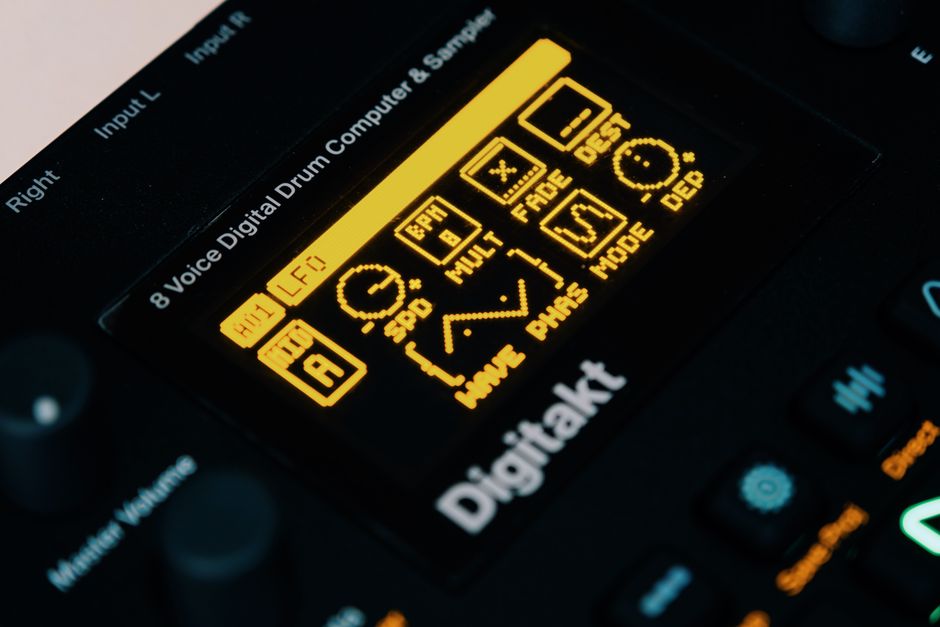
Innovations continue unabated. Today, sequencing goes beyond mere note playback. Modern sequencers incorporate advanced algorithms, such as those found in virtual modular environments (e.g., VCV Rack: https://vcvrack.com/) or generative sequencing plugins, which allow for the creation of complex, evolving musical patterns with degrees of controlled randomness. Artificial intelligence (AI) is beginning to play a significant role, with tools that suggest harmonic progressions, rhythms, or even sonic textures, assisting composers and producers. Platforms like Google’s Magenta Studio (https://magenta.tensorflow.org/studio/) or the music generation algorithms found in services like Shutterstock Music (https://www.shutterstock.com/music/ – which acquired Amper Music) are examples of how AI can interact with the sequencing process. Furthermore, online collaborative music production and the creation of immersive music, such as spatial audio for Dolby Atmos (https://professional.dolby.com/music/dolby-atmos-music/), benefit from sequencers capable of managing events in multichannel environments, expanding creative possibilities into previously unimaginable auditory dimensions. The versatility of current sequencers, from compact hardware devices like those from Teenage Engineering (https://teenage.engineering/) to intricate Eurorack modules, and through the infinite possibilities of software, underscores their central role at the forefront of musical creation.
From the rudimentary mechanisms of music boxes to complex AI algorithms and spatial audio production, the trajectory of sequencers is a testament to human ingenuity in automating and expanding musical expression. These tools have evolved from mere playback devices to co-creators, offering artists unprecedented control over the timing and structure of their compositions. The ability to capture an idea, manipulate it with millimeter precision, and then reproduce it with flawless consistency has radically transformed how music is produced and heard worldwide. As technology continues to advance, sequencers are expected to keep evolving, further integrating AI, cloud computing, and gestural interfaces, promising even vaster creative horizons for the next generation of producers and musicians.
Related Posts

Psychoacoustics and Sound Production: Designing Auditory Landscapes for Physiological Well-being
Technical analysis of frequency, timbre, and spatialization manipulation for effective therapeutic music.

Sampling Rate and Bit Depth: Fundamentals of Digital Audio Fidelity
Understand digital audio resolution, including sample rate and bit depth, to optimize production and distribution.

Temporal Granular Synthesis: Microscopic Architecture of Advanced Sound Textures
Delve into microscopic sound deconstruction and reconstruction. Explore grain manipulation for unprecedented timbres and sonic landscapes.

Sound Design and Spatiality in Ambient Music Production
Technical exploration of synthesis, reverb, delay, and composition for immersive ambient soundscapes.