Wow and Flutter: Mechanical Phenomena, Quantification, and Relevance in Modern Audio Production
Exploring analog audio speed fluctuations, their measurement, sonic impact, and creative application in digital environments.
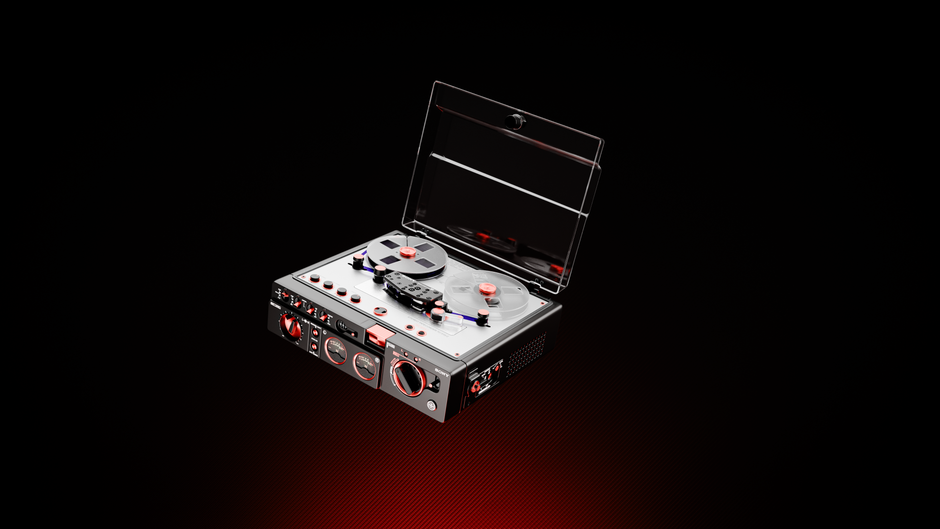
Nature and Origin of Speed Fluctuations
The pursuit of pristine sound in music production and high-fidelity audio is a constant goal. However, in the analog era, certain phenomena inherent to mechanical playback systems challenged this aspiration. Among these, “wow” and “flutter” represented subtle yet audible deviations in the drive speed of tape, platters, or vinyl, directly affecting tonal stability. Although contemporary production leans towards digital, understanding these mechanical fundamentals remains relevant. This is not only because many studios still employ vintage or hybrid equipment but also due to the growing trend of emulating these characteristics to infuse modern recordings with analog warmth and character, or for the restoration of historical material. This analysis delves into the nature of these fluctuations, their quantification methods, and their impact on auditory perception, offering essential insights for engineers and producers.
“Wow” and “flutter” are unwanted variations in the speed of a recording or playback medium. “Wow” refers to low-frequency fluctuations (typically between 0.1 and 10 Hz), perceived as slow pitch oscillations, reminiscent of a slow vibrato or progressive detuning. It is often caused by eccentricities in motor shafts, irregularities in turntable platter surfaces, or inconsistencies in magnetic tape tension. On the other hand, “flutter” encompasses high-frequency variations (generally from 10 Hz to 200 Hz or more), manifesting as a granularity or roughness in the sound, a sort of rapid tremolo that can degrade clarity and timbral definition. Common causes include worn bearings, unevenly stretched tapes, or worn pulleys.
Both phenomena originate from mechanical imperfections in transport systems. The quantification of wow and flutter is crucial for evaluating the quality of analog equipment and is typically expressed as a percentage (%). Various measurement standards exist, such as WRMS (Weighted Root Mean Square), DIN (Deutsches Institut für Normung), or JIS (Japanese Industrial Standards), each with its own frequency weightings to reflect human perception. A low value indicates greater stability, resulting in a more faithful reproduction of the sound material. For example, a high-end turntable might exhibit wow and flutter values below 0.05% WRMS. The presence of these variations can alter the perception of tuning, modify the attack and decay of instruments, and ultimately compromise the listening experience, especially in passages with sustained notes or pure-tone instruments.
Quantification and Measurement Standards for Wow and Flutter
Accurate measurement of wow and flutter is fundamental for the maintenance and calibration of analog equipment, as well as for assessing its performance. Historically, test discs or tapes containing a fixed-frequency tone, commonly 3 kHz or 3.15 kHz, were used. These tones were played back, and their output was fed into a dedicated wow and flutter meter, which analyzed frequency deviations and displayed the result as a percentage. Instruments from companies like Audio Precision or vintage meters from brands such as Teac or Leader were industry standards.
Today, while analog equipment persists, methodologies have modernized. Spectral analysis software within digital audio workstations (DAWs) can assist in visually identifying these fluctuations, although it doesn’t provide a direct metric as precise as a specialized meter. However, specific software tools have emerged. For instance, applications like WFGUI allow for detailed analysis of test tone recordings, generating graphs and numerical values representing the variations. Advanced plugins also contribute to detection and, in some cases, correction. The stability of the reference signal is vital; any instability in the test signal source or the measurement system will introduce errors. Therefore, using high-precision signal generators and calibrated measuring equipment is recommended. Current technology also integrates digital signal processing (DSP) algorithms that can mitigate wow and flutter effects in old recordings, such as those found in iZotope’s RX suite, which offers dedicated restoration modules. These advancements enable audio engineers to preserve and enhance archival material with unprecedented fidelity.
Although the origin of wow and flutter dates back to the analog era, their influence and consideration persist in today’s music landscape. For producers working with archival recordings or vinyl material, the ability to identify and, if necessary, correct these variations is crucial for restoration and mastering. In Buenos Aires and other cities in the region, where vinyl culture and the revaluation of historical recordings are strong, this expertise is particularly valued.
Historical and Contemporary Measurement Methodologies
Beyond restoration, wow and flutter have transformed into creative tools. Many plugins and emulations of vintage equipment (such as those offered by Universal Audio or Arturia) incorporate parameters to intentionally adjust these fluctuations. This allows engineers to imbue tracks with a “lo-fi” character or an authentic analog aesthetic, simulating the warmth and imperfections of tape recorders or analog synthesizers. This approach is observed in genres seeking nostalgic or experimental sonic textures. A clear example is the use of plugins that model the pitch drift of old synthesizers or the instability of cassette recorders, adding a unique temporal and timbral dimension to music.
Recent innovations in artificial intelligence are also addressing these phenomena. AI algorithms are being developed to analyze and correct wow and flutter more efficiently and transparently, or even to generate them in a controlled and musical manner. The production of immersive music, such as Dolby Atmos, demands even greater tonal and temporal precision, making the elimination of unwanted wow and flutter more critical, while their creative application is undertaken with very specific intent. Understanding these principles not only contributes to fidelity but also expands the sonic palette of possibilities for today’s creators.
The study of wow and flutter transcends mere historical curiosity; it represents a fundamental understanding of how mechanical imperfections shape our perception of sound. From their origin in analog systems to their emulation and mitigation in the digital realm, these phenomena continue to be a relevant factor in audio production. Knowing their causes, measurement methods, and auditory effects allows engineers not only to preserve the integrity of valuable recordings but also to use these characteristics creatively to sculpt new sonic textures. In a world where the line between analog and digital blurs, expertise in managing wow and flutter is a valuable asset for any audio professional seeking maximum fidelity or the most authentic artistic expression.
Related Posts

Acoustic Capture of Dulcimer and Zither: Transducer Selection and Miking Strategies
Technical analysis of spatial acoustics, microphone selection, and miking techniques for faithful recording of dulcimer and zither.

The Sonic Architecture of Trap: Advanced Bass Processing and Vocal Design
A technical deep dive into trap's sound design, from 808 synthesis to expressive vocals and streaming optimization.

Formant Shifting: Vocal Timbre Modulation in Modern Audio Processing
A deep dive into manipulating vocal resonances (formants) for timbre modification in music production and sound design.

Rhythmic Architecture and Vocal Processing in Contemporary Trap Music Creation
Technical analysis of 808 synthesis, hi-hat patterns, and stylized vocal manipulation in modern trap production.