Cubase: Technological Evolution and Its Impact on Modern Music Production
Analysis of Cubase's evolution from its MIDI beginnings to current AI and immersive audio capabilities.
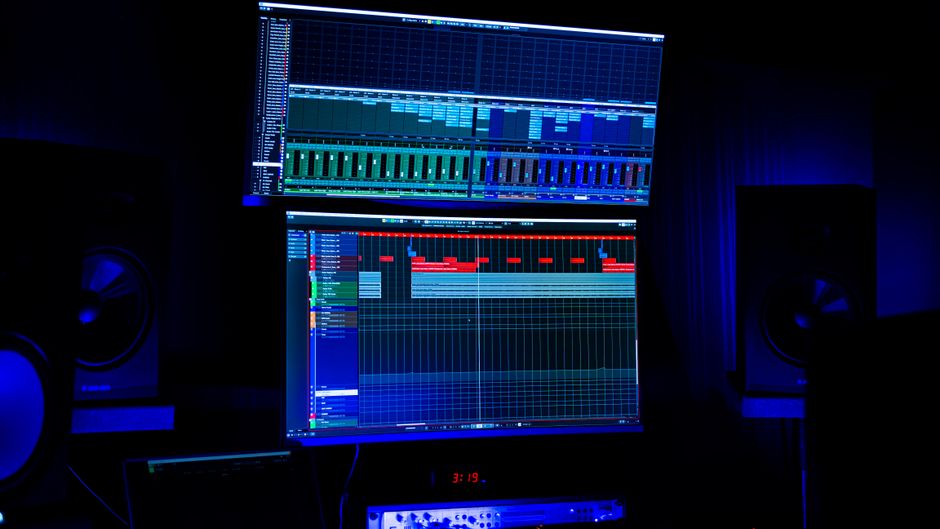
The Origins of Cubase: MIDI Sequencing and Atari ST Pioneers
Cubase began its journey in 1989, emerging as a revolutionary software for the Atari ST. In its early iterations, the platform distinguished itself with its robust MIDI sequencing capabilities, a feature that allowed musicians and composers to manipulate musical data with unprecedented precision. The graphical user interface, pioneering for its time, facilitated interaction with electronic instruments, opening new avenues for musical creation. This period marked Cubase’s establishment as a fundamental tool in recording studios and for producers seeking to integrate digital technology into their workflows. The original version laid the groundwork for the subsequent development of digital audio workstations (DAWs) by offering an intuitive environment for composition and arrangement.
The 1990s witnessed a crucial transformation with the integration of digital audio. Cubase VST, released in 1996, represented a turning point by introducing Virtual Studio Technology (VST). This innovation enabled the use of virtual instruments and effects directly within the software environment, eliminating the reliance on expensive and bulky external hardware. The VST standard democratized music production, making professional-grade tools accessible to home studios. Concurrently, the implementation of the ASIO (Audio Stream Input/Output) protocol optimized latency, ensuring real-time response for audio recording and playback. This phase solidified Cubase as a comprehensive platform combining the power of MIDI with the capabilities of digital audio processing, setting the stage for the modern recording studio.
Integration of Digital Audio and the VST Standard
The 21st century brought a series of significant enhancements to Cubase, cementing its position as a leading DAW. During this period, mixing and mastering tools were refined, incorporating advanced equalizers, compressors, and effects processors that offered meticulous control over sound. The addition of high-quality virtual instruments, such as integrated synthesizers and samplers, expanded the sonic possibilities for producers. Features like VariAudio, introduced in Cubase 5, revolutionized pitch and time editing for vocal and monophonic recordings, providing a powerful alternative to other pitch correction solutions. The platform also expanded its music notation capabilities, catering to the needs of composers and arrangers. This constant evolution reflected Steinberg’s commitment to improving the user experience and broadening the available creative tools.
Today, Cubase continues to lead the way in music production innovation. Recent versions have incorporated notable technological advancements, including artificial intelligence tools for mastering and spectral analysis. Compatibility with immersive audio formats, such as Dolby Atmos and 3D audio, positions Cubase as a vital platform for creating enveloping sound experiences—a growing trend in music consumption via streaming (e.g., on platforms like Spotify and Apple Music). Cloud collaboration functionality, through Steinberg VST Connect, allows musicians to work together on projects from remote locations, an increasingly relevant aspect in the digital age. Furthermore, integration with new MIDI controllers and control surfaces enhances physical interaction with the software. These updates demonstrate a constant adaptation to market demands and technological advancements, ensuring that Cubase remains a robust and versatile choice for producers of all levels.
21st Century Evolution: Advanced Mixing and Editing Tools
Cubase’s trajectory, from its beginnings as a MIDI sequencer to becoming a complete digital audio workstation, illustrates the evolution of music production. Its impact on the industry is undeniable, having introduced key technologies like VST and ASIO that defined modern standards. Observing its ability to integrate artificial intelligence and immersive audio formats, it becomes clear that Cubase continues to be an engine of innovation. For producers and musicians in the region, understanding this history not only provides context but also allows for an appreciation of the depth of tools available to them today, facilitating the creation of music with exceptional sound quality.
Related Posts

Compass Point's Sonic Legacy: Engineering and Ambiance in Iconic Music Production
An analysis of Compass Point Studios' impact on music production: engineering, ambiance, and recording techniques that defined a sound.

Acoustic Holography: Physical Principles and Applications in 3D Sound Fields
Analysis of acoustic hologram synthesis, Wave Field Synthesis, and HOA for immersive audio recreation in production and VR.

Plugin Automation: Dynamic Modulation for Sonic Expression and Evolving Soundscapes
Explore how temporal parameter modulation in plugins creates movement, emotion, and complexity in modern music productions.

Spectral Analysis and Psychoacoustics in Timbral Authenticity Quantification
Exploring objective and perceptual methods to evaluate and preserve timbral fidelity in modern sound production.