Spectral Compression: Frequency Dynamic Control for Advanced Music Production
Analysis of spectral compression, its application in mixing and mastering, and the technological evolution of its processors.
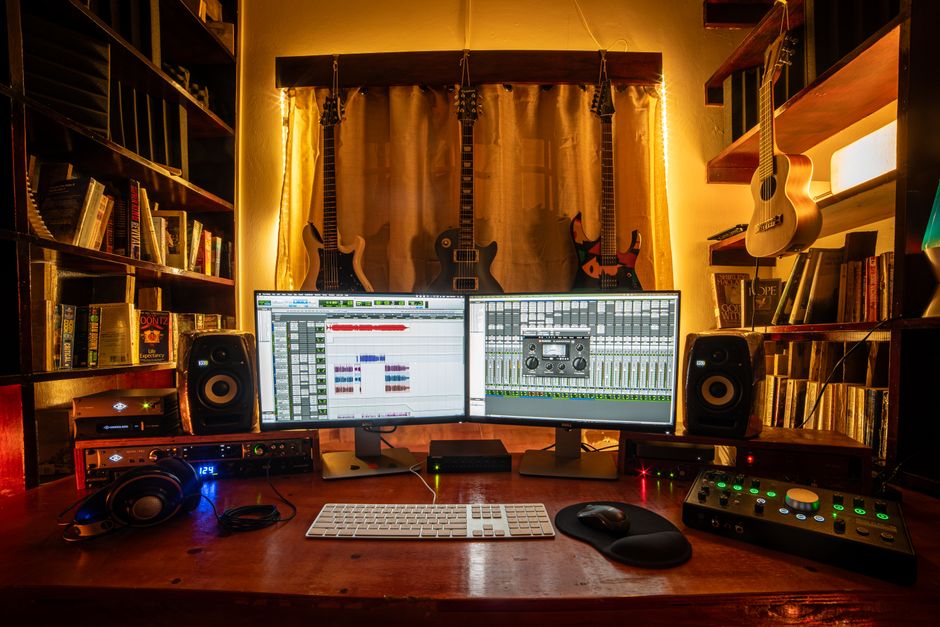
Spectral Compression: Advanced Frequency Dynamic Manipulation
Dynamic processing is a cornerstone in sound engineering. While broadband compression has been a fundamental tool, spectral compression represents a significant advancement, offering unprecedented precision in dynamic manipulation. This approach allows for selective management of an audio signal’s frequency content, impacting only the bands where intervention is required. Its implementation redefines clarity and tonal control in complex mixes, positioning it as an indispensable technique in contemporary music production.
Unlike a traditional compressor that acts on the overall amplitude of a signal, a spectral compressor analyzes and processes audio across multiple individual frequency bands. Each band operates with its own threshold, ratio, attack, and release parameters, or even adaptively. This enables surgical intervention to mitigate annoying resonances, control excessive sibilance, or balance specific elements within the spectrum without affecting the track’s overall dynamics. For example, a low-frequency buildup that “muddies” a mix can be attenuated only when its level exceeds a certain point, leaving other frequencies and quieter moments untouched. This level of control surpasses the capabilities of dynamic equalizers, which are often less flexible in their dynamic response. Understanding this mechanism is key to harnessing its potential for sound shaping.
Spectral Processing Mechanisms: Analysis and Band-by-Band Control
The versatility of spectral compression is evident in various critical applications. In vocal production, it is a formidable tool for de-essing or smoothing harsh transients without obscuring the voice. For instruments, it can manage problematic resonances in acoustic guitars or percussion, providing greater definition. In a full mix, this technique helps to “clean up” the frequency space, allowing each element to occupy its place without competing or causing masking. For instance, in a dense mix, subtle spectral compression can be applied to the mid-high frequencies of vocals to make them stand out, while managing the low frequencies of a bass guitar to prevent clashes with the kick drum. Mix engineers use these processors to sculpt sound with a finesse previously unattainable, improving overall coherence and intelligibility.
The current market offers a growing range of spectral processors, many powered by advanced algorithms and even artificial intelligence. Plugins like FabFilter Pro-MB [https://www.fabfilter.com/products/pro-mb-multiband-compressor-plugin] or iZotope RX [https://www.izotope.com/en/products/rx.html] are prominent examples that provide granular control over frequency dynamics. More recent tools, such as Oeksound Soothe2 [https://oeksound.com/plugins/soothe2/] or Soundtheory’s Gullfoss [https://www.soundtheory.com/products/gullfoss], utilize intelligent algorithms to automatically identify and correct resonances and spectral imbalances in real-time, dynamically adapting to the audio material. These advancements not only simplify complex tasks but also open new possibilities for sound creation, from immersive mastering in formats like Dolby Atmos, where precise management of each element in space is crucial, to producing soundtracks for video games. The integration of AI into these processes represents a key trend, optimizing workflows and allowing producers to focus more on creativity.
Versatile Applications of Spectral Compression in Production
Spectral compression stands as an advanced and indispensable technique in the modern audio engineer’s arsenal. Its ability to manipulate dynamics on a detailed frequency plane provides clarity, definition, and tonal control that elevates the quality of any production. Understanding its fundamentals and applying the available tools allows professionals to tackle complex mixing and mastering challenges, achieving more polished and professionally balanced results. The continuous evolution of these processors, driven by technological innovation, ensures their relevance will only grow in the future of music production.
Related Posts

The Evolution of Multitrack Recording: From Analog Tape to Immersive Digital Production
We explore the technological journey of multitrack recording, from its analog beginnings to digital platforms and immersive audio.

Total Harmonic Distortion (THD): Evaluating Fidelity and Character in the Audio Chain
Understand Total Harmonic Distortion (THD) to assess audio fidelity and shape sonic character in music production.
Neural Networks in Vocal Synthesis: Architectures, Applications, and Creative Frontiers
AI advances in vocal synthesis: models, realism, and the future of vocal expression in music production.

Solo's Secret Weapon: Unleashing Dynamic Delays for Expressive Music
Discover how creative delay techniques can transform your solos, adding depth, rhythm, and emotional resonance to your musical expressions.