The Evolution of Digital Synthesis: From Academic Origins to Modern Music Production
A journey through the development of digital synthesizers, from their laboratory beginnings to their current impact on music.
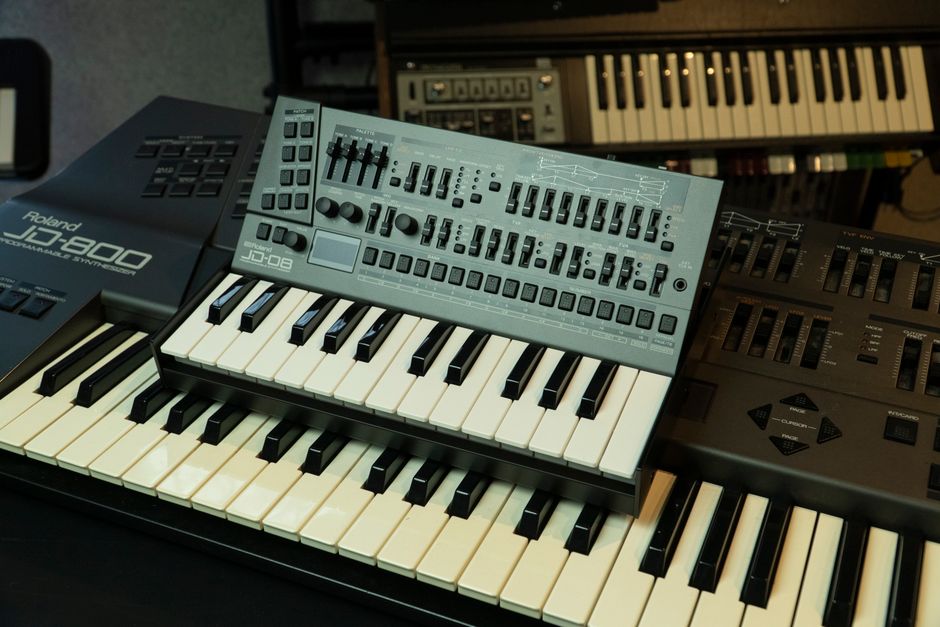
Origins of Digital Synthesis: From Academic Research to Early Prototypes
The advent of digital technology radically transformed the landscape of music and sound production. In the mid-20th century, analog synthesis laid the groundwork, but its inherent limitations in stability, polyphony, and preset storage capacity spurred a quest for new frontiers. This transition marked the arrival of the first digital synthesizers, instruments that not only expanded the available sonic palette but also democratized music creation, opening unprecedented pathways for artists and producers worldwide. The development of these devices represents a fundamental milestone in the evolution of electronic music, redefining the possibilities of sound manipulation and generation.
The earliest forays into digital synthesis took shape in academic and research environments during the 1950s and 1960s. Bell Labs in the United States was a crucial epicenter, where pioneers like Max Mathews experimented with generating sound through computers. His Music-N program, developed starting in 1957, allowed for the encoding of sound parameters and their digital playback, laying the theoretical and algorithmic foundations for future instruments. These initial systems were complex, requiring mainframes and exhaustive programming, far removed from today’s interactivity. However, they demonstrated the viability of creating any conceivable timbre through the manipulation of numbers. Stanford University, with John Chowning and his work on frequency modulation (FM) synthesis in the late 60s, also played a prominent role. These academic advancements not only validated the potential of digital synthesis but also offered solutions to problems such as tuning instability and the complexity of analog circuits, heralding an era of unprecedented control and precision in sound creation. The prototypes from this initial stage, though rudimentary, paved the way for the commercialization of more accessible instruments.
Commercialization of FM Synthesis: The Impact of the Yamaha DX7
The 1980s witnessed the mass commercialization of digital synthesis, primarily thanks to frequency modulation (FM). The Yamaha DX7, launched in 1983, revolutionized the music industry. Based on Chowning’s research, this synthesizer offered a distinctive sonic palette, featuring metallic timbres, bells, powerful basses, and ethereal pads, which were impossible to replicate with analog synthesis. Its architecture, involving operators (oscillators with their own envelopes) and algorithms to determine their interactions, provided considerable depth in sound design, although its programming was initially complex for many users. The DX7 became a staple of pop, new wave, and R&B music of the era, heard in countless hits. Its success was not only due to its unique sound but also its accessible price and its ability to store 32 presets, a revolutionary feature at the time. This instrument not only popularized digital synthesis but also established a standard for the Musical Instrument Digital Interface (MIDI), facilitating the interconnection of equipment and the emergence of new workflows in recording studios and live performances.
While FM synthesis gained traction, other forms of digital synthesis also began to emerge and vie for the attention of musicians and producers. Wavetable synthesis was one such form, popularized by instruments like Wolfgang Palm’s PPG Wave in the early 80s. Instead of generating simple waves, wavetable synthesis employed a series of pre-recorded or digitally designed waveforms, allowing for fluid transitions between them and generating evolving timbres and complex textures. These sounds were often more “organic” or “animated” than those from FM, finding their niche in genres like experimental electronic music and progressive rock.
Diversification of Digital Synthesis: Wavetable and Sampling
Concurrently, digital sampling technology also began its digital journey. The Fairlight CMI (Computer Musical Instrument), introduced in 1979, was one of the first and most influential digital sampling systems. Although its prohibitive price made it inaccessible to most, its ability to record any sound, manipulate it, and reproduce it as a musical instrument opened a universe of possibilities. The Synclavier, another high-end system from the same era, combined FM synthesis with sampling and resynthesis, offering even greater sonic versatility. These digital giants allowed artists like Peter Gabriel and Kate Bush to incorporate real-world sounds into their compositions in innovative ways, setting a precedent for the use of sampling that is now ubiquitous in contemporary music production. The ability to digitize and manipulate audio laid the groundwork for future hardware and software samplers that would define subsequent decades.
The foundations laid by early digital synthesizers persist and have expanded exponentially in the current era. FM synthesis, for example, remains a vital technique, integrated into numerous modern software plugins and hardware synthesizers. Tools like Native Instruments FM8 or Arturia DX7 V emulate and enhance the capabilities of the originals, offering more intuitive interfaces and unlimited polyphony. Wavetable synthesis is also enjoying a resurgence, with virtual instruments like Xfer Serum and Wavetable in Ableton Live, enabling highly detailed and animated timbre creation.
Legacy and Evolution: Digital Synthesis in Contemporary Music Production
The legacy of digital sampling is evident in every modern DAW and sampler, from Ableton Live and Logic Pro to Native Instruments’ Kontakt. The ability to record, manipulate, and recontextualize sounds is central to today’s music production. Innovations continue unabated: artificial intelligence is beginning to play a role in sound generation and synthesis parameter automation, while immersive audio production, such as Dolby Atmos, drives the development of new spatialization tools that interact with digital synthesis to create three-dimensional soundscapes. Hybrid synthesizers, combining the best of analog and digital synthesis, also represent a growing trend, offering analog warmth with digital precision and versatility. The evolution continues, and today’s tools, from physical modeling plugins to virtual modular environments like VCV Rack, are direct descendants of those early digital experiments, taking sound manipulation to levels of complexity and accessibility unimaginable just a few decades ago.
From initial laboratory experiments to the ubiquity of contemporary software and hardware synthesizers, the history of digital synthesizers represents a chronicle of constant innovation. These instruments not only provided new tools for musicians but also expanded the very definition of what music could be. Their influence is undeniable, shaping genres, inspiring generations of artists, and laying the groundwork for the sophisticated sound design technologies that enrich our productions today. Understanding this historical journey is fundamental to fully appreciating the capabilities and limitless potential of digital synthesis in modern music.
Related Posts

Adaptive Soundscape Synthesis: AI and Real-Time Processing for Immersive Experiences
Exploring AI in audio: how adaptive synthesis creates dynamic, personalized sound experiences in music production.
Unleash Raw Power: How Field Recordings Revolutionize Rock Music Production
Discover how field recordings transcend traditional studio limitations, adding raw sonic textures and unique artistic depth to modern rock music productions.

Legião Urbana's Sonic Analysis and Legacy in Latin American Rock
Exploring Legião Urbana's sound, influences, and enduring impact on Latin American music.

Elevate Your Mixes: A Deep Dive into Dolby Atmos Music Production
Discover how Dolby Atmos transforms music production, offering artists and producers in Latin America new dimensions of immersive sound experiences and creative expression.