Reason's Modular Architecture: Sound Design and Workflows in Contemporary Music Production
Exploring Reason's virtual rack architecture, its application in advanced sound design, and integration into modern workflows.
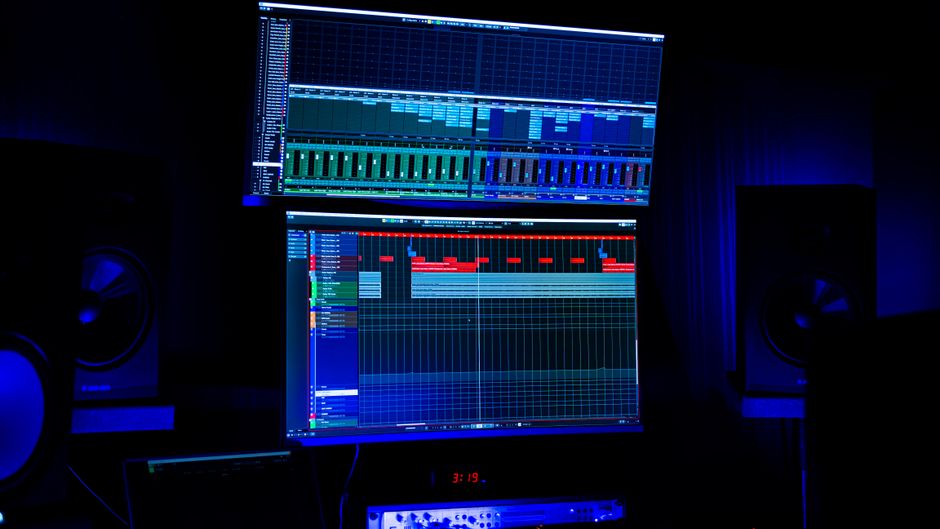
Virtual Rack Architecture: Interconnection and Sound Design
Contemporary music production demands tools that fuse creative flexibility with technical power. Within this landscape, Reason stands out as a digital audio workstation (DAW) with a unique focus on a virtual rack environment that emulates studio hardware. Its architecture invites producers to a level of sonic experimentation that often echoes analog modular synthesis, offering an expansive digital canvas for musical creation.
The core of Reason lies in its virtual rack, an ecosystem where devices connect intuitively, replicating the physical interconnection of a studio. This design allows users to configure complex signal chains, from synthesizers and samplers to modulation effects and dynamic processors. Devices like the Europa synthesizer or the Grain sampler, alongside classics such as Thor, provide a vast sonic palette for texture design. The ability to access the rear of the rack for audio and CV (Control Voltage) connections opens a universe of possibilities for cross-modulation and device interaction, facilitating the creation of evolving sounds and intricate soundscapes. This versatility positions it as a strong choice for genres ranging from experimental electronic music to polished pop, enabling artists to sculpt their sonic identity with precision.
Integration and Modern Workflows in Music Production
Reason’s integration into modern workflows has evolved significantly. From its capability to function as a VST/AU plugin within other DAWs (the “Reason Rack Plugin”) to its subscription service Reason+, which grants continuous access to a growing library of sounds and devices. This adaptability allows producers worldwide to incorporate the virtues of the Reason rack into their existing setups, enriching their projects with its distinctive instruments and effects. Furthermore, compatibility with external MIDI devices and advanced CV/Gate signal routing capabilities make it a bridge between the digital realm and analog hardware, an aspect valued by those seeking a tactile and experimental experience in their creative process. Player devices, such as Scales & Chords or Dual Arpeggio, simplify the composition of melodic and harmonic patterns, streamlining the creative process and enabling the rapid generation of innovative musical ideas.
At a time when music production trends lean towards remote collaboration and sonic immersion, Reason continues to adapt. Its intuitive interface and robust audio engine facilitate the creation of high-quality content for streaming platforms and immersive experiences. The recent focus on artificial intelligence in music creation, while not directly integrated into Reason for native composition, encourages producers to seek DAWs that allow flexible experimentation with third-party tools, where Reason integrates seamlessly as an environment for implementing AI-generated ideas or processing audio with advanced plugins. The Reason Studios community, active and global, contributes to an ecosystem of learning and sharing, fundamental for the professional development of any musician or producer, whether in a major city or any cultural hub. This dynamism ensures the platform remains relevant and constantly evolving, responding to the demands of a perpetually changing music industry.
Adaptability and Evolution of Reason in the Current Sonic Landscape
In summary, Reason represents an exceptional platform for music production, combining a powerful modular architecture with an interface that fosters creativity. Its capacity to generate complex sounds, its flexible integration into diverse studio environments, and its constant updates solidify it as a valuable choice for those pursuing a distinctive sound and an unconstrained creative process. Delving into its functionalities opens pathways for innovation and the realization of unique musical visions.
Related Posts

Vocal Cohesion and Depth: Acoustic Principles, Arrangement, and Processing for Modern Mixing
Exploring vocal blending: from acoustics and harmony to processing and spatialization techniques for resonant arrangements.

Audio Engineering for Extended Reality: Challenges and Spatial Mixing Methodologies
Exploring advanced sound design and mixing techniques for immersive XR concert experiences, focusing on spatialization and synchronization.

Reactive Sound Synthesis: Mapping Neural Data to Dynamic Auditory Landscapes
Exploring audio generation for neural simulations, merging composition, neuroscience, and programming for immersive auditory experiences.

Granular Synthesis and Temporal Manipulation: Crafting Innovative Sound Textures from Existing Fragments
Exploring advanced techniques for recontextualizing pre-existing recordings via granular synthesis and temporal alteration.