Organic Sound Design: From Field Recordings to Immersive Acoustic Environments
Methodologies for capturing, processing, and integrating natural sounds into advanced audio productions, creating rich, distinctive textures.
Sound Source Acquisition: Field Recording and Foley
Contemporary media production’s soundscape demands constant innovation. Crafting singular auditory experiences is paramount, transcending conventional synthetic textures. Organic sound design, rooted in the manipulation of field recordings and natural sounds, enables the generation of rich, authentic acoustic environments. This approach not only lends realism but also imbues any project with a distinctive identity, from musical compositions to interactive settings. We will present methodologies for collecting, processing, and integrating real-world acoustic elements into advanced audio productions.
Capturing Natural Sound Sources and Foley Technique
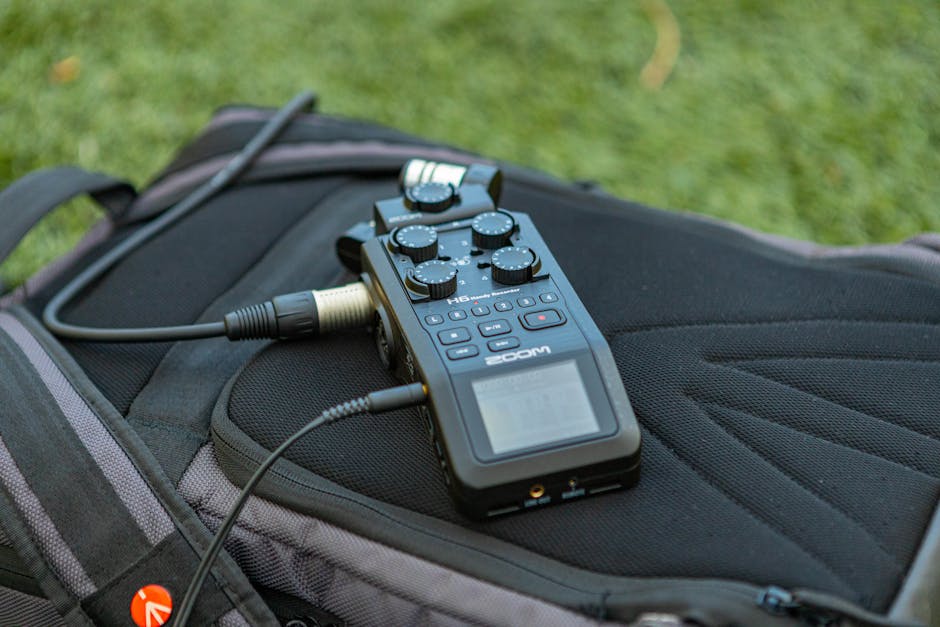
The foundation of organic sound design lies in acquiring high-quality source material. Field recording involves capturing environments, objects, and events in their original setting. Equipment selection is critical for this; directional microphones like shotgun mics (e.g., Sennheiser MKH 416) or stereo configurations (e.g., ORTF with Røde NT5 microphones) are ideal for capturing specific details or spatial breadth. High-resolution portable recorders, such as those offered by Zoom or Sound Devices, facilitate this task, ensuring fidelity in the capture.
Concurrently, foley technique reproduces and enhances everyday sounds in a controlled studio environment. This includes footsteps, clothing rustles, impacts, and object manipulation to synchronize with visual actions or create abstract textures. A talented foley artist can simulate everything from the crunch of snow to the sound of fantastical creatures, employing diverse elements like dry leaves, cellophane, or coconuts. Precision in close-miking (e.g., Neumann TLM 103) and experimentation with surfaces are vital for achieving the desired character. These recordings form the starting point for subsequent sonic transformation.
Creative Processing and Sound Transformation
Granular and Convolutional Processing and Synthesis
Once source sounds are obtained, the next step involves their shaping and recontextualization. This procedure ranges from subtle editing to extreme synthesis. Granular synthesis, for example, breaks down an audio file into minute “grains” that can be independently rearranged, time-stretched, or modulated in pitch and amplitude. Tools like Native Instruments Kontakt or dedicated plugins like Granulator II in Ableton Live allow the generation of ambient textures, drones, or complex rhythmic effects from a single recording.
Convolution is another powerful technique, where the “impulse response” of an acoustic space or object is applied to a different sound. This enables a clap recorded in a dry studio to sound as if it occurred in a cathedral or inside a metal tube. Convolutional reverb plugins, such as Altiverb or native options in many DAWs, are essential for this application.
Additionally, spectral processing, using tools like iZotope RX, allows for isolating specific components of a sound, modifying its timbre, or even removing unwanted elements. Envelope manipulation, phase inversion, ring modulation, and subtle distortion are complementary procedures that can impart a completely new character to a sound element, distancing it from its recognizable origin to integrate it into innovative design. Experimentation with unconventional effect chains is fundamental to this process.
Integration and Contextualization in Modern Projects
The application of these techniques is evident across multiple disciplines in contemporary audio production. In video games, creating dynamic and reactive soundscapes is crucial for immersion. Audio engines like Wwise or FMOD facilitate the implementation of organic sounds that adapt in real-time to player interaction, generating a unique auditory experience for each user. For instance, the sound of wind might subtly vary based on character speed or the topography of the virtual environment.
Applications in Video Games, Film, and Immersive Audio
In film and television production, organic sound design enriches the narrative, adding layers of realism and emotion. The orchestration of custom foley effects and meticulously crafted ambiances contributes to scene credibility. The trend towards immersive audio formats, such as Dolby Atmos, has elevated the demand for spatially complex sounds, where the provenance and movement of organic elements are critical. 3D mixing tools and spatialization plugins are increasingly relevant in this context.
Furthermore, artificial intelligence (AI) is beginning to play a significant role in sound generation and manipulation. Machine learning algorithms can analyze existing recordings to synthesize realistic variations or even create entirely new sounds based on desired parameters. This opens new frontiers for sound designers, enabling them to conceive auditory landscapes previously unattainable. Platforms like A Sound Effect or Splice continue to be valuable resources for accessing high-quality organic sound libraries, serving as starting points or complements to original creations.
Organic sound design represents a powerful methodology for enriching audio productions with authentic and novel textures. From the careful capture of environmental sounds to their sophisticated processing through granular or convolutional synthesis, each stage offers opportunities for creativity. Integrating these practices into video games, film, and immersive formats, alongside the emergence of AI-driven tools, underscores their relevance in the current industry landscape. By applying these techniques, audio professionals can generate memorable and distinctive auditory experiences, elevating the artistic and technical value of their projects.
Related Posts

Bitwig Studio: Modular Architecture and Signal Processing for Advanced Sound Design
Exploring Bitwig Studio's modular architecture, synthesis engine, and expressive MPE capabilities for innovative production.

Acoustic Dulcimer and Zither Capture: Miking and Processing for Faithful Sound Reproduction
Technical analysis of miking and processing to preserve the warmth and detail of dulcimers and zithers in music productions.

Cubase: Architecture, Workflow, and Advanced Techniques in Contemporary Music Production
Analysis of Cubase functionalities for composition, recording, mixing, and mastering, optimizing professional workflow.

Chorus and Flanger: Technical Evolution and Contemporary Sound Design Applications
From tape manipulation to digital algorithms, explore the principles and creative use of chorus and flanger effects.