Neural Synthesis: Algorithmic Foundations and Applications in Contemporary Sound Creation
Exploring neural synthesis, its AI models, and their impact on music production and sound design.
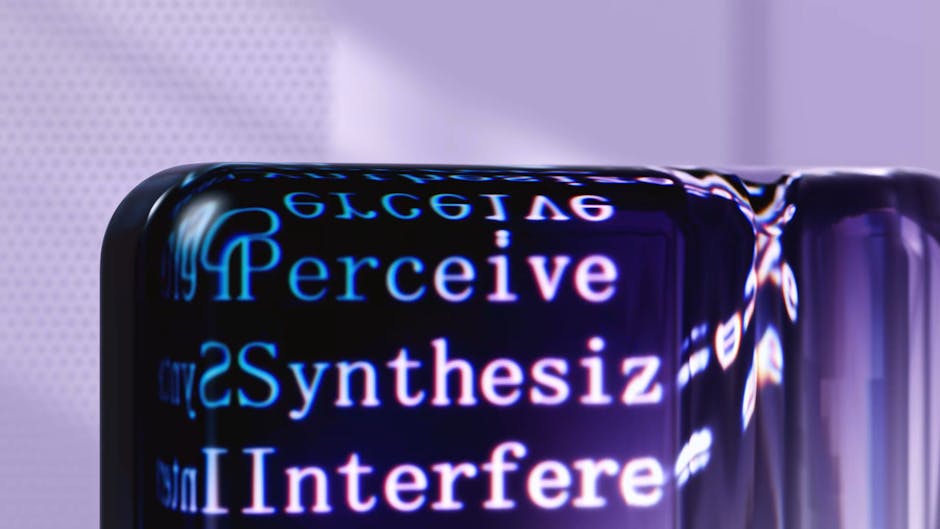
Foundations of Neural Synthesis in Audio
The convergence of artificial intelligence and sound production is redefining the boundaries of musical creation. In this context, neural synthesis emerges as a cutting-edge discipline that promises to transform how producers and sound designers generate and manipulate audible textures. This advanced approach, grounded in machine learning algorithms, offers unprecedented tools for sound modeling, opening a spectrum of creative possibilities that transcend traditional methods.
Neural synthesis operates on principles that differ substantially from classic techniques. While subtractive, additive, or frequency modulation (FM) synthesis rely on the explicit manipulation of sound’s physical parameters, neural synthesis leverages neural networks to learn complex patterns from vast audio datasets. Models such as Generative Adversarial Networks (GANs), Variational Autoencoders (VAEs), or the more recent diffusion models are fundamental to this process. These algorithmic architectures can generate new waveforms, textures, or even complete melodies based on the knowledge acquired from previous examples. The system not only replicates but infers and creates, offering a flexibility and sonic innovation capacity that conventional synthesizers cannot match. This represents a paradigm shift, where parametric programming gives way to data-driven generation and the recognition of implicit patterns in audio. For a deeper understanding of AI fundamentals in music, resources like Google Magenta (https://magenta.tensorflow.org/) provide valuable insights.
Neural Architectures for Sound Generation
Neural synthesis applications are already being implemented across various fronts in contemporary music production. One of its most notable advantages lies in generating sonic textures of high complexity and realism, from emulating acoustic instruments with astonishing detail to creating dynamic ambient soundscapes for video games or virtual reality experiences. Emerging tools use these techniques for audio stylization, allowing, for example, the timbre of one instrument to be applied to the performance of another, or generating subtle yet significant variations in existing recordings. Platforms like AIVA (Artificial Intelligence Virtual Artist) (https://www.aiva.ai/) use AI algorithms to compose complete musical pieces in various styles, while state-of-the-art sound design plugins integrate neural synthesis modules to offer evolving, organic textures that would be difficult to conceive with traditional methods. The ability of these tools to learn and adapt to user preferences opens pathways to personalized sound experiences and increased workflow efficiency in studios worldwide. Immersive production, with formats like Dolby Atmos, also benefits from AI’s capability to generate and position sound elements in three-dimensional spaces, contributing to the creation of more enveloping auditory environments. Articles in specialized publications like Sound on Sound (https://www.soundonsound.com/) or MusicTech (https://www.musictech.com/) often analyze these advancements.
Despite its promising progress, neural synthesis faces significant challenges. The computational cost associated with training and executing complex neural models can be considerable, requiring powerful hardware. Likewise, precise control over specific parameters of the generated sound may be less intuitive than in a traditional analog or digital synthesizer, where each knob or fader has a clear function. The quality and bias of training datasets are also crucial; an inadequate dataset can limit creativity or introduce unwanted artifacts. However, future prospects are encouraging. Current research focuses on developing more intuitive interfaces for artists, optimizing algorithms for real-time performance, and achieving deeper integration with Digital Audio Workstations (DAWs). This will enable producers to manipulate and direct neural synthesis processes with greater agility. The democratization of these tools and constant innovation in hardware and software, including new MIDI controllers with enhanced capabilities and AI-powered plugins, herald a future where sonic creativity will be exponentially expanded. Remote collaboration, a growing trend in the music industry, could be further empowered by neural synthesis systems that allow production teams to generate and share sonic ideas more fluidly and efficiently, transcending geographical barriers.
Practical Applications of AI in Music Production
In synthesis, neural synthesis is not merely a technological evolution; it represents a revolution in sound creation. By harnessing the power of machine learning, this technique offers musicians, engineers, and sound designers an expansive palette of tools to conceive sounds previously unimaginable. While technical obstacles remain to be overcome, its potential to redefine artistic expression and efficiency in music production is immense, marking a milestone in the history of digital acoustic manipulation. Understanding these fundamentals is crucial for anyone seeking to remain at the forefront of sonic innovation in the digital age.
Related Posts

Sound Synthesis and Processing: Sculpting Immersive and Emotional Auditory Landscapes
Dive into granular synthesis, AI, and immersive audio to craft rich sound textures and narratives.

Recording Prepared Instruments: Acoustics, Miking, and Processing for Advanced Sound Design
Audio engineering for modified instruments: capture techniques, microphone placement, and post-production for innovative sound textures.
Additive Synthesis: Fourier Fundamentals and Contemporary Sound Design Applications
Detailed analysis of Fourier's theorem and its application in timbre creation, from acoustic emulations to abstract soundscapes.

The MIDI Protocol: Genesis, Evolution, and Foundation of Digital Music Production
Explore the development of the MIDI standard, its role in interconnecting electronic instruments, and its lasting impact on modern music creation.