Hardware Synthesizer Recording: Studio Prep, Capture, and Processing in Modern Production
Explore advanced methodologies for recording hardware synthesizers, optimizing sound quality and integration into contemporary mixes.
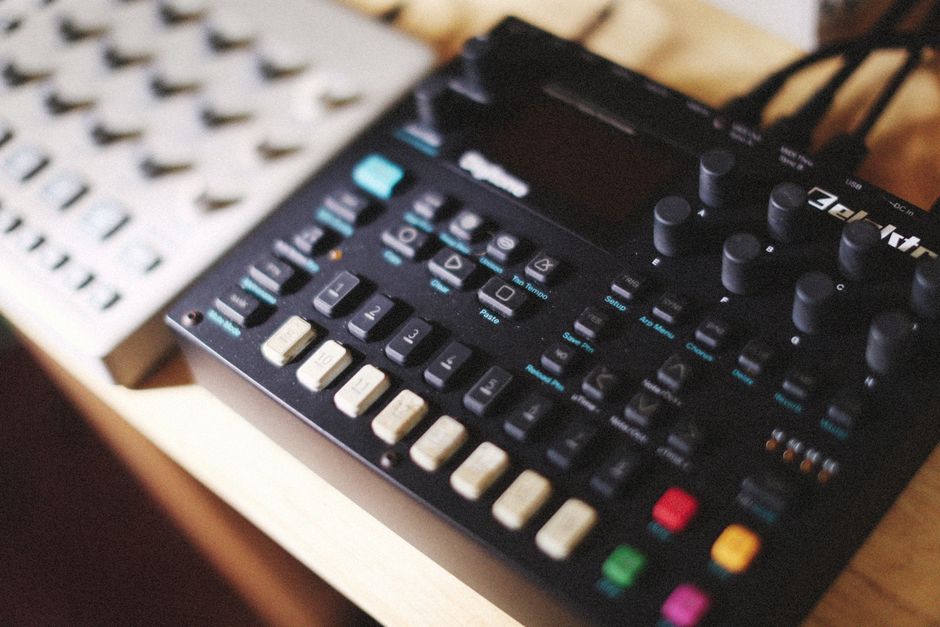
Studio Environment and Equipment Preparation for Synthesizer Recording
The integration of hardware synthesizers into music production imparts a distinctive sonic quality and tactile interaction that software emulations often fail to fully replicate. From vibrant analog circuits to complex digital architectures, each instrument possesses a unique identity that requires a methodical approach for accurate capture. Effective recording not only preserves the synthesizer’s original character but also establishes a robust foundation for subsequent mixing and mastering. This technical analysis delves into the fundamental considerations and advanced methodologies for recording hardware synthesizers, optimizing their presence within the context of modern composition.
The quality of the initial recording is heavily influenced by studio preparation. An acoustically treated environment minimizes unwanted reflections and resonances that could color the signal, ensuring the captured sound is as faithful to the source as possible. Cable selection is crucial; the use of balanced cables (TRS or XLR) is advised whenever feasible to reduce electromagnetic interference and noise, particularly in environments with multiple electronic devices and extensive wiring. The synthesizer’s output impedance should properly match the input impedance of the audio interface or preamplifier for optimal signal transfer. Audio interfaces with high-quality converters, such as those offered by Universal Audio [https://www.uaudio.com/audio-interfaces.html] or RME, are preferable for preserving tonal fidelity and dynamics. It is essential to verify the grounding of all equipment and utilize surge-protected power strips to prevent ground loops that generate audible hum, a common issue in studios with interconnected gear. Correct gain staging, from the synthesizer’s output to the interface’s input, prevents digital clipping and optimizes the signal-to-noise ratio, laying the groundwork for a clean and robust signal.
Signal Capture Methods: Direct Input and Re-amping
The most direct method for recording a hardware synthesizer is by connecting it to the line input of an audio interface. This technique, known as “Direct Input” (DI), captures the instrument’s pure signal. For synthesizers with mono outputs, a single input is used; for those with stereo outputs, like many effects modules or synthesizers with internal panning, two line inputs are required to preserve the spatial image. It is vital to adjust input levels on the interface so that the signal is strong but does not reach saturation (clipping). A peak level between -6 dBFS and -3 dBFS is a good starting point, leaving headroom for unexpected transients.
Some producers opt to re-amp the synthesizer signal through a guitar or bass amplifier, subsequently miking the cabinet to add further analog character. This technique, while more complex, can impart a unique texture, especially for aggressive bass sounds or lead lines. Microphone placement, similar to that for an electric guitar, will drastically influence the final timbre.
Simultaneous MIDI recording is a common practice. By capturing both the audio signal and MIDI data (either via USB or 5-pin DIN), flexibility is maintained to edit notes, quantize, or even change the synthesizer used post-session, while preserving the original performance.
During the recording phase, it is advisable to keep processing minimal to retain flexibility during the mix. However, a high-quality preamplifier can enrich the signal before analog-to-digital conversion, adding color and depth. Gear such as Neve [https://www.ams-neve.com/products/preamps-eqs/] or SSL preamplifiers are valued for their harmonic character and ability to enhance a sound’s presence. If compression or equalization is applied during recording, it should be done with extreme moderation and with the certainty that the effect is permanently desired, as any modification is irreversible. An extended practice is to record the “dry” signal (without external effects) and apply processing during the mixing stage, utilizing plugins or external hardware units in a send/return loop, which allows for experimentation and adjustment without compromising the source material.
Processing and Flexibility in the Recording Stage
In the current landscape, hybrid production is predominant. Many studios integrate hardware synthesizers with digital audio workstation (DAW) environments using advanced MIDI controllers or interfaces with CV/Gate connectivity. This allows for precise automation of synthesizer parameters directly from the DAW, expanding creative possibilities and sound design capabilities. Artificial intelligence (AI) is beginning to significantly influence audio processing; emerging plugins utilize AI algorithms for tasks such as audio restoration, adaptive mastering, or the generation of creative effects that complement or transform synthesizer timbres. Platforms like iZotope [https://www.izotope.com/] are at the forefront of these innovations, offering tools that optimize workflows. Furthermore, the growing demand for immersive audio experiences, such as Dolby Atmos, drives producers to consider how synthesizer sounds can be spatialized and manipulated in three-dimensional environments, adding a new dimension to the sound design and mixing phase, from crafting enveloping pads to dynamic textures that move through space.
Recording hardware synthesizers is a process that demands attention to technical detail and a deep understanding of each instrument’s sonic characteristics. By optimizing studio preparation, employing appropriate capture methodologies, and integrating contemporary tools and trends, producers can ensure that the unique character of their synthesizers is fully manifested in the mix. Investing in quality from the signal’s origin is a cornerstone for achieving productions of high artistic and technical value, paving the way for an impactful sonic presence in any composition.
Related Posts

Granular Synthesis: Principles, Parameters, and Applications in Contemporary Sound Production
An analysis of granular synthesis, its microelements, control parameters, and its role in creating advanced sound textures.

X-Y vs. A-B Stereo Microphone Techniques: Principles, Applications, and Relevance in Immersive Audio
Compare X-Y and A-B stereo microphone configurations, exploring their impact on sonic spaciousness and immersive audio production.

Audio Crosstalk: Technical Principles, Measurement, and Mitigation Strategies for Sound Engineering
Technical evaluation of audio crosstalk: causes, precise quantification, and attenuation methods for signal integrity.
Sympathetic Resonance in Recording: Physical Principles and Technical Applications for Sound Engineers
Capturing and processing secondary vibrations in acoustic instruments to enrich sonic textures and auditory experience.