Sequential Circuits: Analog Innovation and Legacy in Electronic Music Synthesis
Explore the evolution of Sequential Circuits, from the Prophet-5 to MIDI, and its lasting impact on modern sound production.
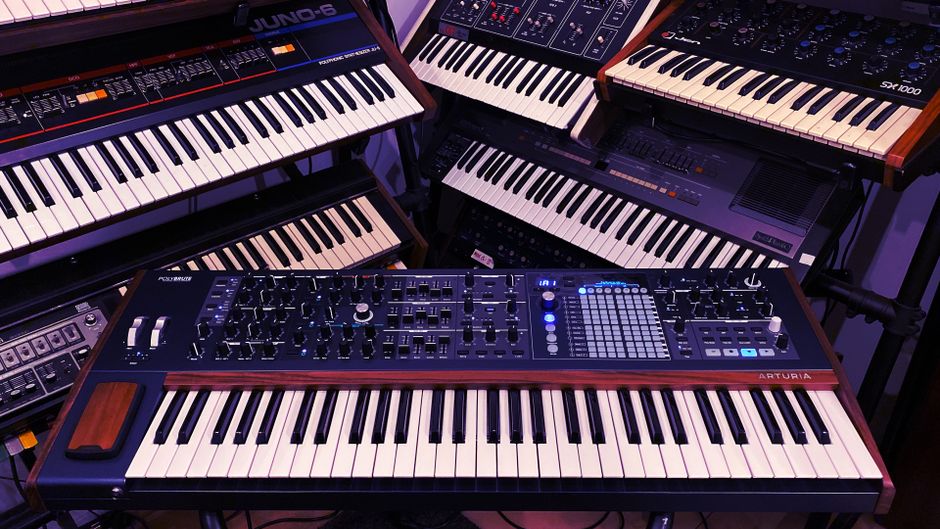
Sequential Circuits: Innovation in Analog Synthesis and Programmable Polyphony
The journey of Sequential Circuits represents a fundamental chapter in the evolution of electronic music synthesis. Founded by Dave Smith in 1974, this Californian company not only introduced crucial technological innovations but also redefined the interaction between musicians and their instruments. His vision of integrating computation with analog synthesis laid the groundwork for modern synthesizer design, marking a milestone in the history of sound production. The impact of its creations spans genres and decades, shaping the sound of countless musical productions.
The turning point arrived with the Sequential Circuits Prophet-5 in 1978. This instrument transcended previous limitations by offering five-voice polyphony and, crucially, the ability to store and recall sound presets using microprocessors. Its impact was immediate and profound, transforming live and studio music creation. Artists from Roxy Music to Michael Jackson and Kraftwerk integrated its characteristic sound, projecting a new dimension into the sonic texture of the era. The Prophet-5’s architecture, with its voltage-controlled analog oscillators, resonant filters, and configurable ADSR envelopes, allowed for an unprecedented expressive palette that is still highly valued today by producers and sound designers worldwide.
The Impact of the Prophet-5: Revolutionizing Musician-Instrument Interaction
Dave Smith’s influence extended beyond his products by co-developing the MIDI (Musical Instrument Digital Interface) standard in the early 1980s, an innovation that unified communication between musical devices from different manufacturers, laying the foundation for modern studio interconnectivity. Models like the Prophet-10, with ten voices, and the Prophet-T8, featuring a velocity-sensitive keyboard and aftertouch, expanded performance and expression capabilities. Subsequently, the Prophet VS introduced vector synthesis, a novel technique that allowed dynamic modulation of multiple waveforms, anticipating the sample-based synthesis that would become popular years later. Despite its innovative success and pioneering role, competition and market shifts led to Sequential ceasing operations in 1987, with Korg acquiring the Prophet brand.
Smith’s legacy, however, was far from over. After a period at other companies and with his own brand, Dave Smith Instruments (DSI) was established, resuming the original design philosophy and the pursuit of excellence in analog synthesis. In 2015, DSI officially reclaimed the Sequential name, marking a triumphant return to the identity that had revolutionized the industry. The Prophet-08 laid the foundation for a new generation of Sequential instruments. Then, the Prophet-6 and OB-6, the latter developed in collaboration with Tom Oberheim, offered polyphonic analog synthesis with an intuitive interface and a contemporary sound that captured the attention of the music community. The revitalization of the iconic Prophet-5 and Prophet-10 in their Rev4 revisions has allowed a new generation of musicians to experience these classics with modern reliability and precision. Instruments like the Take 5, a compact and powerful synthesizer, and the Prophet X, which merges analog synthesis with high-fidelity sample playback, demonstrate the brand’s continued pursuit of innovation. This evolution reflects a current trend in music production, where hybrid instruments and analog hardware coexist harmoniously with digital production environments, offering artists a broader range of tools for sound creation. More information about their current catalog is available on their official website: https://www.sequential.com/
MIDI Standard and Vector Synthesis: Post-Prophet Technological Advancements
Sequential Circuits’ influence on electronic music and contemporary production remains profound. From the democratization of programmable polyphony to its essential role in MIDI standardization and its resurgence with cutting-edge instruments, Dave Smith’s vision has shaped much of the modern sonic landscape. The company continues to be a benchmark for build quality, synthesis innovation, and an unmistakable timbre that endures in countless current recordings and compositions, solidifying its status as a pillar in musical technology.
Related Posts

Pyramix DAW: Architecture for Ultra-High Resolution Audio and Precision Editing
Analysis of Pyramix's audio engine, advanced editing, and hardware-software synergy for elite productions.

Brain-Computer Interfaces in Music Production: Decoding Mental Intent into Soundscapes
Exploring how BCIs translate neural activity into musical parameters, examining methods, challenges, and creative potential.

Tape Echo and Analog Delay: Technical Evolution and Cultural Impact on Sound Production
Analysis of the genesis and legacy of tape echo and analog delay, their influence on contemporary music, and modern emulations.

AIR Studios London: A Legacy of Excellence in Audio Engineering and Music Production
An analysis of AIR Studios' impact on music and film production, from analog to immersive audio.