Wind Instrument Miking: Classic Strategies and Processing for High-Fidelity Recordings
Technical research on microphone selection, placement, and processing for accurate capture of wind instruments.
Microphone Selection and Characteristics for Wind Instruments
Capturing the sound of wind instruments presents both a challenge and an opportunity for audio engineers. Their dynamic range, harmonic complexity, and interaction with the acoustic space demand a precise methodology. While technology advances, the fundamental principles underpinning classic recordings remain valid. This technical analysis focuses on the timeless miking and processing strategies that have defined the sound of orchestras and ensembles, and how they integrate into contemporary workflows for high-fidelity results.
The choice of microphone is the critical first step. Large-diaphragm condenser microphones, such as the Neumann U87, are frequently selected for their extended frequency response and ability to capture subtle details, making them ideal for flutes and clarinets. For instruments with greater intensity and character, like the saxophone or trumpet, ribbon microphones, such as the Royer R-121, offer inherent warmth and a smooth transient response that mitigates harshness. Dynamic microphones, while less common for orchestral detail, can be useful in high sound pressure environments or for a more direct sound in band contexts.
Microphone placement is as decisive as the microphone type. Close miking, at about 15-30 cm (6-12 inches), prioritizes articulation and minimizes room ambience, suitable for an intimate sound or for isolating the instrument in a dense mix. However, to capture the full resonance of the instrument and its interaction with the air, a medium distance (60-90 cm or 2-3 feet) often provides a superior balance between direct and reverberant sound. Stereo configurations, like ORTF or X/Y, are pertinent for ensembles or for imparting a wide spatial image to a soloist in a favorable environment. A classic example of stereo miking for a woodwind section can be observed in recordings by the Buenos Aires Philharmonic Orchestra, where spatial cohesion is sought.
Spatial Placement and Recording Room Acoustics
The acoustics of the recording space exert an undeniable influence. A room with controlled reverberation and a natural decay time contributes significantly to tonal richness. Proper absorption and diffusion prevent unwanted resonances and allow the instrument to “breathe.” Experimentation with the performer’s position within the room, as well as the instrument’s orientation, can optimize interaction with the sound field.
Each wind instrument presents unique characteristics that require an adapted approach. For the transverse flute, an airy and delicate sound is distinctive. Overhead miking, pointed towards the embouchure at a distance of 30-45 cm (12-18 inches) with a small-diaphragm condenser, is usually effective for capturing both the body of the instrument and the characteristic breathiness. In contrast, the clarinet and oboe, with their complex harmonics and directionality, benefit from a microphone positioned slightly above and aimed towards the center of the instrument, avoiding excessive proximity to prevent mechanical key noise.
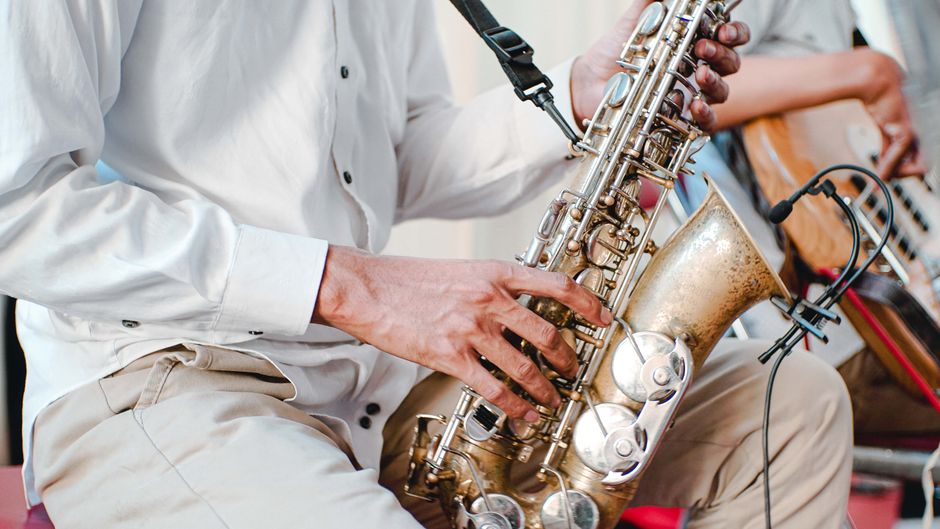
The saxophone, with its projection and metallic resonance, is often recorded with a ribbon microphone or a large-diaphragm condenser, seeking a sweet spot between the bell and the upper keys. A ribbon microphone about 20-30 cm (8-12 inches) from the bell can offer a warm and robust sound, while a condenser at a similar distance but more centered on the instrument’s body can provide greater brightness and detail. Many jazz producers in the region have perfected these techniques, achieving iconic sounds.
Specific Miking Techniques for Wind Instruments
For brass instruments like the trumpet and trombone, high sound pressure is a primary consideration. A robust condenser microphone or even a high-quality dynamic, positioned off-axis from the bell (slightly off-center), helps mitigate volume peaks and smooth out aggressive transients, achieving a more balanced and less piercing sound. Distance is key; getting too close can result in a thin, lifeless sound, while greater distance allows the sound to develop and blend with the room’s ambience.
After recording, post-production processing refines and shapes the sound. Equalization (EQ) is fundamental for correcting resonances, adding clarity, or warmth. For example, a slight dip in the 2-4 kHz range can soften the harshness of some brass instruments, while a subtle boost in the 8-12 kHz range can add air to a flute. Compression is used to manage dynamics. Gentle compression with a low ratio (1.5:1 to 3:1) and a slow attack allows initial transients to pass, preserving naturalness, while a faster release can create a more “pumped” sound if a stylistic effect is desired.
Reverb and delay are essential for placing instruments in a virtual acoustic space. Convolution algorithms, which simulate real spaces, are preferable for achieving realistic integration of winds into a mix. Modern plugins like FabFilter Pro-R or Valhalla VintageVerb allow detailed manipulation of the reverb tail, pre-delay, and density, emulating everything from concert halls to more intimate environments.
Post-Production Processing and Trends in Immersive Audio
Current trends in music production integrate these classic techniques with innovative tools. Immersive mixing, for formats like Dolby Atmos, requires careful consideration of each wind instrument’s spatialization, moving them in a 3D environment for an enveloping listening experience. Platforms like Spotify and Apple Music are driving these formats, and audio engineers need to adapt their stereo processing approach to multi-channel configurations. Likewise, the emergence of AI-powered plugins, such as those that suggest EQ or compression settings based on instrument type, complements the human ear, streamlining workflows without replacing artistic judgment. Continuous education and experimentation with these new technologies, while keeping acoustic fundamentals in mind, are crucial for producers in today’s scene.
Recording wind instruments, by combining respect for tradition with the adoption of technological innovations, allows producers to create rich and authentic soundscapes. Proper microphone selection, strategic placement, consideration of the acoustic environment, and judicious post-production processing are pillars for capturing the essence of these instruments. By integrating these classic methodologies with the possibilities offered by digital tools and trends like immersive audio, engineers’ ability to generate wind recordings that resonate with clarity and depth in the contemporary musical landscape is strengthened. Constant practice and study of each instrument’s acoustic properties are the path to excellence in this field.
Related Posts
The Evolution of Logic Pro: From MIDI Sequencer to Comprehensive Digital Audio Workstation
An analysis of Logic Pro's development, its integration into the Apple ecosystem, and key innovations in music production.

Tape Saturation: Acoustic Principles, Creative Applications, and Digital Emulation
Explore the fundamentals, creative applications, and digital evolution of tape saturation to enrich your mixes with warmth and cohesion.

Mastering for Multiversal Distribution: Optimizing Loudness and Immersive Formats
Technical analysis of modern mastering: LUFS, True Peak, spatial audio, and AI tools for digital distribution.

Vocal Double Tracking: Principles, Applications, and Sound Optimization in Music Production
Technical analysis of vocal double tracking: enhancing fullness, density, and presence in modern and immersive mixes.