Acoustics and Psychoacoustics in Music Podcasts: Optimizing Listener Experience and Sound Fidelity
Technical analysis of music podcast production, from pre-production to distribution, focusing on audio quality.
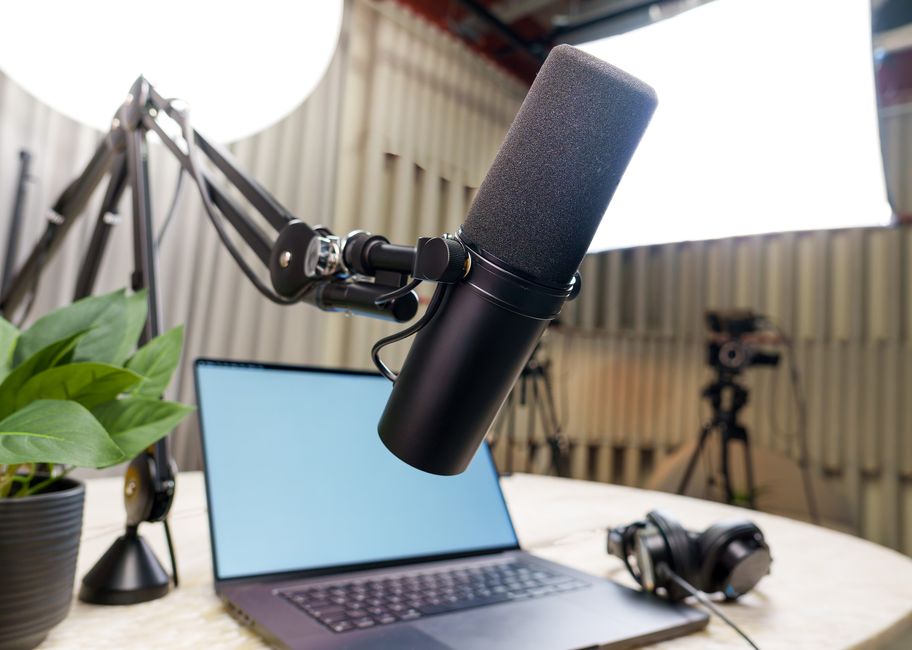
Pre-production and Sound Capture: High-Fidelity Fundamentals
The production of music podcasts presents unique challenges and opportunities that go beyond mere voice recording. The harmonious integration of spoken segments with compositions, sound effects, and instrumental arrangements demands a meticulous technical approach and a deep understanding of acoustics and psychoacoustics. A high-fidelity music podcast not only captures the audience’s attention but also establishes a standard of professionalism that distinguishes the creator in a competitive market. Audio quality stands as the fundamental pillar for generating an immersive and engaging listening experience, essential for retaining listeners and enhancing content reach.
The pre-production and recording phase for musical elements constitutes the critical initial stage. To achieve sonic excellence, the appropriate selection of microphones and their strategic positioning are paramount. For instance, when recording acoustic instruments, combining a large-diaphragm condenser microphone to capture harmonic richness with a dynamic microphone for attack and presence can enrich the sonic palette. The acoustic conditioning of the recording space, minimizing unwanted reverberations and external noise, directly impacts the clarity and definition of the sound material. Planning musical arrangements and their interaction with the speech is vital; considering instrumental density and dynamics to avoid overlap with the main voice optimizes intelligibility. The use of high-resolution audio interfaces, such as those offered by Universal Audio, guarantees precise analog-to-digital conversion, preserving signal integrity from source to post-production. It is important to document each take, using consistent file naming conventions, to facilitate the subsequent workflow.
Audio Processing: Mixing and Post-production for Music Podcasts
Mixing and post-production of musical audio require considerable technical expertise. Equalization is applied to sculpt the timbre of each instrument, removing problematic frequencies and enhancing those that contribute character. Compression, on the other hand, manages dynamics, lending cohesion and presence to tracks without sacrificing naturalness. The application of effects such as reverb and delay helps create a sense of space and depth, but must be used judiciously to avoid a muddy sound. Processing tools like iZotope plugins, which employ artificial intelligence to assist in spectral balancing and dynamic adjustment tasks, represent a significant innovation, allowing producers to optimize their mixes more efficiently. The integration of voice and music is perfected through sidechain compression, where the music is subtly attenuated when the voice is present, ensuring the spoken message maintains its prominence without the musical background losing its energy. This delicate balance is the key to a successful music podcast.
Finally, distribution and optimization for streaming platforms is a crucial step. Loudness standards, such as EBU R128, which defines LUFS (Loudness Units Full Scale) levels, are vital to ensure the podcast sounds consistent across different platforms like Spotify or Apple Podcasts. An integrated loudness level of -16 LUFS is commonly recommended for podcasts, avoiding excessive compression that the platform might automatically apply. Including complete and accurate metadata, such as music genre tags and detailed descriptions, improves visibility and discoverability. Current trends indicate a growing interest in immersive audio formats, like Dolby Atmos, which offer a three-dimensional experience. Although Atmos production for music podcasts is still in its early stages, platforms like Apple Music already support this format, signaling a future direction for sound content creation. Implementing monetization strategies and engaging with the audience through platforms like Bandcamp can boost the project’s reach and sustainability. The continuous technological evolution in digital audio necessitates constant updating of knowledge and tools to maintain relevance and quality in music podcast production.
Optimization and Distribution: Loudness Standards and Streaming Platforms
In summary, producing high-quality music podcasts demands a fusion of technical skill, artistic vision, and an up-to-date understanding of industry innovations. From meticulous audio capture to optimization for global distribution, each stage directly impacts the listener’s experience. Adopting best practices and staying abreast of emerging tools not only elevates production standards but also ensures that musical content resonates with current and future audiences, solidifying the creator’s presence in the dynamic podcasting ecosystem. Investing in sound quality always translates into greater impact and a deeper connection with the public.
Related Posts

Power Station: Acoustic Design and Recording Legacy That Shaped the Music Industry
Exploring Power Station's acoustic and technological design impact on iconic recordings and contemporary music production.

Acoustic Capture of Crystal and Tibetan Singing Bowls: Miking, Processing, and Spatial Audio
Research into optimal miking and digital processing techniques for preserving the sonic integrity of crystal and Tibetan singing bowls.

Wind Instrument Acoustics and Microphony: Detailed Capture of Harmonics and Transients
Technical analysis of microphone selection, miking techniques, and processing for wind instruments in music productions.

FL Studio: Architecture, Synthesis, and Workflow in Contemporary Music Production
An analysis of FL Studio's capabilities in composition, sound design, mixing, and mastering for modern music production.