API's Sonic Legacy: Equalizer Design and Its Influence on Modern Production
Explore the evolution and impact of API equalizers, from their analog origins to their relevance in today's hybrid studios.
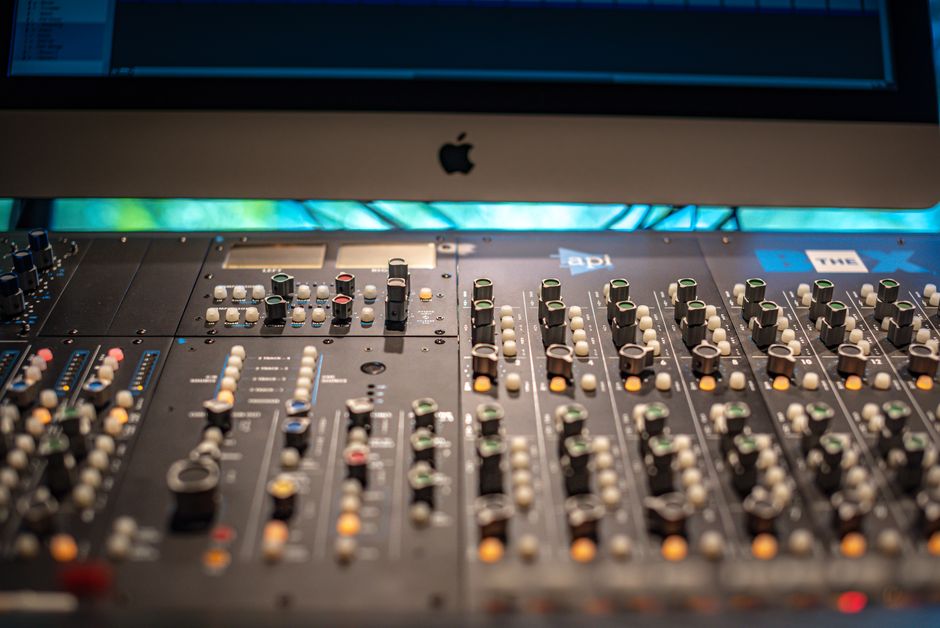
Origins and Design Philosophy of API Audio
Audio engineering has been shaped by timeless innovations. Among these, the equalizers from Automated Processes Inc. (API) stand as fundamental pillars in the shaping of modern sound. Since their inception in the 1960s, these devices have imparted a distinctive sonic character to countless recordings, establishing a benchmark for quality and reliability. Their impact spans from classic studio consoles to current hybrid and digital setups, maintaining an enduring relevance in the workflows of producers and engineers worldwide.
The story of API began in 1968 with Saul Walker, who envisioned the creation of high-quality audio modules for mixing consoles. The heart of API’s design philosophy lies in the 2520 operational amplifier, a discrete component that contributes a particular sonic characteristic: a fast transient response and significant headroom capability. This design allowed API equalizers to process signals with exceptional transparency, while simultaneously adding a subtle harmonic coloration, highly prized for its musicality. Early equalizers, such as the legendary 550, offered fixed frequency points with a proportional bandwidth bell curve. This meant that as a frequency was boosted or cut, the bandwidth (Q) narrowed, creating a very particular and useful sonic effect for tone sculpting without sounding artificial. This feature became a hallmark, facilitating adjustments that sound organic and natural, even with pronounced boosts or cuts.
The Series 500 Modular Format: Flexibility and Quality
API’s introduction of the Series 500 format represented a revolution in studio design. This modular standard allowed engineers to configure custom racks with a variety of modules, including preamplifiers, compressors, and crucially, equalizers. The 550A, an evolution of the original 550, and the later 550B, with four bands of equalization and the ability to select peak or shelving frequencies, became indispensable tools. The 550 graphic equalizer, on the other hand, provided detailed control over ten frequency bands, ideal for problem-solving or creative sound shaping. The flexibility of the Series 500 enabled studios of all sizes to access API quality, democratizing access to high-end equipment and fostering experimentation in the signal chain. The persistence of this format to this day attests to its ingenuity and durability, remaining a preferred choice for many professionals seeking versatility and sonic performance.
In today’s music production landscape, API equalizers maintain their legendary status. While the original hardware remains highly sought after, digital emulations have expanded their reach. Companies like Universal Audio offer plugins that accurately replicate the sonic behavior of API equalizers, integrating them into digital workstations (DAWs) such as Pro Tools, Logic Pro, and Ableton Live. This allows producers to apply API’s characteristic ‘punch’ and clarity to their mixes without the need for expensive or complex physical equipment. The trend towards hybrid studios, which combine the best of analog hardware with software flexibility, has revitalized interest in the Series 500. Many engineers in Argentina and Latin America incorporate API modules into their racks, using their equalizers to process key mix elements like lead vocals, drums, or bass before the digital mixing stage.
Furthermore, the evolution of immersive audio and formats like Dolby Atmos has placed a new emphasis on spatial precision and the clarity of each sonic element. API equalizers, with their ability to define and separate instruments, are valuable tools in this context, helping to create three-dimensional soundscapes where each component has its place. Integration with new technologies, such as audio interfaces with internal DSP processing or advanced MIDI controllers, demonstrates how API’s heritage adapts and thrives in the digital age, continuing its influence on contemporary music creation.
To delve deeper into the technical characteristics of these modules, one can consult the official API Audio documentation: https://apiaudio.com/ or review technical analyses in specialized publications like Sound on Sound: https://www.soundonsound.com/.
Legacy and Adaptation of API Equalizers in Modern Production
The trajectory of API equalizers is a testament to ingenious design and enduring sonic quality. From their beginnings with the 2520 op-amp to their presence in today’s most advanced studios, these devices have provided engineers and producers with tools to sculpt sound with unparalleled musicality. Their legacy endures not only in the original hardware and classic consoles but also through accurate digital emulations and their continued relevance in hybrid production methodologies. The essence of API, with its agile transient response and harmonic character, ensures that its impact on shaping musical sound will remain fundamental for decades to come.
Related Posts

Temporal Audio Modulation: Historical Evolution and Technical Application of Chorus and Flanger
Trace the evolution of chorus and flanger, from analog techniques to digital algorithms, and their impact on music production.

Spectral Coherence Analysis: Optimizing Phase and Spaciality in Audio Mixes
Explore how spectral coherence analysis refines phase relationships and stereo imaging for enhanced sonic clarity and impact.

Environmental Sound Architectures: Timbral and Spatial Design with Digital Synthesis
Exploring granular synthesis, convolution reverb, and AI for immersive, evolving auditory landscapes.

Reason's Modular Architecture: Sound Design and Workflow in Contemporary Music Production
Exploring Reason's virtual rack, its modular flexibility, and VST/AU integration for advanced music creation and mixing.