Optimizing Acoustic Monitoring Systems for Professional Audio Engineering
Design principles, component selection, and calibration for critical listening environments in music production.
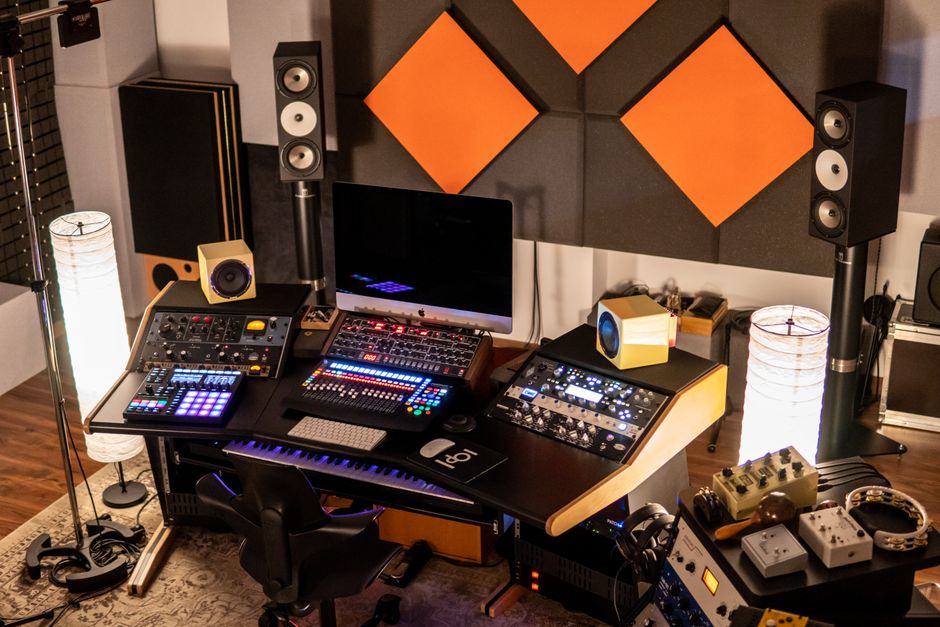
Acoustic Setup of Monitoring Rooms
Accuracy in sound reproduction is a fundamental pillar in contemporary music production. In an environment where auditory quality demands are intensifying, and consumption formats vary drastically from high-fidelity systems to mobile devices, an audio engineer’s ability to make informed decisions directly depends on the reliability of their listening system. This text addresses the essential elements for configuring a monitoring environment that enables critical perception and objective judgment of mixing and mastering.
A superior monitoring system begins with the room. The interaction between loudspeakers and the physical space significantly impacts frequency response and stereo imaging. It is crucial to mitigate primary reflections and standing waves that can mask details or generate misleading resonances. Strategic placement of absorption panels, diffusers, and bass traps is indispensable. Considering the optimal listening position, forming an equilateral triangle with the monitors, ensures phase-temporal coherence and accurate stereo imaging. Acoustic measurement of the enclosure using specialized software, such as REW (Room EQ Wizard) or commercial solutions like Sonarworks SoundID Reference (Sonarworks), allows for the identification of anomalies and the application of specific corrections to linearize the room’s response. These technological advancements simplify a previously complex process, enabling studios of any size, even those in Buenos Aires or Córdoba, to achieve greater fidelity.
Selection and Components of Nearfield Monitoring Systems
The choice of studio monitors is a determining factor. Nearfield models are prevalent in most studios due to their ability to minimize the impact of room acoustics when working at close distances. Aspects such as flat frequency response, transient handling capability, and minimal total harmonic distortion are indicators of quality. Amplification must be compatible with the impedance and sensitivity of the loudspeakers, preferably with active monitors that integrate their own optimized amplifiers. The digital-to-analog converter (DAC) plays a critical role in the chain, transforming the digital signal from the DAW into a high-fidelity analog one. A superior quality DAC ensures transparent conversion, preserving sonic dynamics and detail. Brands like Universal Audio (Universal Audio) or RME offer interfaces with reference DACs that are implemented in countless professional productions.
Once the components are installed, calibration is mandatory to ensure consistency. Establishing a reference Sound Pressure Level (SPL), commonly 83 dB SPL C-weighted at the listening position for pink noise, standardizes volume perception and reduces listening fatigue. Verifying the phase between monitors is vital for a solid stereo image; misalignment can degrade spatial coherence. Audio analysis tools, integrated into DAWs or as dedicated plugins, allow for detailed inspection of spectral balance, phase correlation, and peak metering. The use of loudness meters compliant with standards like LUFS (Loudness Units Full Scale) is fundamental for preparing mixes for streaming platforms like Spotify (Spotify) or Bandcamp (Bandcamp), which apply volume normalization. This directly influences how the end audience, from a listener in La Plata to one in Mendoza, will perceive the work.
Calibration and Verification of the Monitoring Chain
Technological evolution constantly transforms monitoring methodologies. Immersive audio production, especially with formats like Dolby Atmos (Dolby Atmos), demands multichannel monitoring systems or advanced binaural headphone monitoring solutions. Room simulation or headphone monitoring plugins, such as Waves Abbey Road Studio 3 or dSONIQ Realphones, allow emulation of various listening environments, facilitating mix verification under varied conditions. Artificial intelligence (AI) is also beginning to play a role, with tools that assist in room optimization or predictive spectral analysis, suggesting adjustments for greater clarity. Remote collaborative production, facilitated by platforms like Audiomovers Listento (Audiomovers), makes monitoring a shared challenge, requiring precise synchronization and impeccable audio transmission quality. The ability to evaluate a mix on diverse devices, from high-end headphones to common Bluetooth speakers, is more important today than ever to ensure the production’s adaptability to the vast range of user listening experiences.
Building a reliable monitoring system is an iterative process that demands attention to detail and a commitment to continuous improvement. By understanding acoustic principles, selecting appropriate components, implementing rigorous calibration, and adapting to technological innovations, engineers and producers can establish a listening environment that enables them to make critical decisions with confidence. This translates into higher quality sound productions and a superior listening experience for the general public.
Related Posts
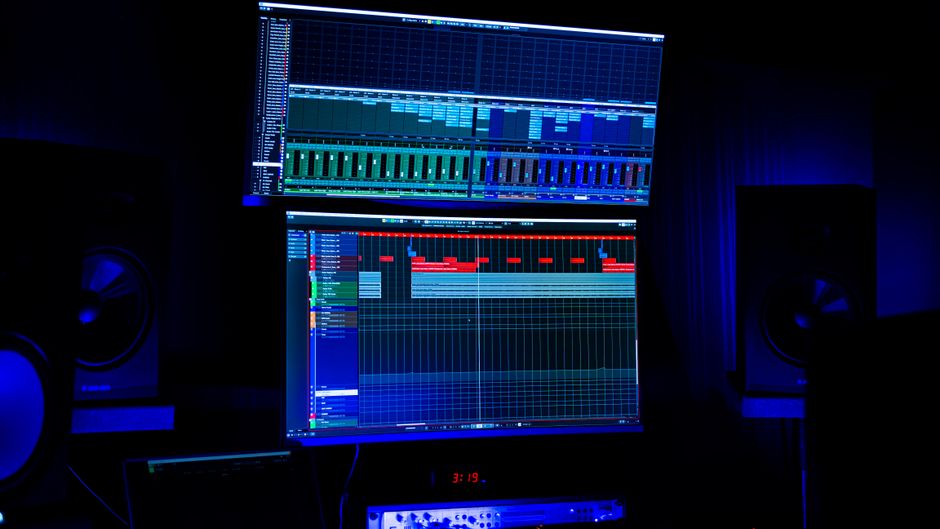
Hybrid Architecture and Object Editing in Samplitude: Granular Control for Advanced Audio Production
Technical analysis of Samplitude's 64-bit architecture and Object Editing for precise audio manipulation and efficient workflows.

Acoustic Fundamentals for Home Studios: Absorption, Reflection, and Diffusion for Better Sound Quality
Optimize your music production environment. Understand sound's interaction with space for accurate recordings and mixes.

Spatial Audio and Dynamic Processing: Sonic Cohesion in Mixed Reality Environments
Explore the integration of real and virtual audio via spatialization, contextual EQ, and AI for immersive MR experiences.

Advanced Sampling: Granular Manipulation, AI, and Immersive Audio in Contemporary Sound Design
Exploring advanced sampling methodologies: granular synthesis, AI, spatial audio, and remote collaboration define current music production.