Rupert Neve's Legacy: Preamplifier Design and Its Influence on Modern Sound Production
An analysis of the sonic impact of Neve's preamp designs, from their analog origins to contemporary digital emulations.
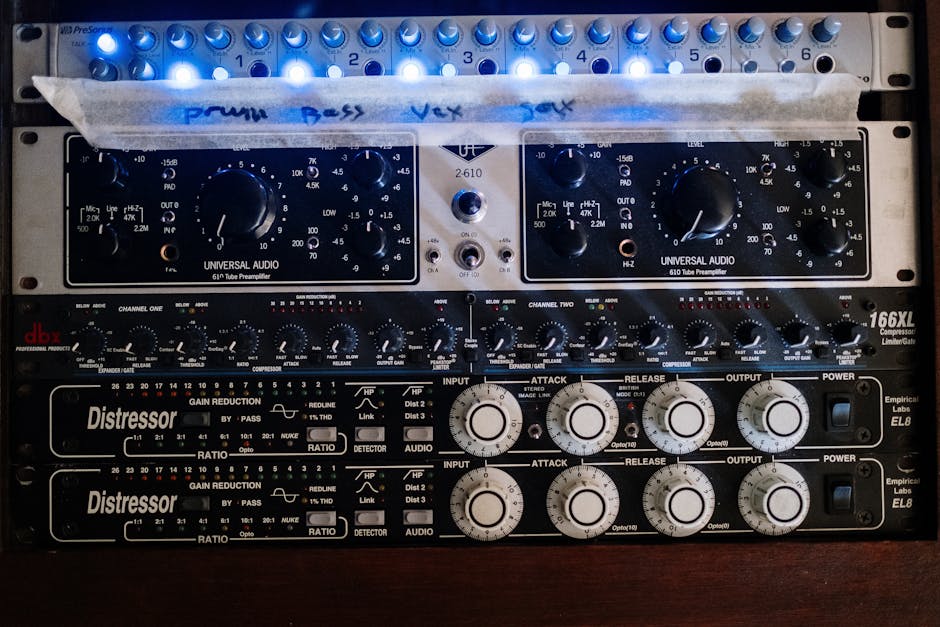
Rupert Neve’s Design Philosophy and Foundational Components
Rupert Neve’s journey in audio engineering represents a cornerstone in shaping the sound of iconic recordings. From his early days, Neve aimed to build equipment that not only processed audio signals but also enriched them with a distinctive tonal quality. This pursuit of sonic excellence laid the groundwork for the development of preamplifiers that, to this day, are revered by professionals worldwide, from Buenos Aires to the major studios of Los Angeles.
Neve’s foundational period was marked by an unwavering philosophy: to utilize the highest quality components and robust designs. Rupert Neve, with a clear vision, implemented custom input and output transformers and discrete Class A circuits. These elements were not mere technical specifications; they were the essence of a characteristic sound – warm, full-bodied, and with a remarkable ability to handle transients. The early designs, such as those based on germanium and early transistor implementations, already foreshadowed the sonic signature that would define the brand. Precision in manufacturing and attention to detail ensured exceptional reliability, a crucial aspect in the demanding environment of professional recording studios. The integration of these principles resulted in a standard of performance that few companies could match.
Landmark Models: Neve 1073 and 1081 in the Industry
Neve’s consolidation in the industry materialized with the introduction of legendary models like the 1073 and 1081. The Neve 1073 preamplifier, introduced in 1970, quickly became a benchmark. Its Class A design, featuring a three-band inductor-based equalizer and high-pass filters, offered a desirable harmonic coloration and unparalleled musicality. The 1073’s ability to add weight and clarity to any sound source made it indispensable for vocals, drums, and guitars. On the other hand, the Neve 1081, while sharing the heritage of quality, presented a Class AB design and a more versatile four-band equalizer section, providing greater flexibility and a slightly faster transient response. The presence of these modules in Neve consoles of the era, such as the 8078, defined the sound of countless rock, pop, and orchestral productions, solidifying their value as essential tools in the recording chain. Their influence endures, being constantly replicated and emulated.
Today, Neve’s legacy is manifested in both reissued hardware equipment and sophisticated digital emulations. Although the production of complete consoles with these original modules is limited, the market offers faithful reissues that maintain the sonic integrity of the classic designs. Furthermore, the digital era has made access to the Neve sound more widespread. Software developers like Universal Audio, Waves, and Plugin Alliance have created plugins that accurately model the behavior of the original analog circuits. These digital tools integrate seamlessly into DAW-based workflows, allowing modern producers and mixers to incorporate the Neve character without the need to invest in vintage hardware. This convergence of analog and digital is a key trend in contemporary music production, where hybrid studios combine the warmth of hardware preamplifiers with the flexibility and efficiency of digital processing. Artificial intelligence is also beginning to have an impact, with plugins that dynamically adapt their parameters, emulating the behavior of these legendary circuits to optimize the signal chain. Examples of use include remote recording, where engineers in different locations can collaborate using these emulations to maintain tonal consistency, or in immersive music mixing, where the subtle coloration of a Neve can add depth to sound layers for formats like Dolby Atmos (Dolby Laboratories).
Contemporary Legacy: Neve Hardware and Digital Emulations
The significance of Neve preamplifiers extends beyond mere signal amplification. They represent a standard of quality, a design philosophy, and an immeasurable contribution to the sonic landscape of recorded music. Their influence continues to shape the technical and artistic decisions of engineers and producers, ensuring that Neve’s distinctive character remains an unavoidable benchmark in the pursuit of auditory excellence.
Related Posts

Audio Crosstalk: Fundamentals, Measurement, and Mitigation for Sound Fidelity
Deep dive into crosstalk, its origins in electrical and acoustic systems, and measurement methods to preserve signal purity.

The Evolution of Digital Synthesis: From Academic Computers to Modern Music Production
Exploring the milestones in digital synthesis: from academic pioneers to the impact of DX7 and sampling on today's music.

Capturing Resonant Instruments: Miking, Processing, and Acoustics
Advanced techniques for recording exotic instruments: miking, EQ, and spatialization for immersive audio.

Sequoia DAW: Object-Based Editing and Spectral Processing for Professional Production
Analysis of Sequoia's architecture, highlighting its non-destructive editing and advanced mastering tools for immersive audio and broadcast.