The Transistor's Evolution: From Vacuum Tubes to Digital Audio and its Sonic Impact
The transistor revolutionized audio, from early germanium to modern MOSFETs, defining fidelity and music production.
The Origin of the Transistor: Germanium Innovation and its Early Applications
The transistor represents a fundamental milestone in the evolution of audio technology. Its invention not only radically transformed electronics but also redefined how sound is captured, processed, and reproduced. Before its advent, audio equipment relied exclusively on vacuum tubes, which were bulky, fragile, and high-energy consuming components. This shift marked the beginning of an era of unprecedented miniaturization, efficiency, and sonic fidelity, impacting everything from domestic hi-fi systems to the complex studio equipment used by producers and engineers today.
The Birth of an Innovation: Germanium Transistors
On December 16, 1947, at Bell Laboratories, John Bardeen, Walter Brattain, and William Shockley succeeded in developing the first point-contact transistor. This germanium-based device was a diminutive alternative to vacuum tubes, capable of amplifying and switching electronic signals with greater efficiency. Initially, its application in audio was limited due to manufacturing and stability challenges. However, its potential was undeniable. The first solid-state amplifiers began to emerge in the late 1950s, offering a more robust and lower-maintenance alternative to tube designs. Initial adoption focused on portable radios and military equipment, where size and durability were critical. Although the sound of early germanium transistors was often perceived as less “warm” than that of vacuum tubes, their ability to operate at low voltages and dissipate less heat laid the groundwork for the future of audio. For a deeper dive into the history of its invention, you can consult the IEEE archives.
The Transition to Silicon: Democratizing Hi-Fi and Studio Equipment
The Silicon Era and Mass Hi-Fidelity
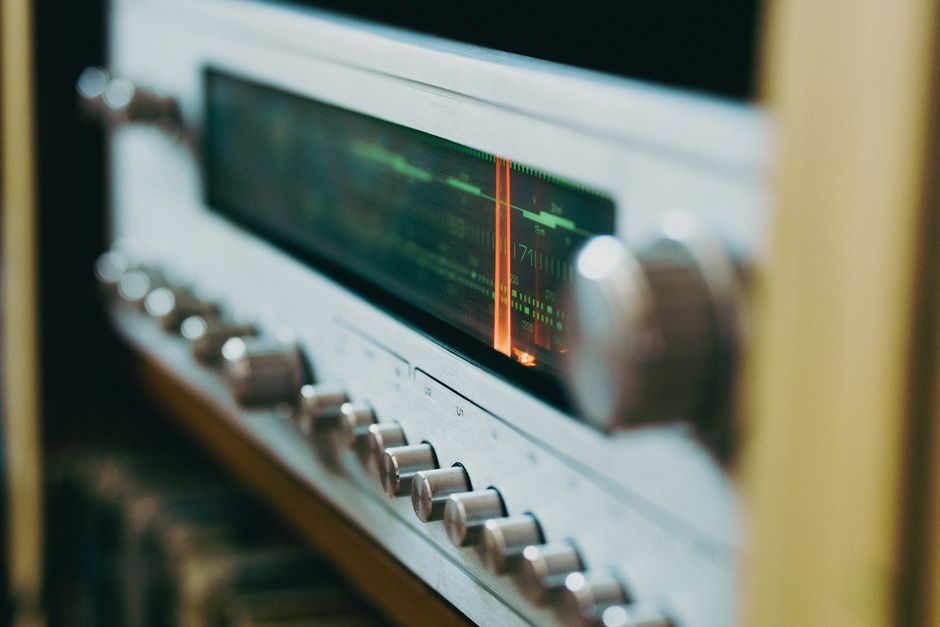
The 1960s witnessed the mass adoption of the transistor, largely thanks to the invention of the silicon bipolar junction transistor (BJT). Silicon, being more abundant and easier to purify than germanium, allowed for large-scale production and the creation of more stable and powerful devices. This advancement was crucial for the high-fidelity (hi-fi) revolution. Solid-state amplifiers offered higher output power, lower harmonic distortion, and a flatter frequency response compared to their vacuum tube predecessors. Brands like Pioneer, Sansui, and Marantz led the market with receivers and amplifiers that democratized access to exceptional sound quality in homes. In the professional realm, transistors enabled the development of compact and reliable mixing consoles, low-noise microphone preamplifiers, and more versatile studio effects. The ability to design integrated circuits (ICs) with multiple transistors on a single chip opened the doors to the complexity and functionality we see in modern audio equipment. Contemporary gear like Universal Audio preamplifiers, which blend classic designs with solid-state technology, exemplify this evolution.
Transistors in Modern Audio: From Analog to Digitalization
Today, the transistor remains the fundamental component of almost all audio electronics, even in the digital age. Class D amplifiers, for instance, employ high-speed switching metal-oxide-semiconductor field-effect transistors (MOSFETs) to achieve superior energy efficiency, ideal for PA systems and active monitors. Microphone preamplifiers and audio interfaces utilize low-signal transistors (such as JFETs or BJTs) in critical stages to ensure minimal coloration and excellent noise margins. Even the digital signal processors (DSPs) within advanced DAWs and plugins rely on millions of transistors in microchips to perform complex real-time calculations. The coexistence of vacuum tube and solid-state technologies in contemporary audio demonstrates the transistor’s versatility. Many equipment designers aim to combine the desirable characteristics of both worlds, using transistors for stability and low noise while tubes contribute specific harmonic coloration. This integration allows sound engineers in Argentina and across Latin America to access a diverse sonic palette for their productions. Specialized magazines like Sound on Sound offer detailed analyses of how different transistor designs influence the sonic character of modern equipment.
The Transistor in Contemporary Audio: From Class D Amplification to DSPs
From its humble beginnings at Bell Labs to its omnipresence in every modern audio device, the transistor has irreversibly shaped the industry. Its continuous evolution, from early germanium devices to the advanced MOSFETs used in Class D amplification, underscores its irreplaceable role. It has enabled the creation of more powerful, compact, and energy-efficient equipment, facilitating the democratization of high-fidelity sound and music production. Understanding the history and operating principles of this essential component offers valuable insight into the development of sound and electronics, remaining relevant for any audio professional or enthusiast seeking to optimize their setups and workflows. Innovation around the transistor continues, adapting to the demands of an increasingly digital and connected world, maintaining its legacy as the silent engine of the sonic revolution.
Related Posts

Vocal Processing and Spatialization: Technical Optimization in Narrative Podcasts
Technical analysis of EQ, compression, and effects for immersive and clear narrative podcast mixes.

AMS Innovations: Shaping Digital Audio Processing in the Music Industry
AMS's legacy in digital audio processing and its enduring influence on modern music production.

Electric Guitar Capture: Mic'd Amp vs. Direct Injection (DI)
Technical comparison of mic'd amp and DI guitar recording, optimizing texture and sonic flexibility.

Unleashing the Roar: Mastering the Art of Live Rock Performance, Guasones Style
Explore the magic behind Guasones' electrifying live shows, from technical mastery to audience connection, offering insights for Latin American musicians.