Audio Processing in Contemporary Classical Music: Recording, Editing, and Mastering Techniques
Innovations in sound capture and manipulation for today's classical music, from microphones to AI.
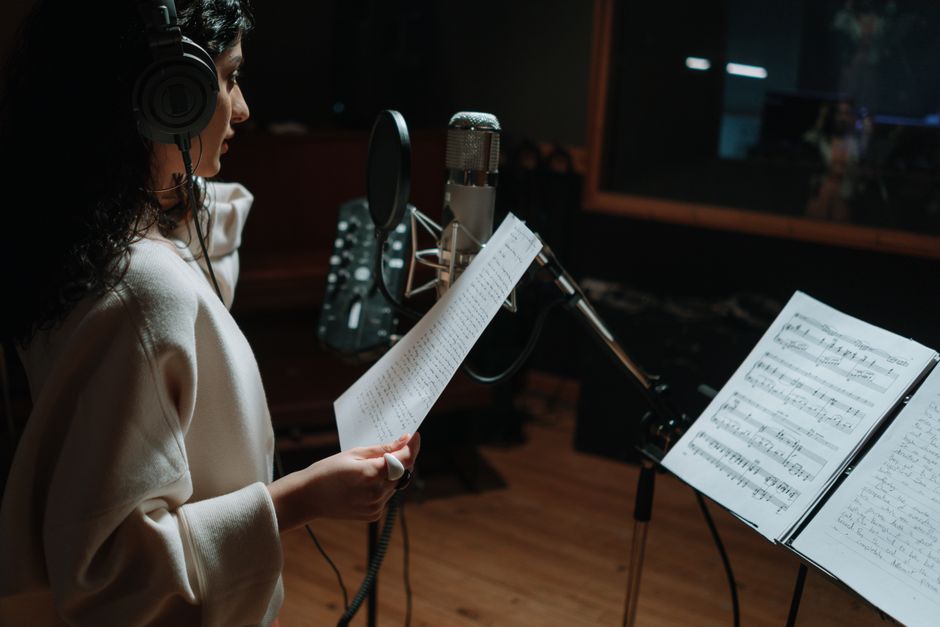
Microphoning and Editing Techniques in Digital Environments
The production of contemporary classical music represents a fascinating intersection of tradition and sonic innovation, where digital tools and cutting-edge techniques are applied to a repertoire that challenges harmonic, rhythmic, and timbral conventions.
Evolution of Recording and Editing Techniques
Capturing the complexity of modern orchestral or chamber ensembles demands a deep understanding of acoustics and microphoning. Microphone configurations, ranging from traditional stereo setups (ORTF, NOS) to multi-channel approaches for immersive formats like Dolby Atmos, are crucial. Precise placement allows for the capture of the inherent spatiality of the concert hall, a vital element in academic music. Editing in DAW (Digital Audio Workstation) software such as Pro Tools, Logic Pro X, or Cubase, allows not only for subtle error correction but also for shaping the final sonic architecture. Phase manipulation, peak and RMS gain management, and high-fidelity effect application are standard practices. Advanced reverb plugins, such as those that emulate specific acoustic spaces or enable the creation of entirely synthetic ambiances, open up new expressive possibilities. The current trend includes the use of artificial intelligence algorithms for tasks like source separation, facilitating the editing of complex recordings or the restoration of archival material. Platforms like Splice, while more associated with other genres, are beginning to incorporate orchestral material, demonstrating the permeability of production ecosystems.
Dynamics and Timbre Processing in Contemporary Music
Dynamic and Timbral Processing in the 21st Century
The treatment of dynamics in contemporary classical music often moves away from aggressive compression, seeking to preserve the natural response of instruments and the composer’s intent. However, subtle use of compressors can be essential for balancing levels in passages with significant dynamic contrasts or for unifying the sound of entire sections. Techniques like multiband compression can be applied to control specific frequency ranges without affecting the overall response. Regarding timbre, equalization is used to define the clarity of each instrument within the ensemble, ensuring that complex textures do not become muddy. The use of high-precision parametric EQs and resonant filters allows for detailed sculpting of the sonic spectrum. Subtle saturation can add warmth or presence to instruments that, by their nature, tend to sound thin in a recording. Psychoacoustic research informs how to optimize the perception of spatiality and detail, even in stereo listening formats. Advances in emulation of classic hardware, such as preamplifiers and consoles from Neve or SSL, offer high-quality timbral coloration options while respecting the aesthetic of academic music. The development of plugins that faithfully model the behavior of analog equipment, like those available from Universal Audio (UAD), are valuable tools in this context.
Innovations in Creation and Distribution
Innovations in Composition and Digital Music Distribution
Contemporary composition often benefits from algorithmic tools and visual programming environments like Max/MSP or Pure Data, enabling the creation of sounds and musical structures that would be impossible to generate otherwise. These environments facilitate experimentation with granular synthesis, physical modeling, and real-time signal processing. Remote production and online collaboration are increasingly relevant, with platforms allowing project sharing and real-time collaboration, overcoming geographical barriers. This is particularly useful for distributed ensembles or for working with composers located in different places. The distribution of contemporary classical music has expanded beyond traditional channels. Streaming platforms like Spotify, Apple Music, and especially Bandcamp, allow independent artists and labels to reach global audiences. Audio quality on these platforms continues to improve, with the growing adoption of high-resolution and immersive audio formats. The integration of detailed metadata and the curation of specialized playlists are key strategies for visibility. The need for masters optimized for different distribution platforms is an important technical consideration in the final production stage.
Additional Technical and Acoustic Considerations
The choice of recording space is fundamental. A room with controlled natural reverberation and a balanced frequency response is ideal. The room’s acoustics directly influence the quality of the captured sound and the perception of spatiality. The use of absorption panels and diffusers may be necessary to optimize the listening or recording environment. Accurate monitoring is indispensable. Well-calibrated studio speaker systems, such as those from Genelec or Neumann, offering a flat frequency response and detailed stereo imaging, enable reliable mixing and mastering decisions. The acoustic treatment of the control room is as important as the choice of monitors. Proper cable management and background noise minimization are basic but crucial aspects for obtaining clean recordings. Detailed documentation of each session, including microphone configurations, gain settings, and plugins used, facilitates project reproducibility and long-term maintenance. Understanding professional audio standards, such as reference levels of -18 dBFS or -20 dBFS for recording, and peak levels for mastering, ensures compatibility with the production and distribution chain.
Related Posts

Wavetable Synthesis: Principles, Applications, and Evolution in Modern Sound Design
A deep dive into wavetable synthesis, from its foundational concepts to contemporary advancements in sonic texture creation.
Vinyl Mastering Principles: Adapting Audio to Physical Groove Limitations
Vinyl sound engineering: bass control, dynamics, and phase for faithful playback. Cutting and quality considerations.
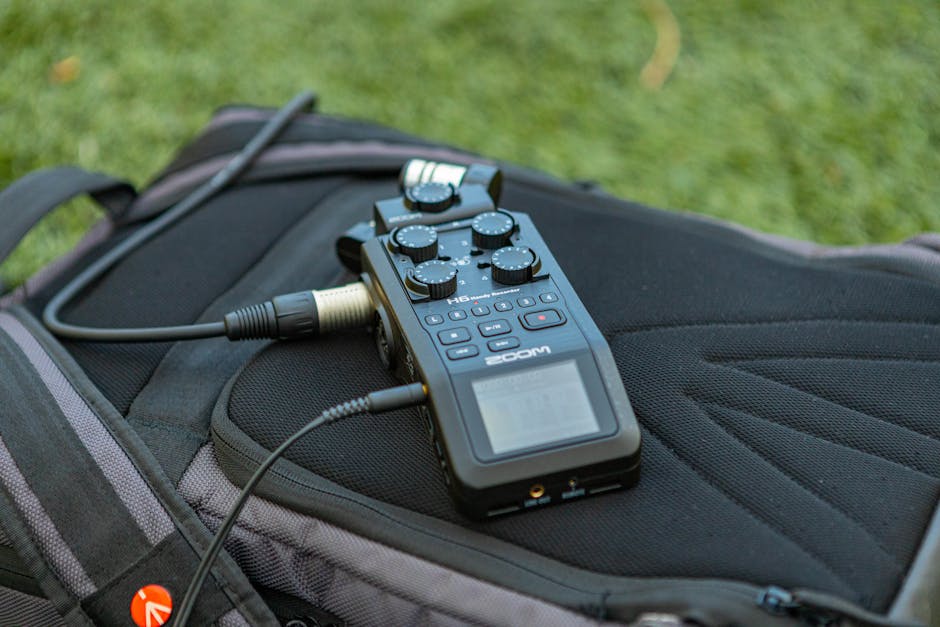
Field Recording for Music: Principles of Capture, Processing, and Technological Innovation
Integrating ambient sounds into music: recording techniques, processing, and technological advances for innovative compositions.

Chase Bliss Audio: Analog-Digital Synergy in Effect Pedal Design
An exploration of Chase Bliss Audio's hybrid architecture, merging analog circuits with digital control for advanced sonic expression.