Pro Tools: Architecture, Advanced Editing, and Immersive Workflows in Contemporary Music Production
Analysis of Pro Tools' capabilities for recording, editing, mixing, Dolby Atmos, and remote collaboration in the music industry.
Initial Setup and Session Management in Pro Tools
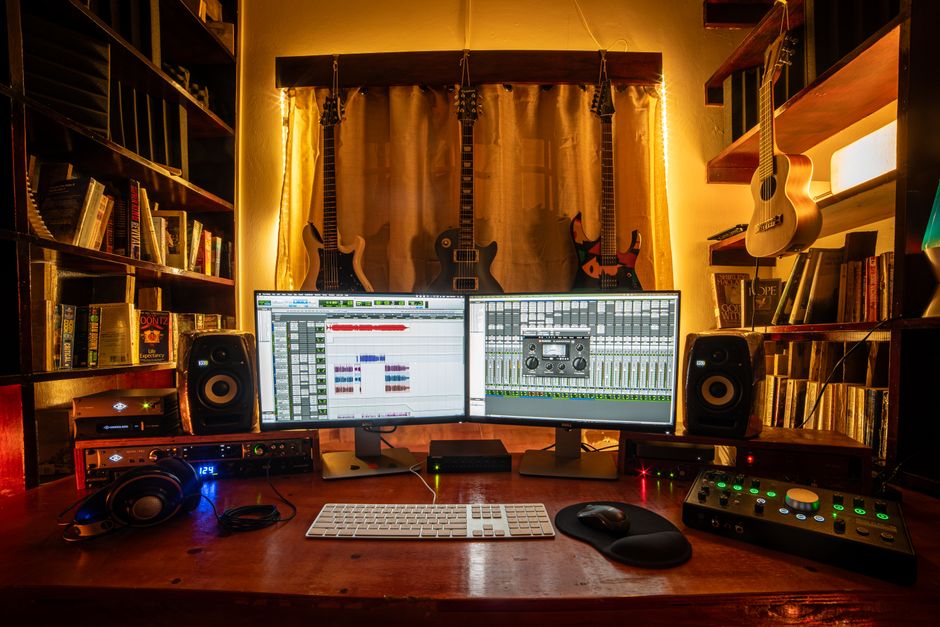
Pro Tools stands as a consolidated standard in the global music production industry. Its robust architecture and integrated toolset position it as a fundamental platform for recording, editing, mixing, and mastering. The evolution of this digital audio workstation (DAW) has enabled engineers and producers to develop highly efficient workflows, continuously adapting to the technological and creative demands of the sector. This analysis examines the essential capabilities and advanced applications of Pro Tools in contemporary production.
The establishment of a session in Pro Tools begins with configuring the audio interface and assigning inputs and outputs (I/O). Correct calibration of input levels is crucial for capturing audio with maximum fidelity and adequate headroom, preventing digital clipping. Track management, whether audio, MIDI, or auxiliary, requires methodical organization to facilitate navigation and subsequent editing. The use of preset or custom templates can significantly streamline the process, especially for recurring projects like band recordings or jingle productions. Proper signaling and bus routing to subgroups or effects sends are fundamental practices for maintaining the project’s structural clarity. For example, grouping all drum tracks into a stereo bus allows for joint dynamic processing and equalization, optimizing system resources.
Editing and Automation Techniques for Precise Mixing
In the editing phase, Pro Tools offers precise functionalities that allow for detailed manipulation of recordings. Tools like Elastic Audio facilitate time and pitch correction without altering audio quality, a significant advantage for rhythmic alignment of instruments or vocal tuning. Beat Detective, on the other hand, is invaluable for quantizing live drum or percussion performances, achieving precise synchronization with the project’s tempo. Automation of parameters such as volume, panning, equalization, and effects sends is a cornerstone of mixing, enabling the creation of dynamic and spatial movements that enrich the sonic narrative. The strategic application of signal processing plugins, such as compressors, parametric equalizers, and modulation effects, contributes to sculpting the sound of each element. For instance, a sidechain compressor on the bass, triggered by the kick drum, generates rhythmic cohesion that defines the punch in many modern genres.
Current trends in music production drive the need for tools that support immersive formats and remote collaboration. Pro Tools has responded to these demands by integrating workflows for Dolby Atmos, allowing producers to create mixes in 7.1.2 or higher configurations, essential for consumption on streaming platforms like Apple Music or Tidal. The capacity for cloud-based collaborative work, through Avid Cloud Collaboration, enables geographically distributed musicians and producers to share and edit projects in real-time, optimizing production times. Additionally, compatibility with artificial intelligence (AI) plugins is transforming aspects such as automatic mastering or mixing assistance, offering innovative solutions for repetitive or complex tasks. Tools like iZotope Ozone or Soundtheory Gullfoss exemplify this trend, providing spectral analysis and dynamic adjustments with remarkable efficiency. Knowledge of these advancements allows audio professionals to remain competitive and broaden their creative horizons.
Immersive Workflows and Remote Collaboration in Pro Tools
In summary, Pro Tools remains a pillar in professional music production, offering a complete ecosystem for sound creation. Its adaptability to advanced editing techniques, its compatibility with immersive formats like Dolby Atmos (more information at Avid Pro Tools), and its openness to remote collaboration and AI integration reaffirm its central position. For producers and audio engineers, understanding and applying these functionalities is fundamental to addressing the challenges and opportunities of the contemporary music landscape, from recording a tango in Buenos Aires to an electronic production destined for global platforms like Spotify for Artists. Constant updates and continuous learning of its features ensure that musical projects reach their maximum technical and artistic potential.
Related Posts

The Sonic Legacy of Yamaha NS-10: Design, Adoption, and Mix Translation in Professional Studios
An analysis of the Yamaha NS-10 monitor's impact on music production, its unique design, and the enduring principles of its mixing approach.
Digital Performer: Evolving MIDI Sequencing to Immersive Audio Production
A technical analysis of Digital Performer's journey, from its MIDI origins to immersive audio and technological adaptation.
Managing Signal Bleed in Live Recordings: Techniques and Equipment
Strategies and equipment to mitigate signal bleed in live recordings, optimizing clarity and post-production.

Evolution of Multitrack Recording: From Analog Tape to DAWs and AI
Analyzes the historical, technical, and creative development of multitrack recording, from Les Paul to digital innovations and AI.