Environmental Sound Architectures: Timbral and Spatial Design with Digital Synthesis
Exploring granular synthesis, convolution reverb, and AI for immersive, evolving auditory landscapes.

Designing Fundamental Sound Textures and Drones
Ambient music production transcends mere sound creation to shape auditory landscapes that invite introspection and immersion. This genre, characterized by its focus on texture, atmosphere, and subtle evolution, has experienced a revitalization in the digital age. Since its origins, the pursuit has been to generate acoustic spaces where time seems to dilate, and current technology offers unprecedented tools for this purpose. Continuous innovation in software and hardware redefines the boundaries of possibility, enabling producers worldwide to craft increasingly sophisticated auditory experiences. The production of ambient music is a field of continuous experimentation and refinement.
The construction of an enveloping sound base is the cornerstone of any ambient piece. This often involves designing ‘drones’ or sustained sounds that serve as a harmonic backdrop. Subtractive, additive, and granular synthesis reveal themselves as fundamental methods for sculpting these textures. For instance, using a digital synthesizer like the Korg Wavestate or plugins such as Xfer Serum, complex waveforms can be modulated, applying low-frequency filters to smooth harmonics and generate constant yet gradual movement. The layering of subtle textures, each with its own slow envelope cycle, contributes to timbral richness without oversaturating the spectrum. Implementing sound design techniques focused on the slow evolution of parameters like filter cutoff or detuning is crucial for maintaining interest without resorting to conventional melodic structures. Managing microtonalities and intentional detuning between layers can impart an ethereal and unique quality to the sound.
Spatial Processing and Auditory Immersion Techniques
Spatial dimension is a vital component in ambient music. Reverb, delay, and phase modulators are essential tools for expanding sound beyond its initial confines. Utilizing convolution reverb algorithms, such as those offered by Valhalla DSP or FabFilter Pro-R, allows for the emulation of real acoustic spaces or the creation of abstract environments with prolonged and dense decays. Chaining multiple delays with different synchronization times and feedback levels can build complex echoes that gradually dissolve. An effective technique is ‘shimmer reverb,’ which incorporates pitch shifting into the reverb tail to produce an upper octave, adding brightness and a sense of ethereal ascent. Strategic placement of elements within a wide stereo field, and even experimentation with immersive audio formats like Dolby Atmos or ambisonics, represents a current frontier for producers aiming to fully envelop the listener. Platforms like Bandcamp or SoundCloud already facilitate the distribution of high-fidelity auditory experiences, driving these innovations.
The contemporary production environment for ambient music relies heavily on Digital Audio Workstations (DAWs) like Ableton Live or Logic Pro X, which facilitate real-time manipulation and extensive automation. Virtual synthesizers and samplers have become the backbone of instrumentation. Plugins like Omnisphere by Spectrasonics offer a vast library of base sounds and deep synthesis capabilities. The integration of artificial intelligence (AI)-based tools for texture generation or melodic variation, such as those emerging on platforms like Splice, is redefining workflows. These tools can suggest subtle harmonic progressions or generate evolving atmospheres, freeing the creator to focus on the overall artistic direction. Furthermore, the use of advanced MIDI controllers, with custom mappings to effect and synthesizer parameters, enables more organic and expressive interaction with sound, fostering improvisation and the discovery of new sonic territories.
Contemporary Production Environment and Digital Tools
Unlike genres with defined rhythmic and melodic structures, ambient composition often centers on gradual evolution and the absence of traditional climactic points. The creation of a continuous flow, where changes are minimal yet significant, is prioritized. The use of long, asynchronous loops, along with slow automation of mix and effect parameters, builds a sonic narrative that unfolds over time. Techniques like ‘controlled randomization’ or algorithmic generation of MIDI events can introduce unpredictable yet coherent variations, maintaining the listener’s attention without resorting to obvious repetitions. Experimentation with field recordings and their subsequent granular or spectral processing adds a layer of realism and organic texture, anchoring the sound in the physical environment or transforming it into something entirely abstract. The goal is to induce a state of contemplation, where the music is both a background and an object of focused attention.
Ambient music production is a field of continuous experimentation and refinement. Current digital tools, combined with a deep understanding of acoustics and psychoacoustics, allow artists to craft immersive sonic worlds. Adapting new technologies, from AI to spatial audio formats, opens innovative pathways for creative expression. The challenge lies in maintaining the genre’s essence—atmosphere, texture, and subtle evolution—while leveraging technological capabilities to forge auditory experiences that resonate profoundly with the listener. The adaptation of new technologies, from AI to spatial audio formats, opens innovative pathways for creative expression.
Related Posts

Mono Compatibility: Ensuring Sonic Coherence Across Playback Systems
Technical analysis of mono compatibility checks in audio mixes, crucial for sonic clarity and consistency.
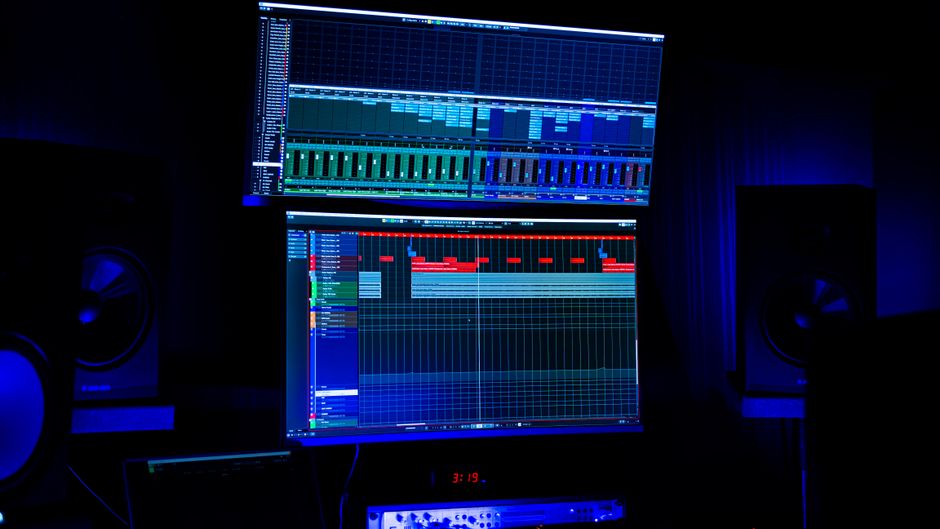
Bitwig Studio: Modular Evolution and Flexibility in Contemporary Music Production
An analysis of Bitwig Studio's development, modular architecture, key innovations, and relevance in modern music production.

Echoes of the Amazon: Regional Rhythms Shaping Global Music
Explore how the vibrant sounds of the Amazon and Latin American regional music are inspiring contemporary artists and shaping the global soundscape.
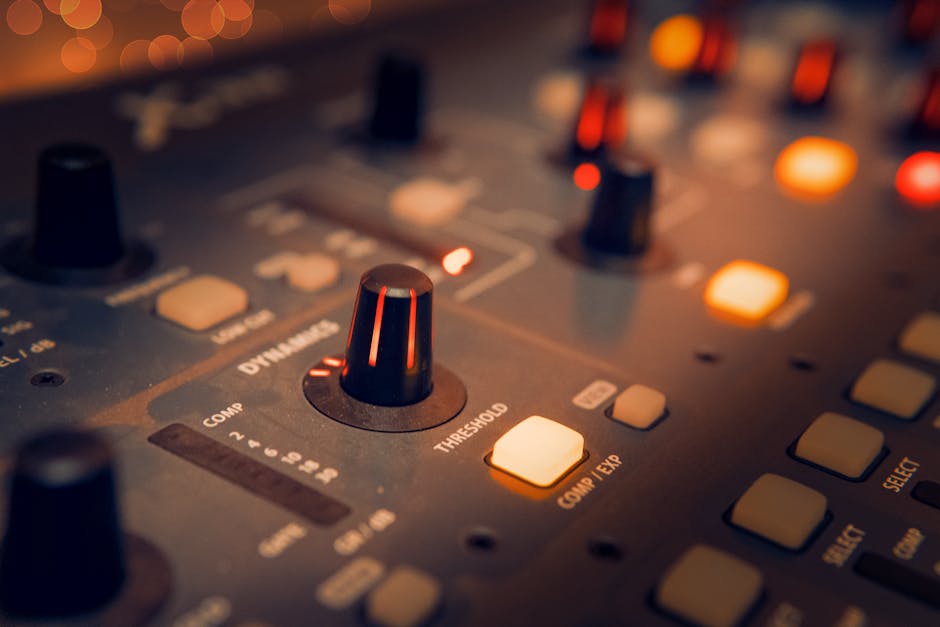
Criteria Studios: Acoustic Engineering and Technological Evolution in Contemporary Music Recording
Technical analysis of Criteria Studios' contribution to music production, from acoustic excellence to digital adaptation.