Room Acoustics: Analysis and Correction of Sound Parameters for Professional Environments
Fundamentals of spatial acoustics, measurement, and physical treatment (absorption, diffusion, bass traps) for optimizing sound quality.
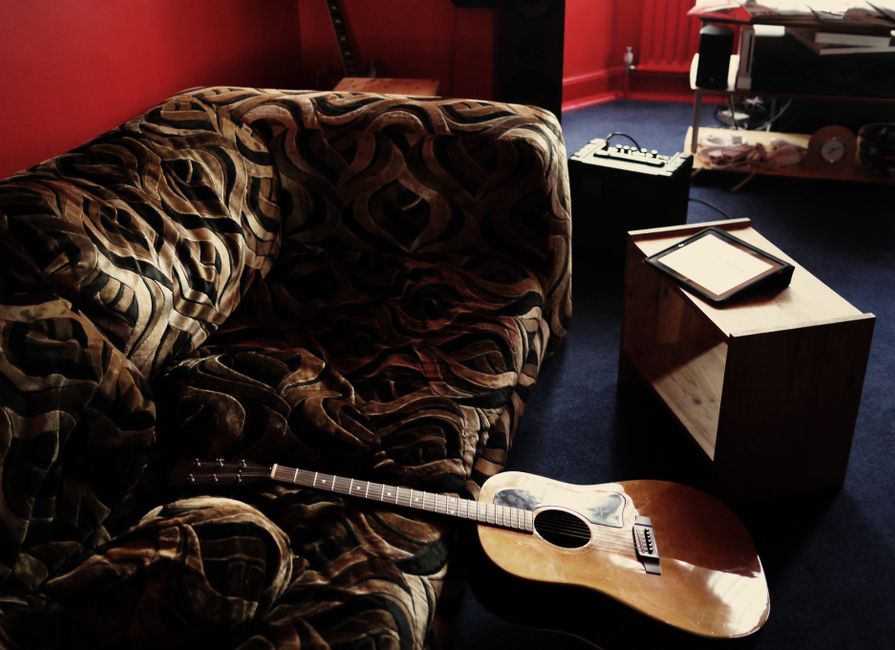
Fundamental Principles of Spatial Acoustics
Room acoustics is an essential pillar in any environment dedicated to production, mixing, mastering, or critical listening. Its influence shapes audio perception, directly affecting creative and technical decision-making. A space with acoustic deficiencies can distort the stereo image, alter the frequency balance, and mask crucial details, leading to inconsistent results and mixes that do not translate well to other systems. Understanding and managing the sonic environment is, therefore, as vital as the quality of the equipment used. This article addresses the fundamental principles of spatial acoustics and the methodologies for its analysis and correction, integrating the latest innovations in the field.
The sound within an enclosed space interacts with surfaces, generating reflections, diffractions, and resonances. Parameters such as reverberation time (RT60), frequency response, sound field uniformity, and intelligibility are determinant. RT60, for example, quantifies the time it takes for sound energy to decay by 60 dB once the original source ceases. Excessively high values can create a sense of “muddiness” or lack of clarity, while very low values can result in a “dead” and unnatural space. Standing waves, or room modes, are another critical phenomenon, especially at low frequencies. These occur when sound waves reinforce or cancel each other out at specific points in the room due to its dimensions, creating peaks and valleys in the frequency response that mislead the listener. Identifying these anomalies is the first step towards an effective solution.
To objectively characterize the acoustic behavior of a space, acoustic measurement is employed. This usually involves using a calibrated omnidirectional measurement microphone, such as the miniDSP UMIK-1 (https://www.minidsp.com/products/acoustic-measurement/umik-1), connected to an audio interface and specialized software. Tools like Room EQ Wizard (REW) (https://www.roomeqwizard.com/) or FuzzMeasure for macOS allow for generating frequency sweeps and analyzing the room’s impulse response. These programs produce detailed graphs representing RT60, frequency response, spectral decay (waterfall), and group delay.
Analysis and Measurement of Sound Behavior
Current technological innovations facilitate this process. Some modern audio interfaces incorporate automatic measurement or calibration functions, such as the Sonarworks SoundID Reference (https://www.sonarworks.com/soundid-reference/) or IK Multimedia ARC System 3 (https://www.ikmultimedia.com/products/arc3/) systems. These advanced solutions not only analyze the room but also generate digital correction profiles that can be applied to the audio signal, compensating for the environment’s acoustic deficiencies. It is important to remember that while digital correction improves linearity, physical treatment remains fundamental for mitigating problems like flutter echo or excessive reverberation. The implementation of artificial intelligence in predictive acoustic analysis, as researched in architectural design environments, also promises future optimizations for studios.
Once the data is analyzed, physical correction proceeds. Acoustic treatment is based on three principles: absorption, diffusion, and bass trapping.
Absorption employs porous materials such as rock wool, fiberglass, or acoustic foams to reduce reverberation time by converting sound energy into heat. These are strategically applied at first reflection points (side walls, ceiling, back wall) and in corners to control low frequencies. Prefabricated acoustic panels, such as those from Auralex (https://auralex.com/) or Vicoustic (https://vicoustic.com/), offer aesthetic and efficient solutions.
Technological Innovations in Acoustic Correction
Diffusers, such as QRD (Quadratic Residue Diffusers) or PRD (Primitive Root Diffusers), scatter sound waves in multiple directions, preventing echoes and creating a more homogeneous and natural sound field. They are ideal for the back wall or ceiling, contributing to a wider spatial perception without eliminating sound energy.
Bass Traps are crucial for mitigating standing waves and low-frequency energy buildup. They are primarily installed in corners, where bass sound pressure is highest. There are broadband (porous) and resonant (Helmholtz or membrane) bass traps, each effective in specific frequency ranges. The correct distribution of these elements is more an art than an exact science, though guided by physical principles. Asymmetrical placement and a mix of different treatment types often yield the best results. The current trend towards modular studios and prefabricated solutions allows producers and musicians worldwide to optimize their spaces without incurring major construction work, using kits that adapt to various configurations. Platforms like YouTube and specialized blogs such as Sound on Sound (https://www.soundonsound.com/) offer numerous tutorials and practical examples for installation.
Room acoustic optimization is not a luxury but a necessity for those seeking precision and consistency in their sound work. Investment in acoustic treatment and measurement tools directly translates into a substantial improvement in the quality of mixes and masterings, ensuring that the sound created is faithful to the artistic intention and translates correctly on any playback system, from headphones to live sound systems. Staying abreast of the latest tools and methodologies is fundamental to perfecting the art and science of room acoustics.
Related Posts

Beyond Bossa Nova: MPB's Modern Resonance in Global Music & Latin American Soundscapes
Explore how Brazilian Popular Music (MPB) continues to shape contemporary global soundscapes, influencing artists from Rio to Buenos Aires and beyond.

Vocal Comping: Assembly Methodology for High-Fidelity Audiovisual Performances
Explore vocal comping, an essential technique for building coherent and expressive master tracks in modern music production.

Cubase: Architecture and Functionalities for Contemporary Music Production
Explore Cubase's editing, mixing, and immersive capabilities, optimizing workflows for advanced sound creation.

The Evolution and Architecture of Studio One: Innovation in Digital Music Production Workflows
A technical analysis of Studio One's trajectory, highlighting its interface, functionalities, and adaptability to current trends.