Sound Engineering at Abbey Road: Technical Innovations and Legacy in Modern Music Production
An analysis of The Beatles' pioneering techniques at Abbey Road and their lasting influence on contemporary music production.
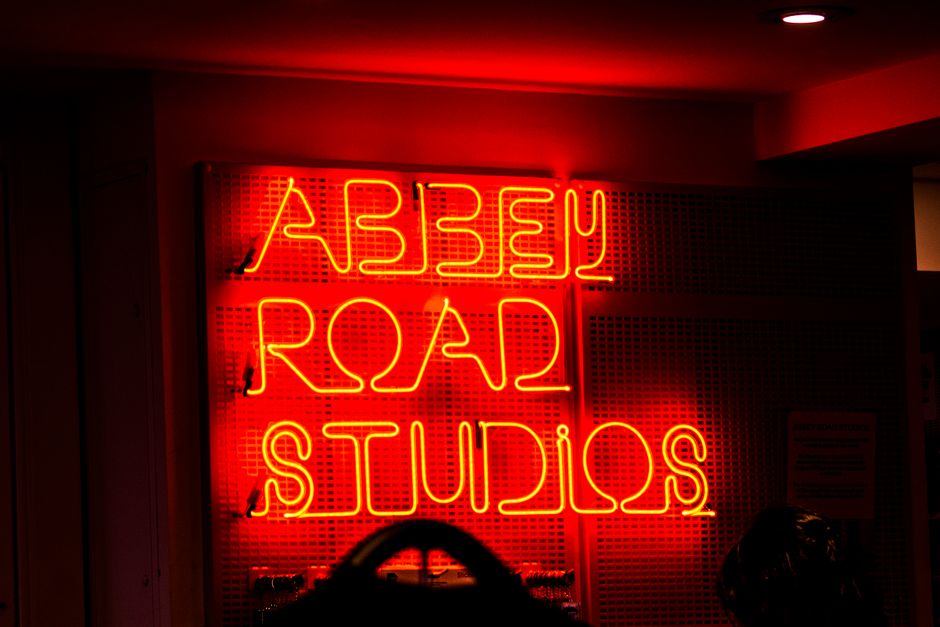
Technical Innovation and Sonic Architecture at Abbey Road
The Abbey Road studio was more than just a venue for The Beatles; it was a sonic laboratory where musical creativity and audio engineering converged to redefine record production. The synergy between the Liverpool quartet and the technical team, led by George Martin, forged a legacy that continues to influence contemporary recording and mixing techniques. This analysis examines the evolution of their methods in this iconic space and their resonance in today’s music landscape.
The sonic architecture of an era was cemented at Abbey Road, a studio that, while possessing state-of-the-art equipment for its time, also spurred invention. Initially, recordings were done on two tracks, a limitation that demanded ingenuity for layering and mixing elements. However, with the advent of four-track and later eight-track machines, creative potential amplified exponentially. Engineers like Geoff Emerick and Ken Scott were instrumental, interpreting The Beatles’ artistic visions and translating them into technical innovations. The ability of these professionals to adapt and expand the studio’s functionalities was crucial. For instance, the early use of the REDD.37 console and later the TG12345 allowed for unprecedented tonal and dynamic control, laying the groundwork for the characteristic sound of seminal albums.
Development of Pioneering Recording Techniques
Within Abbey Road, The Beatles and their team forged a suite of revolutionary techniques that shaped the sound of modern music. One of the most celebrated was ADT (Artificial Double Tracking), an invention by Ken Townsend that allowed for the doubling of vocals and instruments without the need for a second take, imparting a unique richness and fullness. This technique was implemented using two tape machines, one playing the original sound and the other, slightly delayed, recording the processed signal. Another distinctive method was ‘vari-speed,’ altering tape speed to modify the pitch and timbre of recordings, creating ethereal vocal effects or unusual instrumental sounds, as heard in “Strawberry Fields Forever.” Backwards tape recording, tape loops, and extreme manipulation of equalization and compression became standard tools in their experimental arsenal. These practices not only defined the sound of albums like “Revolver” and “Sgt. Pepper’s Lonely Hearts Club Band” but also established a new standard for studio experimentation.
The legacy of The Beatles at Abbey Road transcends history; their influence resonates strongly in contemporary production. The philosophy of constant experimentation and pushing technical boundaries remains a cornerstone for today’s producers and musicians. Today, the emulation of vintage equipment, such as the consoles and compressors used at Abbey Road, is possible thanks to advanced plugins. Companies like Universal Audio offer digital recreations that allow modern engineers to access those classic timbres, integrating them into DAW-based workflows. The curiosity for sound manipulation, so present in The Beatles’ sessions, manifests today in research into granular synthesis, immersive production (like Dolby Atmos), and the application of artificial intelligence in composition and mixing. Platforms like Spotify and Bandcamp continue to be channels for works that, in one way or another, owe part of their sonic audacity to the path pioneered in that London studio. The pursuit of unique textures and the integration of unconventional elements in contemporary music are direct echoes of that era of innovation.
Legacy of Sonic Experimentation and Its Current Influence
In summary, the collaboration between The Beatles and the Abbey Road team was not merely a series of recordings; it was a period of intense research and development in sound engineering. Their methods not only defined a musical era but also laid the foundation for much of the production practices employed today. The audacity to manipulate sound and the relentless pursuit of new acoustic expressions in that studio, accessible at https://www.abbeyroad.com/, continue to inspire new generations of creators and audio technicians worldwide, from Buenos Aires to the most remote corners of the industry. For those wishing to delve deeper into emulating these sounds, Universal Audio (https://www.uaudio.com/) offers notable digital solutions, and platforms like Spotify (https://www.spotify.com/) and Bandcamp (https://bandcamp.com/) host the evolution of these influences.
Related Posts

Analog vs. Digital Filters: Fundamentals, Differences, and Audio Production Applications
Compare analog and digital filters: their principles, unique sonic characteristics, and roles in modern music and immersive audio production.

Parametric vs. Graphic EQs: Applications and Spectral Control in Music Production
Explore the differences and applications of parametric and graphic equalizers for refining audio mixes and solving frequency challenges.

Sunset Sound: Acoustic Legacy and Technological Evolution in Music Recording Engineering
Sunset Sound's influence on popular music, its acoustic design, and the integration of analog and digital technologies.

Studio One's Evolution: Architecture, Innovations, and Adoption in Latin American Music Production
Technical analysis of Studio One's development, technological milestones, and impact on modern workflows, including immersive audio and collaboration.