Synthesizer Layering: Spectral, Spatial, and Dynamic Principles for Complex Sound Design
Technical analysis of layering in music production, covering equalization, stereo imaging, envelopes, and advanced modulation.

Fundamental Principles for Building Sonic Layers
Sound superposition, known as layering, is an essential technique in contemporary music production. This methodology allows engineers and producers to create sonic textures of great richness, depth, and complexity, overcoming the timbral limitations of a single instrument or synthesizer. By combining diverse layers, each contributing unique characteristics—from the initial attack to the decay tail—a composite sound is built that not only occupies a distinct space in the mix but also conveys a particular sonic identity. The strategic application of layering is crucial for imparting impact and character to leads, pads, basses, and effects across various musical genres, from electronic to pop and film scoring.
Fundamental Principles for Building Sonic Layers
The effectiveness of layering lies in a thorough understanding of how different frequencies and dynamics interact. A central aspect is frequency allocation: each layer must occupy a defined spectral range to avoid masking and ensure clarity. Using parametric equalization to boost or cut specific bands in each synthesizer prevents collisions and fosters cohesion in the overall sound. For example, one layer might provide the body in the low frequencies, another the presence in the mids, and a third the brightness in the highs.
Concurrently, spatial imaging is another pillar. The placement of each component in the stereo field through panning or mid-side processing contributes to width and immersion. A central layer can be anchored in mono, while others extend laterally, creating a sense of three-dimensional space. This approach is particularly relevant in the era of immersive audio, where sound’s spatial distribution gains an additional dimension.
Finally, the dynamic contour of each layer requires meticulous attention. Adjusting the amplitude envelopes (ADSR) of each synthesizer ensures that attacks do not overlap undesirably and that tails do not create muddiness. Individual compression, and sometimes parallel or bus compression, are valuable tools for unifying dynamics and providing cohesion to the entire sound. Expert handling of these principles lays the foundation for articulate and professional layering.
Advanced Modulation and Effects Processing Strategies
Advanced Modulation and Effects Processing Strategies
Beyond basic separation, integrating complex modulation and creative effects elevates layering to a higher level. Applying modulators like LFOs or envelopes to different parameters on each layer—for instance, the filter of one layer, the pitch of another, or the volume of a third—can generate internal movement and organic timbral evolution that maintains auditory interest. This technique fosters the creation of dynamic sounds that transform over time, rather than remaining static.
Managing time-based effects like reverb and delay also offers vast possibilities. Instead of applying the same effect to all layers, one can opt for reverbs or delays with different characters or decay times on each, or send multiple layers to the same effects bus with specific settings. This helps differentiate textures and imbue the ensemble with greater depth. Saturation and distortion, applied judiciously, can add harmonics and body, while granular processing can fragment and reorder a layer’s sound, creating ethereal or aggressive textures that blend with the rest.
Today, tools like virtual modular synthesizers or advanced sound design environments, such as Native Instruments Reaktor or Arturia Pigments, facilitate the implementation of these strategies, enabling unprecedented signal interconnection and manipulation. The intelligent use of these resources allows producers to compose sounds with a unique identity and unparalleled timbral complexity.
Contemporary Applications and the Future of Layered Sound Design
Contemporary Applications and the Future of Layered Sound Design
Technological evolution constantly redefines the possibilities of layering. Artificial intelligence (AI) is beginning to play a significant role, with plugins and tools assisting in generating complementary layers, analyzing spectra to suggest optimal EQs, or even creating sounds from textual descriptions. Companies like iZotope and Soundtheory are developing solutions that streamline processes traditionally requiring a high degree of manual intervention, speeding up workflows and opening new creative avenues.
Furthermore, the increasing adoption of spatial audio and formats like Dolby Atmos drives a reconsideration of layering in a three-dimensional context. The ability to place layers not just on the horizontal plane but also vertically and in depth offers an immersive auditory experience. Sound design for immersive environments requires meticulous planning of each layer so it contributes to the overall spatiality without causing listening fatigue. Platforms like Ableton Live or Logic Pro X incorporate advanced functionalities for immersive mixing, facilitating experimentation with these new dimensions.
Online collaborative production also influences how layering is applied. With platforms that allow real-time project sharing, teams of producers can contribute layers to the same sound from different geographical locations, enriching the timbral palette with diverse perspectives and specializations. This collective synergy fosters innovation and the creation of complex, multifaceted sounds.
The technique of synthesizer layering is much more than a simple sum of sounds; it represents a sophisticated methodology for building complex and distinctive sonic identities. From meticulous frequency allocation and stereo placement to intricate modulation and the leveraging of emerging technologies like AI and spatial audio, every technical decision contributes to artistic expression. By integrating this knowledge and adopting an experimental mindset, producers can create soundscapes that not only capture attention but also define the cutting edge of current music production. The key lies in patience, critical listening, and the willingness to constantly innovate.
Related Posts

Sequential Circuits: Audio Engineering, Programmable Polyphony, and Analog Synthesis Legacy
An analysis of Sequential Circuits' impact on musical synthesis evolution, from the Prophet-5 to current innovations.

Parallel Compression: Integrating Dynamics and Cohesion in Modern Productions
Analysis of parallel compression technique to enhance density, punch, and sonic warmth in contemporary audio mixes.

Psychoacoustics and Sound Design: Principles for Therapeutic Music Production
Exploring advanced acoustic and technological principles for creating sound experiences for well-being.
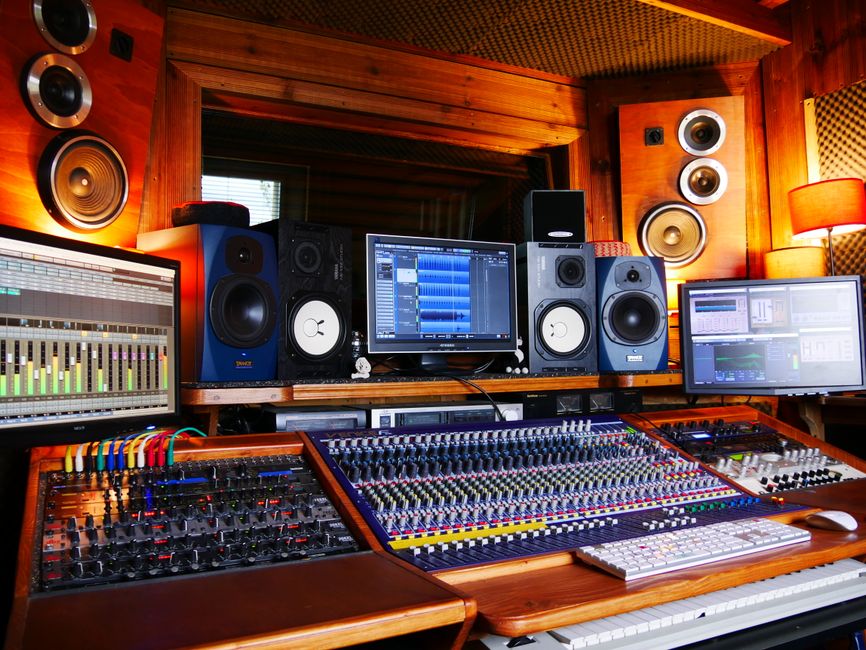
Nearfield vs. Midfield Monitors: Impact on Mix Translation and Acoustic Environments
Understanding the differences between nearfield and midfield monitors is crucial for optimizing studios and achieving accurate mixes.