USB vs. Thunderbolt: Connectivity Architecture and Performance in Audio Interfaces for Music Production
Technical comparison of USB and Thunderbolt audio interfaces: bandwidth, latency, and ecosystem for optimizing your recording studio.
Data Transfer Architecture: USB vs. Thunderbolt
The choice of an audio interface is a fundamental decision for any producer or musician, as it forms the critical bridge between instruments, microphones, and the digital environment of the Digital Audio Workstation (DAW). In today’s music production landscape, two connectivity technologies dominate the market: USB and Thunderbolt. Both offer robust solutions for audio capture and playback, but they present significant differences in terms of performance, latency, and ecosystem that directly impact workflow and production quality. A detailed technical analysis of these options is essential for equipping a studio with the appropriate infrastructure.
The primary distinction between USB and Thunderbolt interfaces lies in their data transfer architecture. USB (Universal Serial Bus) is a universally adopted standard, present in almost every computer. It has evolved through various iterations (USB 2.0, 3.0, 3.1, 3.2, and the current USB4), progressively increasing its bandwidth. While USB 2.0 offered adequate speeds for basic recordings, more recent versions, especially USB 3.0 and above, provide considerably higher data flow, enabling a greater number of input/output channels and reduced latency. However, the USB protocol shares resources with other devices connected to the bus, which in complex configurations can affect performance and stability. Latest-generation USB interfaces, such as those integrating USB-C connectors, optimize transmission and power, improving overall efficiency.
Performance and Latency: USB and Thunderbolt in Production
On the other hand, Thunderbolt, developed by Intel in collaboration with Apple, was designed from its inception for high-performance applications, including high-resolution video and professional audio. It utilizes the PCI Express (PCIe) protocol, which offers direct access to the system’s CPU and memory. This translates into extremely high bandwidth and exceptionally low latency, crucial characteristics for multi-track recording and real-time monitoring with effects. Thunderbolt 3 and 4 versions multiply transfer speeds, facilitating the daisy-chaining of multiple devices, including external hard drives and monitors, without compromising the audio interface’s performance. This approach allows for a more integrated and powerful studio ecosystem.
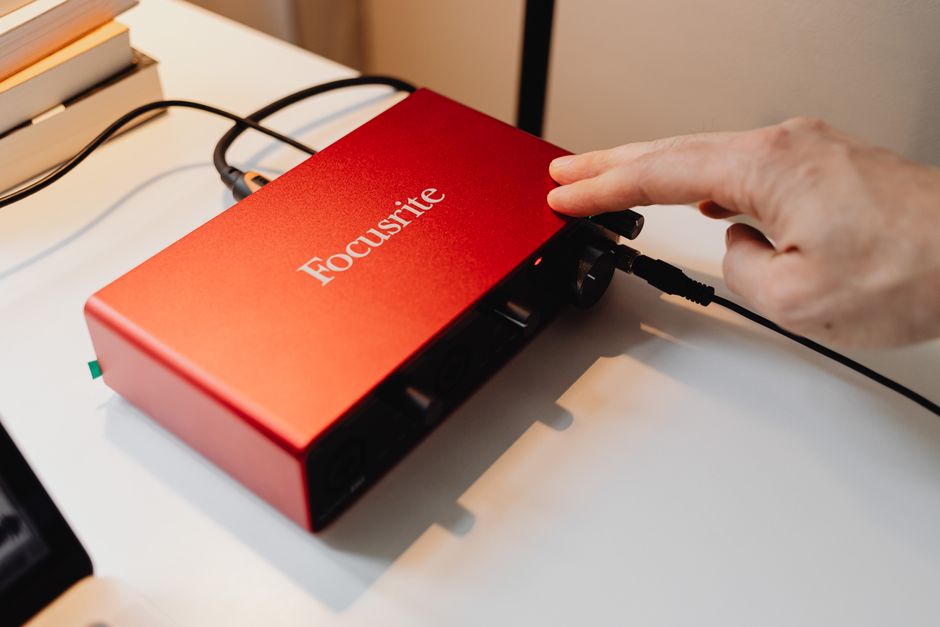
USB interfaces are distinguished by their broad compatibility and more accessible initial cost, making them the preferred choice for home studios, touring musicians, and entry-level producers. Their plug-and-play nature and the availability of USB ports on virtually any computer simplify setup. Manufacturers like Focusrite [https://focusrite.com/en] and PreSonus [https://www.presonus.com/] offer a vast range of USB interfaces that meet diverse needs, from compact two-input models to multi-channel units for band recordings. The evolution of the USB standard has allowed many of these interfaces to deliver outstanding performance for most music production tasks, including recording vocals, instruments, and mixing in moderately sized environments. Latency, while historically a concern, has been significantly mitigated in modern versions and with optimized drivers, making the experience smooth for most users. Portability is another key advantage; many USB interfaces are bus-powered, eliminating the need for an external power supply, ideal for location recording or composing sessions away from the studio.
Compatibility and Cost: USB for Home Studios
Thunderbolt interfaces are synonymous with premium performance and are geared towards professional production environments where ultra-low latency and massive bandwidth are imperative. Their ability to handle a large number of simultaneous input and output channels, along with the possibility of integrating onboard Digital Signal Processing (DSP), positions them as indispensable tools for high-end recording studios. Companies like Universal Audio [https://www.uaudio.com/] with its Apollo series, or Antelope Audio, have capitalized on Thunderbolt technology to offer interfaces that not only manage audio with exceptional fidelity but also allow for the execution of high-quality plugins with near-zero latency, freeing up the computer’s CPU resources. This is particularly valuable in complex productions, such as recording orchestras, live band tracking sessions, or mixing and mastering projects with countless tracks and effects. Thunderbolt’s daisy-chaining capability also facilitates studio expansion, allowing for the addition of more inputs/outputs or high-speed storage without negatively impacting performance. For immersive audio projects, such as Dolby Atmos formats that demand a large number of output channels, Thunderbolt interfaces prove to be the most efficient and reliable technical solution [https://www.apple.com/thunderbolt/].
The decision between a USB and a Thunderbolt interface should be based on a thorough evaluation of each producer’s specific needs. Budget is a determining factor, as Thunderbolt interfaces typically come with a higher price tag, both due to the technology itself and the advanced features they usually incorporate. The type of computer also influences the choice; while USB is universal, Thunderbolt requires a compatible port, which is standard on many recent macOS devices and high-end PCs. The number of required inputs and outputs is another crucial aspect; for a small studio recording one or two sources at a time, a quality USB interface may be more than sufficient. However, for studios with multi-channel recording requirements, low-latency monitoring with multiple headphone mixes, or integration with external hardware, Thunderbolt’s capability becomes indispensable. It’s important to consider the studio’s potential for growth; an initial investment in Thunderbolt could offer greater long-term scalability. Furthermore, the plugin ecosystem and the need for integrated DSP should be weighed. Thunderbolt interfaces with DSP, such as those from Universal Audio, offer the advantage of processing audio without overloading the CPU, which is a trend in professional production for handling increasingly complex and resource-intensive projects.
High Performance and Scalability: Professional Thunderbolt
In summary, both USB and Thunderbolt interfaces are powerful tools for music production, each with its distinct strengths. Current USB interfaces provide a versatile and cost-effective solution for most users, with performance that meets the demands of many studios. Meanwhile, Thunderbolt interfaces are positioned as the superior choice for professionals and studios that require maximum performance, minimal latency, and the greatest expansion capacity. The optimal choice will depend on the existing system configuration, the scope of musical projects, the available budget, and the producer’s growth aspirations, always prioritizing stability and audio quality as fundamental pillars of any successful production.
Related Posts

3D Audio in VR: Implementing HRTF and Binaural Renderers for Dynamic Sound Immersion
Explore how HRTF and binaural renderers recreate interactive 3D acoustic environments, overcoming traditional stereo audio limitations in VR.

Parallel Compression: Principles, Practical Applications, and Technological Advancements in Audio Mixing
Exploring parallel compression to enhance sonic impact and density while preserving original dynamics in music productions.

Bandalos Chinos: Unveiling the Studio Secrets Behind Their Indie Pop Magic
Explore the sophisticated studio production techniques and artistic vision that define Bandalos Chinos' distinctive indie pop sound, inspiring Latin American artists.

Spatial Audio in Virtual Reality: Production Principles for Immersive Soundscapes
Exploring spatial audio methodologies and music production techniques for creating compelling 3D sound experiences in VR.