Drum Acoustics and Miking in Small Spaces: Strategies for Clear Recordings
Optimize drum capture in compact studios. Control reverb, apply close-miking techniques, and advanced processing.
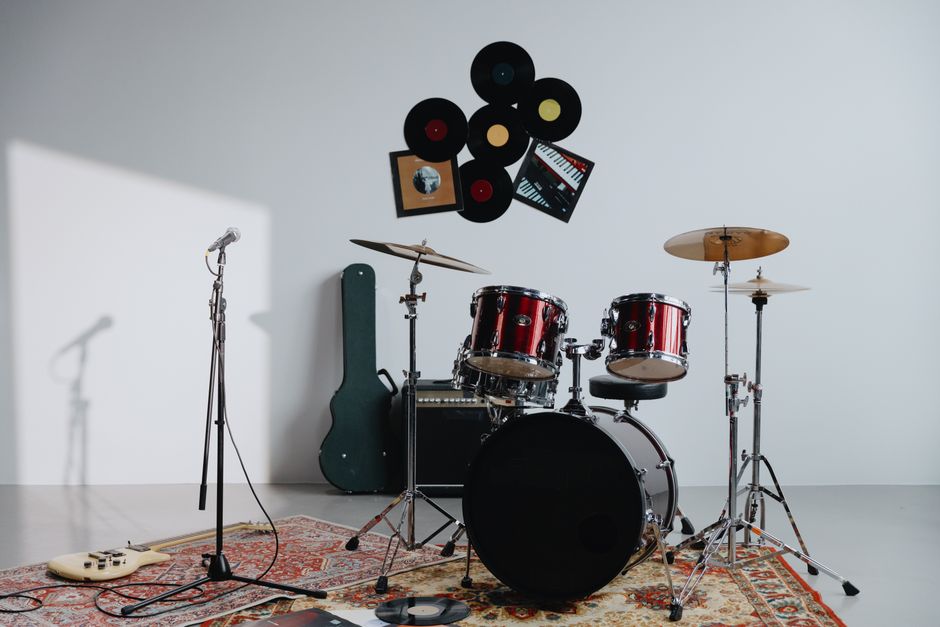
Acoustic Management and Kit Placement
Capturing an acoustic drum kit in confined environments, such as home studios or rehearsal rooms, presents significant challenges. Controlling unwanted reverberation, mitigating bleed between kit components, and achieving a clean signal are paramount objectives for any sound engineer. This analysis delves into contemporary strategies and tools that enable professional results, even with the spatial constraints inherent in many studios in Buenos Aires and Latin America.
The management of early reflections and room resonance is essential. Implementing absorption panels, constructed from materials like mineral wool or high-density acoustic foam, at first reflection points (side walls, ceiling) minimizes “flutter echo” and unwanted sound coloration. Diffusion, through the use of acoustic diffusers (commercial or handcrafted from wood), helps to disperse sound energy more uniformly, preventing the buildup of specific frequencies. The strategic placement of the drum set within the enclosure drastically influences the overall acoustic response. It is advisable to position the instrument away from corners, as these tend to amplify low frequencies, and experimenting with the distance to side and rear walls can mitigate bass buildup. Bass traps, placed in corners, are fundamental for controlling problematic sub-bass frequencies in small enclosures. The versatility of movable panels can offer flexibility for different configurations or for adapting the space to other instruments.
Close Miking Techniques and Instrumental Separation
In compact spaces, close miking is a fundamental strategy to maximize instrumental separation and reduce the negative influence of the room. For the kick drum, large-diaphragm dynamic microphones like the Shure Beta 52A or the AKG D112 are standard, positioned in the front port or slightly inside the resonant head to capture attack and body. For the snare, a Shure SM57 on top, aimed at the center, captures the impact and brightness, with an optional second mic on the bottom, phase-inverted, adding the snare wire sound. Toms benefit from dynamic microphones with good transient response, such as the Sennheiser MD421. For overheads, if space permits, a pair of small-diaphragm condenser microphones (e.g., Rode NT5, AKG C451) in an spaced or X/Y configuration can work. However, in very confined environments, minimalist techniques like Glyn Johns or Recorderman are highly efficient, employing a reduced number of microphones to capture the entire kit with a cohesive stereo image, prioritizing phase coherence. Phase alignment between microphones is a critical aspect; software tools in the DAW facilitate this post-recording adjustment, correcting potential phase cancellations that affect punch and clarity.
Once the tracks are recorded, digital processing plays a decisive role in sculpting the final sound. Corrective equalization allows for the attenuation of problematic frequencies generated by the room’s acoustics, while additive equalization enhances the desired character of the instrument. The use of noise gates is essential for mitigating unwanted bleed between drum elements, achieving greater cleanliness and definition in the mix. Dynamic compression shapes the sonic envelope of each percussive element, providing punch and control over transients. Parallel compression is a valuable technique, where a dry signal is blended with a heavily compressed signal, to add density and impact without sacrificing natural dynamics. Transient shapers offer precise control over attack and sustain. Regarding reverb, it is preferable to avoid the natural room sound if its quality is poor; instead, high-quality convolution or algorithmic reverbs are employed to create controlled and aesthetically pleasing ambiances. AI-powered software tools, such as de-reverb plugins (e.g., iZotope RX), represent a significant advancement in removing unwanted reverberation from existing recordings, offering unprecedented clarity. The application of immersive production techniques, such as spatial audio, can also benefit from a clean original source, although post-processing will be key for its implementation in formats like Dolby Atmos, a growing trend on streaming platforms like https://artists.spotify.com/. Platforms like https://www.uaudio.com/ offer a wide range of plugins that emulate classic hardware with great fidelity, while https://www.izotope.com/en/products/rx.html is a benchmark for audio restoration. For more information on miking and processing techniques, https://www.soundonsound.com/ is an invaluable resource.
Digital Processing for Sonic Optimization
Recording drums in small enclosures demands a combination of technical ingenuity and adaptation. From basic acoustic treatment to strategic microphone selection and advanced digital processing, each stage contributes to the final production quality. Perseverance and experimentation are the pillars for achieving professional results, transforming spatial limitations into creative opportunities for producers and engineers in the region’s vibrant music scene. Tags: drum recording, studio acoustics, miking, percussion mixing, music production, professional audio, AI audio, Dolby Atmos Category: Music Production
Related Posts

Multiversal Mastering: Technical Adaptation for Diverse Audio Platforms
Optimizing masters for streaming, physical formats, and immersive audio. Acoustic and dynamic keys.

Optimizing Dynamics and EQ for Music Podcasts: Technical Methodologies
Managing dynamics, EQ, and LUFS standards: optimizing sound for music podcasts.

Adaptive Acoustics and Live Recording: The Defining Sound of Stax Records
An analysis of Stax Records' sonic methodology, unique acoustics, and live recording techniques that defined a genre.

Electric Guitar Capture: Mic'd Amp vs. Direct Input (DI) Signal
Technical analysis of mic'd amplification and direct input (DI) methodologies for electric guitar in music production.