Quantum Audio Compression: Fundamentals, Applications, and the Future of Sound Fidelity
Exploring the application of quantum principles in music data management and transmission, promising unprecedented fidelity and efficiency.
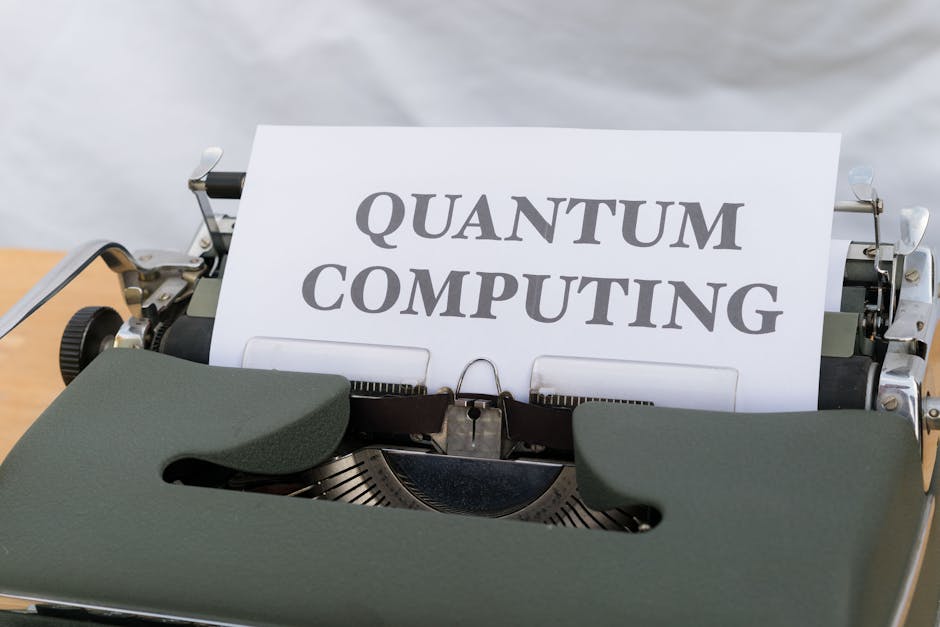
Fundamentals of Quantum Music Data Compression
The rapid evolution of information technology continually redefines the paradigms of music production. While classical audio compression, such as MP3 or FLAC, operates under binary principles, a new horizon is emerging with quantum computing. This emerging field promises to radically transform how music data is managed, stored, and transmitted, offering unprecedented prospects for fidelity and efficiency. Quantum music data compression is not a mere incremental improvement; it represents a fundamental shift in sound information processing, with profound implications for artists, producers, and the industry at large.
Understanding quantum compression requires delving into its fundamentals. Unlike traditional bits, which represent either 0 or 1, qubits can exist in a superposition of both states simultaneously. This characteristic, along with quantum entanglement, allows for the parallel processing of massive amounts of information. In the context of audio, this could mean encoding not only the amplitude and frequency of a signal but also its phases and complex correlations within an exponentially larger state space. Quantum algorithms could identify and eliminate redundancies in the sound signal in ways that classical methods cannot, or even synthesize missing information with astonishing precision. For example, while a classical compressor reduces the bit rate, a quantum system could reinterpret the entire sound spectrum with unattainable granularity, potentially recreating lost harmonic details or generating textures from a minimal representation. A qubit’s ability to interact with others in complex ways opens the door to manipulating sound patterns that currently require intensive processing algorithms.
Principles of Quantum Sound Information Processing
The potential impact of quantum compression in the musical realm is vast and multifaceted. One of the most significant applications lies in ultra-high-fidelity audio streaming. Imagine the possibility of streaming recordings with a richness of detail superior to current lossless formats, yet with significantly less bandwidth. This could redefine quality standards for platforms like Spotify or Tidal, elevating the listening experience to an unprecedented level. Furthermore, audio processing latency, a critical factor in live production and remote collaboration, could be drastically reduced. Artists in Buenos Aires could collaborate in real-time with producers in Berlin with near-perfect synchronization, enabling new modes of musical creation. The implementation of this technology could also drive the development of new immersive audio formats, such as Dolby Atmos, by allowing for more efficient encoding of complex sound spheres. Music synthesis techniques could advance towards generating organic, evolving sounds that are currently prohibitively computationally complex. Processing plugins, like compressors or equalizers, could operate with contextual intelligence, adapting to the audio signal in innovative ways, perhaps restoring dynamics or harmonics with unprecedented accuracy. Sample manipulation and archival audio restoration could also see notable advancements, recovering details now considered irretrievable.
Despite its promise, quantum music data compression faces considerable challenges. The construction of stable and scalable quantum computers is a monumental task. Decoherence, the loss of quantum information due to environmental interaction, is a major obstacle that researchers are striving to mitigate. Furthermore, the development of specific quantum algorithms for audio processing is an active research field that still requires substantial work. However, progress is constant. Institutions like IBM and Google are making significant strides in building quantum hardware. For instance, IBM Quantum’s laboratory (https://www.ibm.com/quantum-computing/) regularly showcases its processor achievements. Similarly, Google AI Quantum’s initiative (https://ai.google/quantum-ai/) also works on fundamental innovations. The global scientific community is engaged in formulating new algorithmic paradigms. As the technology matures, we may see the integration of quantum modules into next-generation DAWs, or even specialized plugins that leverage quantum principles for specific tasks. This could revolutionize not only audio quality but also workflow efficiency, enabling producers worldwide to reach new heights of creativity and performance. Training audio engineers with expertise in quantum computing will be crucial to capitalize on these opportunities. The convergence of quantum physics and audio engineering paves the way for an unimaginable sonic future.
Potential Impact on Streaming and Music Production
The vision of quantum music data compression represents one of the most exciting frontiers at the intersection of technology and sonic art. While still in its nascent stages, the potential to transform music production, streaming, and the listening experience is undeniable. From overcoming bandwidth limitations to enabling new forms of creativity and collaboration, quantum computing promises a future where audio fidelity and efficiency reach unprecedented levels. Staying abreast of these developments will be essential for those seeking to remain at the forefront of innovation in the music industry.
Related Posts
Evolution of the USB Audio Interface: Connectivity and Democratization in Latin American Music Production
Technical analysis of the USB audio interface: historical development, technological impact, and accessibility in contemporary sound.

Nuendo: Architecture and Applications in Immersive Audio Production and Advanced Post-Production
Technical analysis of Nuendo's modular architecture, its role in immersive audio, and workflow optimization in post-production.

Charly García: Guitar Selection and Signal Processing in Latin American Rock
Technical analysis of Charly García's guitar and effects selection, defining his sonic imprint on Latin American rock.

Wavetable Synthesis: Exploring Dynamic Waveforms and Timbral Modulation
A technical analysis of wavetable synthesis, its oscillator architecture, and advanced sound design applications.