AI Vocal Synthesis: Capabilities, Ethical Implications, and Applications in Contemporary Music Production
Explore the power of AI in voice synthesis, covering its creative application, ethical challenges, and the future of sound production.
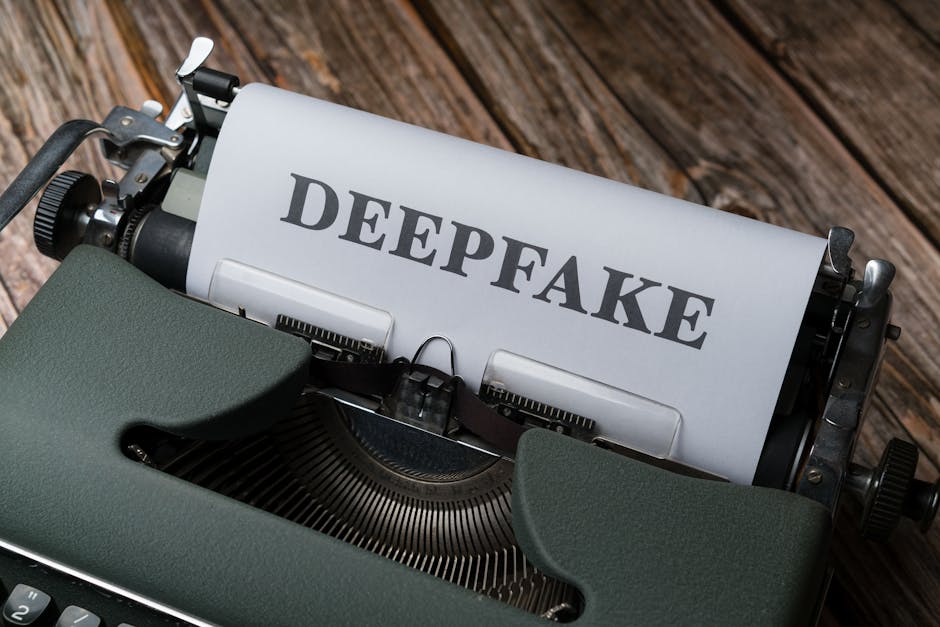
Fundamentals of Voice Cloning and Ethical Considerations
Artificial intelligence-driven vocal synthesis represents one of the most significant innovations in contemporary sound creation. This capability to emulate or produce voices with astonishing realism opens a spectrum of expressive possibilities, while simultaneously posing ethical and legal challenges that demand meticulous attention. The technology, once seemingly science fiction, now empowers musicians and audio professionals to transcend traditional vocal limitations, from articulating complex harmonies to preserving sonic legacies.
The foundation of voice cloning lies in deep learning algorithms that analyze vast amounts of audio data to model a voice’s unique characteristics. Through neural networks, these systems learn to replicate timbre, intonation, and rhythm, enabling the generation of new performances or the modification of existing ones. However, the power of this engineering carries inherent responsibility. The issue of consent is paramount: was explicit permission obtained from the original vocalist for the use of their voice? Intellectual property also emerges as a crucial point, especially when new works are created from pre-existing voices. Deepfakes are a palpable concern, where vocal identity impersonation could have serious legal and reputational implications. The music industry, alongside regulatory bodies, is beginning to establish frameworks to address these dilemmas, seeking a balance between artistic freedom and the protection of performers’ rights. Initiatives like ‘Fair Use’ in certain legal contexts and the implementation of digital watermarks on synthesized voices are initial steps in this direction.
Artistic Applications and Sonic Experimentation
Beyond moral considerations, synthesis techniques offer potent instruments for artistic expression. Music creators worldwide are employing these technologies for various purposes. Accompaniments or choruses can be generated to complement a lead vocalist, articulating rich sonic textures without the need for multiple singers. Another innovative application is the ability to ‘re-animate’ historical recordings, allowing iconic voices to perform new material, always under strict licensing and with due respect to the original artist or their legacy. Furthermore, vocal synthesis enables experimentation with sonorities that go beyond human capability, creating hybrid, robotic, or ethereal voices for genres like experimental electronic music or film. Platforms such as Descript, with its Overdub feature (https://www.descript.com/overdub), or software solutions like Vocaloid (https://www.vocaloid.com/en/), exemplify how these tools facilitate vocal manipulation and crafting, opening doors to composing melodies and lyrics with pre-trained or custom voices.
The technical process for vocal cloning generally involves recording a high-quality voice sample by the vocalist, which is then used to train an AI model. This training can require anywhere from a few minutes to several hours of audio, depending on the model’s sophistication and the desired quality. Once configured, the model can receive text or audio as input to produce new vocal performances. Contemporary instruments, such as AI-based vocal modeling plugins integrated into DAWs like Ableton Live (https://www.ableton.com/en/live/) or Logic Pro (https://www.apple.com/logic-pro/), or specialized online services, simplify this process. For instance, some startups are developing plugins that allow adjustment of the ‘emotional state’ of a synthesized voice or transplanting one vocalist’s style onto another, always respecting copyright. The quality of the output has improved exponentially, with systems capable of producing voices nearly indistinguishable from human ones. The integration of these technologies with intuitive user interfaces democratizes their access, allowing a broader range of creators to manipulate vocal sound with unprecedented flexibility. Continuous evolution in processing power and advances in Generative Adversarial Network (GAN) algorithms continue to drive the fidelity and versatility of these solutions.
Technical Process and Vocal Synthesis Tools
Ethical and creative vocal synthesis represents a constantly evolving field, with immense potential to redefine music production. Integrating these techniques into the workflow of artists and audio professionals demands a clear understanding of their capabilities and a firm commitment to moral principles. As the industry navigates the landscape of AI in audio, it must prioritize transparency, consent, and the protection of creators’ rights. The future promises even more sophisticated tools that, when handled responsibly, will enrich the sonic spectrum and expand the boundaries of musical expression worldwide.
Related Posts

Audio Impedance: Fundamental Principles and Their Impact on Sound Reproduction and Studio Engineering
Technical analysis of audio impedance, its measurement, and equipment optimization for faithful signal reproduction.
Vocal Pitch Processing: Techniques, Applications, and Expressive Preservation
Technical analysis of vocal pitch processing: from tuning correction to creative effects, optimizing expressiveness.

Bitwig Studio: Modular Architecture and Unified Modulation for Advanced Sonic Experimentation
Analysis of Bitwig Studio's modular design and unified modulation system, highlighting its impact on creativity and hybrid workflows.
Criteria Studios Miami: Acoustics, Innovation, and Legacy in Global Music Production
Exploring Criteria Studios' influence on Latin American and global music, from its founding to the digital age.