Ondes Martenot and Historical Synthesizers: Recording, Processing, and Sonic Legacy
Technical analysis of recording pioneering electronic instruments, from Ondes Martenot to Mellotron, and their current relevance.

Ondes Martenot and Historical Electronic Devices: Sonic Innovation
The evolution of electronic music is underpinned by the innovation of pioneering instruments. The Ondes Martenot, with its ethereal timbre and unique expressiveness, represents a milestone in this journey, establishing a sound that transcends eras. This article delves into the specifics of its recording and that of other historical electronic devices, analyzing the inherent challenges and creative opportunities they present for contemporary audio production. From their origins in the early 20th century to their resonance in current compositions, these instruments offer an unparalleled sonic palette that demands a specific technical and artistic approach for their capture and processing.
The genesis of sound synthesis dates back to the early 20th century, with avant-garde creations like the Theremin, the Trautonium, and, notably, the Ondes Martenot. Maurice Martenot conceived his instrument as an extension of human musical expression, achieving a distinctive sound that oscillates between the vocal and the instrumental, with unparalleled melodic and vibrato capabilities for its time. The Martenot, unlike other early synthesizers, incorporated a keyboard and a sliding ring, facilitating precise tonal control and fluid glissandos. Its unique sound derived from vacuum tube oscillators and an acoustic diffusion system that included sympathetic resonators, such as the ‘Palme’ and ‘Métallique’, each contributing unique timbral qualities. Recognizing these characteristics is fundamental for any sound engineer aspiring to capture its essence. Other instruments, like the Mellotron, although mechanical in operation, also contributed unique textures based on the playback of pre-recorded tapes, generating a sound that evokes nostalgia and a particular harmonic richness that continues to inspire musicians and producers.
Sonic Capture: Techniques and Challenges of Pioneering Instruments
Recording these instruments in their early days involved rudimentary but ingenious techniques, driven by the need to capture novel sounds. For the Ondes Martenot, miking focused on capturing the resonance of its special loudspeakers, which were often positioned in different locations to leverage their directional and dispersion qualities. Condenser and ribbon microphones were used, selected for their frequency response and transient handling capabilities, strategically placed to capture the harmonic richness, spatial depth, and subtle modulation generated by these unique resonators. The signal chain was typically minimal, prioritizing sound purity. Vacuum tube preamplifiers, known for their warmth and natural compression, were key components, adding an inherent coloration that is now valued as part of the vintage character. Subsequent processing, if any, was limited to passive equalization for timbre shaping and the use of chamber or plate reverb to simulate acoustic environments, always aiming to preserve the instrument’s natural dynamics and avoid excessive compression that could flatten its expressiveness.
The replication of these methodologies in contemporary studios requires an appreciation for simplicity and fidelity to the original sound design, beyond a mere pursuit of high fidelity. This often involves employing vintage hardware emulations or plugins that replicate the behavior of the era’s equipment with astonishing accuracy. For instance, emulations of vacuum tube compressors and equalizers, available on platforms like Universal Audio, allow sound engineers to approach that classic sonic character, infusing digital recordings with analog warmth. There is also a growing interest in ambisonic or binaural miking techniques to capture the complex spatiality of these instruments, especially when presented in specific acoustic environments or for productions intended for immersive audio experiences, expanding the possibilities of sound design. (More information at: https://www.uaudio.com/)
Today, the fascination with these historical sounds persists vigorously, manifesting both in the search for original instruments and through advanced digital emulations that make them accessible to a global audience. Contemporary artists, experimental music producers, and film score composers regularly turn to the Ondes Martenot and other vintage synthesizers to add unique textures, an emotional depth unattainable with purely modern instruments, and a touch of historical authenticity. Current production benefits significantly from plugins that accurately model the behavior of these devices, capturing not only their timbre but also the imperfections and peculiarities of their circuitry. Notable examples include virtual instrument collections offered by Arturia or GForce Software, which allow producers to integrate these distinctive timbres into any DAW environment, opening up a universe of sonic possibilities. (Visit: https://www.arturia.com/ and https://www.gforcesoftware.com/)
Furthermore, artificial intelligence is beginning to profoundly influence the recreation and processing of historical sounds. Machine learning algorithms can analyze old recordings with unprecedented detail to synthesize new textures with similar tonal and dynamic characteristics, or even to restore degraded recordings by removing unwanted noise and artifacts. This not only opens new avenues for composition and sound design but also facilitates the preservation and revitalization of these instruments’ legacy. The implementation of these elements in productions for immersive formats, such as Dolby Atmos, allows these ethereal sounds to be placed in complex, multidimensional spatial environments, enhancing their emotional impact and immersing the listener in rich, enveloping soundscapes. (Learn more about Dolby Atmos: https://www.dolby.com/technologies/dolby-atmos/)
New high-resolution audio interfaces and advanced MIDI controllers also facilitate renewed expressiveness when interacting with emulations, bringing the modern performer’s experience closer to that of the pioneers and pushing the boundaries of digital musical interaction and sonic manipulation.
Modern Replication of Vintage Sounds: Emulation and New Frontiers
The recording of the Ondes Martenot and other historical electronic instruments represents an essential bridge between the past and present of music production. Understanding their operating principles, acoustic characteristics, and original capture techniques is crucial for preserving their sonic authenticity and legacy. At the same time, the integration of these sounds into the current production environment, enhanced by cutting-edge software emulations and advancements in artificial intelligence, offers limitless creative possibilities. These instruments are not mere relics; they are inexhaustible sources of inspiration that continue to shape the contemporary sonic landscape, from experimental music to film scores, keeping the magic of early innovation alive.
Related Posts

Granular Synthesis: Microscopic Sound Architecture for Advanced Audio Design
Explore sound deconstruction and reconstruction through audio grains. Detailed control of acoustic micro-events for innovative textures.

The Moog Synthesizer's Legacy: Innovation, Design, and Enduring Musical Impact
Exploring the Moog synthesizer's evolution, from its modular origins to its contemporary influence on music production.

Headphone Mixing Engineering: Methodologies and Technologies for Professional Quality
Optimize headphone mixes: techniques, calibration, room emulation, and AI for precise results and reliable transducers.
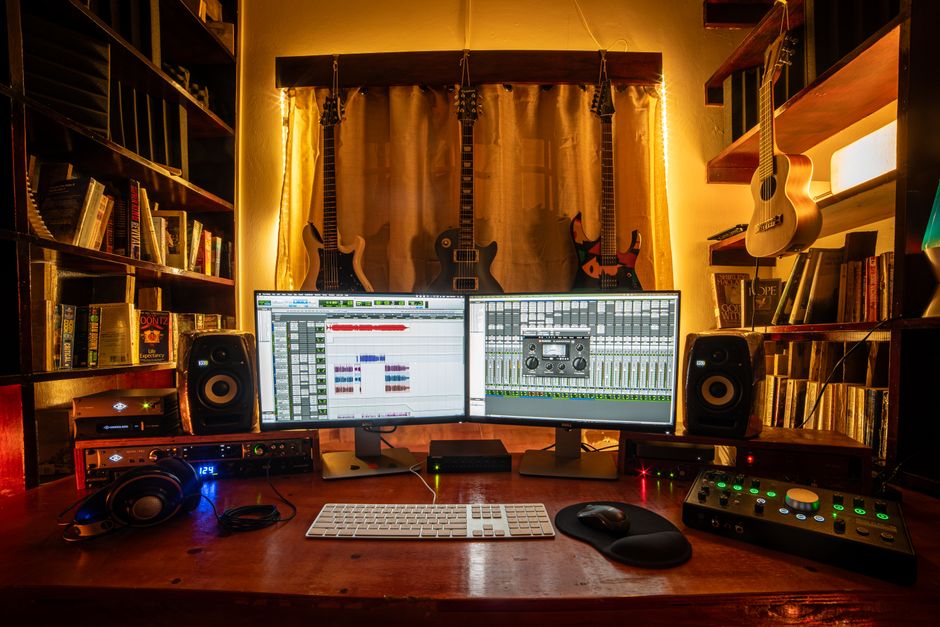
Pro Tools: Technical Architecture for Immersive and Collaborative Music Production
Technical analysis of Pro Tools: recording, editing, mixing, immersive audio, and remote collaboration for professionals.