Capturing and Processing Gestural Instruments: Theremin and Beyond in Music Production
Technical analysis of recording and post-production for theremins and gestural instruments to maximize expressiveness and sonic fidelity.
Principles of Capture for Gestural Instruments
The integration of electronic gestural instruments, such as the theremin, into contemporary music production presents a unique technical challenge and creative opportunity. These devices, which allow for touchless interaction, generate distinct sonic textures that demand a meticulous approach to their capture and processing. From the delicate oscillations of a theremin to more advanced gestural interfaces, understanding their acoustic and electronic principles is fundamental for their effective incorporation into any sound project. This technical analysis addresses the essential considerations for recording and treating these innovative tools, ensuring maximum fidelity and expressiveness.
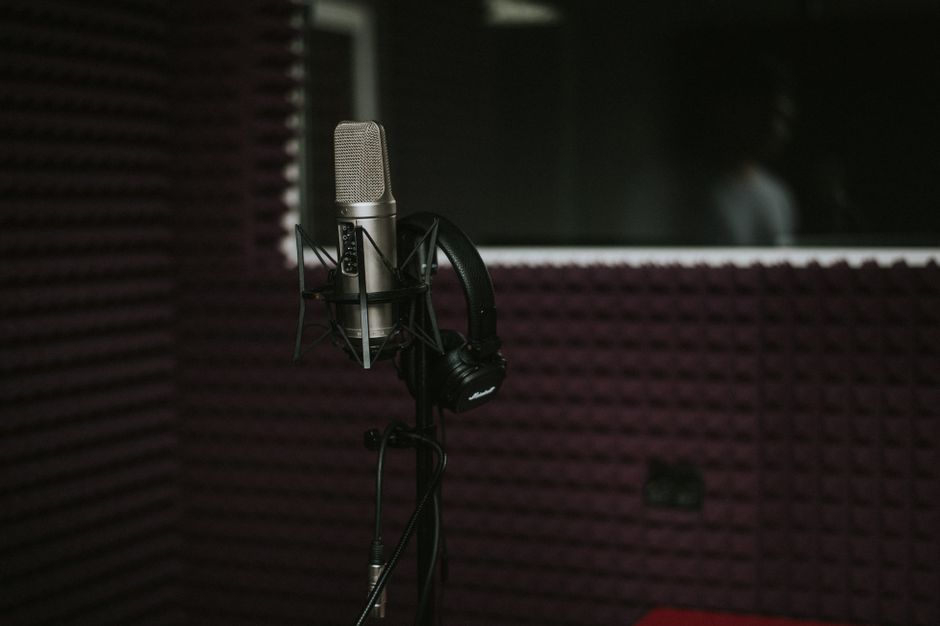
The nature of gestural instruments imposes specific requirements for their recording. The theremin, for instance, emits its sound through an internal speaker or a line output. For capture, one can opt for miking its speaker or connecting it directly to an audio interface. Miking, preferably with large-diaphragm condenser microphones like a Neumann U87 (https://www.neumann.com/en-us/products/microphones/u87-ai/) or a Shure KSM32 (https://www.shure.com/en-US/products/microphones/ksm32), allows for capturing the instrument’s acoustic resonance and its interaction with the space. It is crucial to position the microphone at an optimal distance to avoid excessive environmental coloration and to capture the sound’s harmonic richness. On the other hand, a direct connection (DI) offers a clean, low-noise signal, ideal for more in-depth subsequent processing. This duality provides sound engineers with considerable flexibility. Other gestural instruments, such as MIDI controllers based on motion sensors or synthesizers that respond to gestures, generally offer line or USB outputs, simplifying the signal chain by working directly with digital data or pre-processed analog signals. The choice of method will depend on the desired sonic character and the context of the mix.
Considerations for Miking and Direct Connection
When opting for miking, placement is key. For a theremin, a microphone placed about 15-30 centimeters from the speaker, slightly off-center, can offer a balance between direct presence and the instrument’s body resonance. The recording room also plays a vital role; spaces with controlled acoustics minimize unwanted reverberations and background noise. If the intention is to capture the performer’s interaction with the space, an additional ambient microphone, perhaps a stereo pair, could be employed to complement the close signal. Experimentation with different microphone types – dynamics for a more impactful sound, ribbons for vintage warmth – can enrich the tonal palette. Phase is another critical aspect, especially when recording multiple sources or combining the miked signal with a direct one. Verifying phase coherence between the different signals is essential to avoid unwanted cancellations that degrade sound quality. Phase analysis tools within the DAW are indispensable for this task.
Once the signal is recorded, digital processing allows for precise sound sculpting. Equalization is fundamental for cleaning up unwanted resonances or enhancing specific frequencies that contribute character. For example, attenuating low-mid frequencies can reduce the sound’s “boominess,” while a slight boost in the high frequencies can add brightness without harshness. Compression is vital for controlling the inherently variable dynamics of these instruments. Gentle compression, with low ratios and adjusted attack and release times, can even out sustain without sacrificing expressiveness. The use of time-based effects like reverbs and delays can place the instrument in a virtual acoustic space, adding depth and atmosphere. Convolution reverb plugins, such as those available on platforms like Universal Audio (https://www.uaudio.com/), offer the possibility of recreating realistic acoustic environments. Modulation, through effects like chorus or flanger, can generate more complex and ethereal textures, suitable for ambient or science fiction passages. Granular synthesis, using tools like Output’s Portal (https://output.com/products/portal), allows for radical transformation of the signal, creating drones or abstract soundscapes from simple recordings.
Signal Processing and Sound Sculpting
The field of gestural instruments continues to evolve. Beyond the classic theremin, we find a proliferation of controllers that integrate motion sensors, computer vision, and machine learning. Devices like the Eigenharp or Leap Motion controllers enable sonic manipulation with unprecedented granularity and expressiveness. Artificial intelligence is beginning to have a significant impact, with plugins that can analyze gestures in real-time to intuitively modulate synthesizer or effect parameters. Immersive music production, in formats like Dolby Atmos, also presents new opportunities for these instruments, allowing gestural sounds to be positioned in three-dimensional space and creating enveloping listening experiences. Software capabilities in platforms like Ableton Live (https://www.ableton.com/es/live/) or Logic Pro X (https://www.apple.com/es/logic-pro/), along with advanced MIDI mapping plugins, facilitate the assignment of gestures to multiple parameters, opening up a creative spectrum for composers and sound designers. The free software community, through projects like Pure Data (https://puredata.info/) or Max/MSP (https://cycling74.com/products/max), also drives experimentation with new forms of gestural interaction and synthesis.
The recording and processing of theremins and electronic gestural instruments demand a combination of precise acoustic technique and a deep understanding of modern digital tools. From selecting the capture method to applying advanced effects, each decision influences the final sound’s expressiveness. By integrating these innovations with a solid foundation in audio principles, producers can enhance the uniqueness of these instruments, creating soundscapes that captivate audiences and define new frontiers in contemporary music. The constant technological evolution in this field promises a vibrant future for touchless musical interaction.
Related Posts

Sound Envelope Modulation: Principles, ADSR Applications, and Advanced Production Technologies
Fundamentals of the sound envelope, including the ADSR model, its application in synthesis and processing, and contemporary innovations.

Harmonic Distortion Fundamentals: Timbral Character and Sound Perception in Audio
Understand the addition of even and odd harmonics and their psychoacoustic impact on shaping timbre.

Evolution of Multitrack Recording: From Analog Tape to DAWs and AI
Analyzes the historical, technical, and creative development of multitrack recording, from Les Paul to digital innovations and AI.

Wind Instrument Acoustics and Microphony: Detailed Capture of Harmonics and Transients
Technical analysis of microphone selection, miking techniques, and processing for wind instruments in music productions.