The Hardware Sampler: Technological Evolution and Its Fundamental Impact on Musical Composition
A historical journey of the hardware sampler, from its analog origins to its influence on contemporary music production.

Origins of Sound Manipulation: From Tapes to Analog Loops
The evolution of music production is intrinsically linked to the development of tools that allow for sound manipulation and reproduction. Among these innovations, the hardware sampler stands as a fundamental pillar, radically transforming composition and sound design. This device, capable of capturing audio fragments for later editing and playback, marked a before and after in musical creation, from avant-garde studios to the most commercial productions. Its trajectory illustrates a fascinating technological and creative journey.
The origins of sound manipulation can be traced back to rudimentary analog techniques. Before the digital era, engineers and musicians experimented with magnetic tapes, cutting, splicing, and creating loops to generate rhythmic repetitions or ambient textures. A notable precursor was the Mellotron, a polyphonic keyboard that, instead of generating sound synthetically, reproduced recordings of real instruments stored on individual tapes for each key. Although not a “sampler” in the modern sense, its principle of reproducing pre-recorded sounds paved the way for future concepts. These early methods, albeit laborious, revealed the immense creative potential inherent in the recontextualization of audio.
The Digital Revolution: Fairlight CMI and Synclavier
The true revolution arrived with the introduction of digital technology. In the late 1970s and early 1980s, prodigious machines like the Fairlight CMI (Computer Musical Instrument) and the Synclavier emerged. These systems, with their complex interfaces and exorbitant prices, established themselves at the pinnacle of innovation. The Fairlight CMI, in particular, allowed users to digitize any sound, visualize its waveform on a CRT screen, and manipulate it in ways previously unimaginable. Artists like Peter Gabriel and Kate Bush employed these tools to forge entirely new soundscapes, imbuing their productions with a distinctive identity. The Synclavier, meanwhile, combined FM synthesis with sampling capabilities, offering an extremely powerful digital audio workstation for its time.
The 1980s witnessed a shift towards accessibility, bringing sampling technology within reach of a broader audience. The Ensoniq Mirage, released in 1985, represented a significant milestone, democratizing sampling capability at a considerably lower price point than its predecessors. Although with limitations in audio quality and sample duration, its impact was undeniable. Subsequently, E-mu Systems introduced the SP-1200, a machine that became an icon of hip-hop and electronic music production. Its characteristic sound, due to its sampling rate and converters, is still highly valued today. The Akai MPC series, initiated with the MPC60 designed by Roger Linn, consolidated the pad interface for beat creation and sample manipulation, establishing a standard that endures to the present day. These devices not only facilitated music production but also defined entire genres.
Democratization of Sampling: Ensoniq, E-mu, and Akai
The legacy of these hardware sampling pioneers remains relevant in contemporary music production. Although software has taken over many sampling functions with plugins like Kontakt or Ableton Sampler, interest in hardware has not waned. Many producers opt for hybrid setups, combining the flexibility of software with the tactile immediacy and sonic character of dedicated machines. Modern devices such as samplers from Elektron, Native Instruments Maschine, or the renewed Akai MPC One and Live continue the tradition, incorporating advanced connectivity, effects processing, and powerful synthesis engines. The resurrection of lo-fi aesthetics and the pursuit of unique sonic textures have further boosted the appreciation for vintage samplers, whose digital imperfections are now considered desirable attributes. The influence of artificial intelligence in audio processing and remote production also suggests new frontiers for sample interaction, opening pathways for assisted generation and manipulation of sonic material.
In summary, the journey of hardware samplers, from their rudimentary analog beginnings to their sophisticated digital embodiment and current revaluation, underscores their irreplaceable role in music history. These instruments not only provided tools for replicating sounds but enabled the creative deconstruction and reconstruction of audio, driving sonic innovation through the decades. Their impact is perceptible in countless recordings and genres, cementing their position as essential catalysts in the evolution of musical expression.
Related Posts
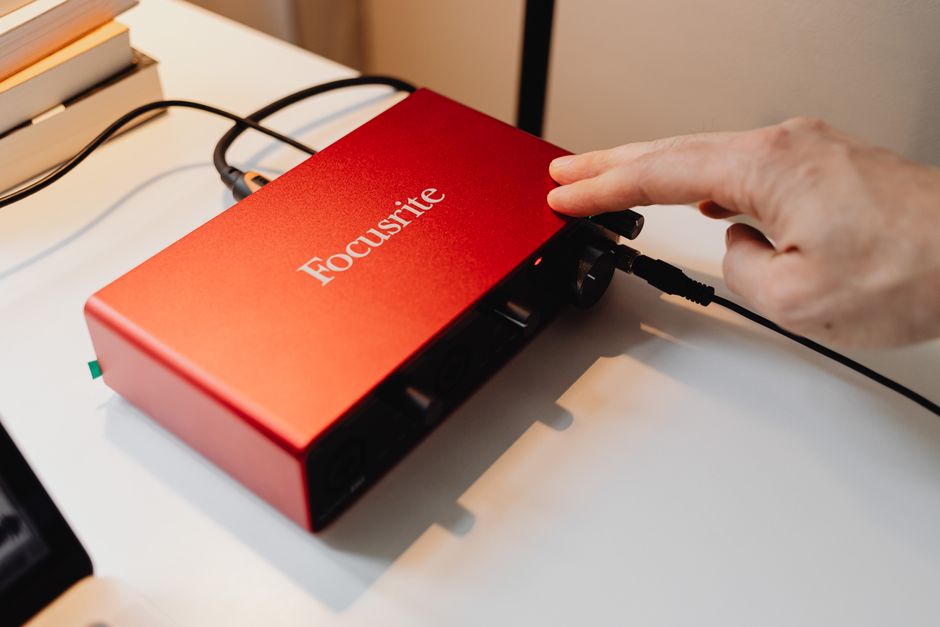
Evolution of USB Audio Interfaces: From Limited Connectivity to Professional Production
Historical analysis of USB audio interfaces: impact of bandwidth, latency, and standardization on modern music production.

Formant Shifting: Vocal Timbre Modulation in Modern Audio Processing
A deep dive into manipulating vocal resonances (formants) for timbre modification in music production and sound design.

Lookahead Compression: Advanced Dynamic Control for Musical Transients
Analyzing the operational principle of lookahead compression and its application in optimizing transients and clarity in music productions.

Evolutionary Sound Design: Granular Synthesis, AI, and Spatial Processing for Dynamic Soundscapes
Explore granular synthesis, AI, and advanced spatialization to create soundscapes that organically mutate and develop in musical productions.