Multitrack Evolution: From Les Paul to Immersive Digital Production
Trace the historical development of multitrack recording, from its analog beginnings to today's immersive digital capabilities.
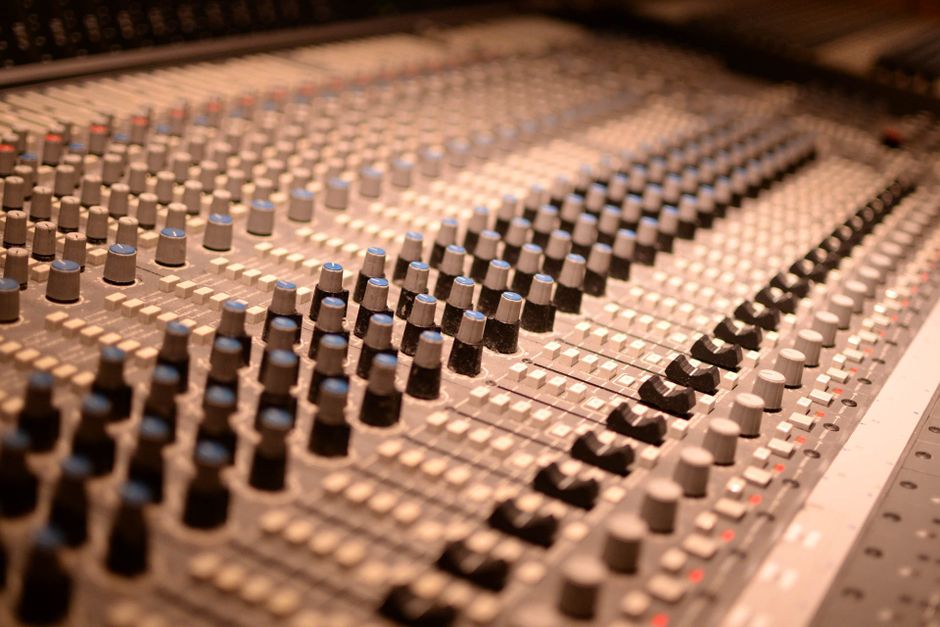
The Technological Evolution of Multitrack Recording
Music recording underwent a radical transformation with the advent of multitrack recorders. Before their introduction, capturing a musical performance meant all musicians playing simultaneously, with the inherent pressure of achieving a perfect take in a single pass. This methodology severely limited creative and corrective possibilities. The invention of multitrack not only simplified production but also redefined composition and arrangement, allowing unprecedented freedom to build complex soundscapes layer by layer. This technological advancement laid the foundation for the sound we appreciate today in countless recordings.
The genesis of multitrack is inextricably linked to figures like Les Paul, an innovative guitarist and technician who, in the late 1940s, experimented with tape recorders, modifying them to overdub sounds. His early methods involved the ‘sound-on-sound’ technique, where one track was recorded over another, degrading quality with each addition. The true revolution came with the collaboration between Les Paul and Ampex. In 1954, Ampex released the Ampex 300, an eight-track one-inch tape recorder, initially designed for telemetry recording, but quickly adapted by Paul for music—a milestone that can be explored in depth in specialized articles like those from Sound on Sound. This device allowed individual instruments or groups to be recorded on separate tracks, opening the door to independent editing, processing, and mixing of each element. Iconic studios, such as EMI Recording Studios (later Abbey Road Studios) in London, adopted these machines, marking the beginning of a new era. The early recordings of The Beatles, for example, were limited by the available four tracks, a constraint that spurred their creativity to achieve intricate arrangements within a confined space. The ability to correct errors on one track without affecting the others became a paradigm shift.
Pioneers and Milestones in Multitrack Technology
Throughout the 1960s and 1970s, analog multitrack recorders became the industry standard. 16 and 24-track models, using two-inch tapes, became common in professional studios worldwide. Manufacturers like Studer, MCI, and Otari were benchmarks for high-fidelity equipment. These systems offered considerable flexibility, allowing producers and musicians to refine every detail of a song. However, they presented inherent challenges: tape hiss, the need for precise synchronization between multiple machines for more tracks, and meticulous maintenance of heads and mechanics. The solution to tape hiss arrived with noise reduction systems like Dolby and dbx, which compressed the dynamic range during recording and expanded it during playback, restoring the original signal while attenuating noise. Despite these challenges, the ‘analog sound’ was valued for its warmth and its particular response to saturation, characteristics that many engineers still try to emulate today with plugins and modern equipment. The investment in these machines was considerable, but their impact on the quality and complexity of musical productions was incalculable.
The 1980s witnessed the emergence of the first digital multitrack systems, an evolution that promised to overcome the limitations of the analog format. Machines like the Mitsubishi X-80 and the Sony PCM-3324 offered pristine audio quality, free from the characteristic tape hiss and with the advantage of perfect copies without degradation. However, these units were extremely expensive and complex. The true turning point came with the digitalization of audio on personal computers. In the early 90s, companies like Digidesign (with Pro Tools) and Steinberg (with Cubase) developed the first Digital Audio Workstations (DAWs) that allowed multiple tracks to be recorded, edited, and mixed directly within software. This democratized music production, making multitrack technology accessible to a much wider audience and smaller studios.
Consolidation and Challenges of the Analog Format
Today, multitrack technology has transcended its physical origins. Modern DAWs, such as Ableton Live, Logic Pro, FL Studio, and Pro Tools itself, offer virtually unlimited capabilities for tracks, effects, and automation. Innovation continues with the integration of artificial intelligence in processes like mixing and mastering, plugins that assist in pitch correction or harmony generation, and cloud-based collaborative production tools that allow artists from different locations to work on the same project in real-time. The emergence of immersive audio formats, such as Dolby Atmos, drives new ways of conceiving sonic space, expanding the multitrack concept into three-dimensional dimensions. Platforms like Spotify already support these formats, indicating a clear direction for the future of production. These advancements demonstrate how the fundamental principle of layered recording, initiated by multitrack pioneers, remains the pillar of contemporary music creation, adapting and evolving with each new digital tool.
From Les Paul’s rudimentary overdubbing experiments to today’s sophisticated digital production environments, the trajectory of multitrack is a testament to the relentless pursuit of greater creative flexibility by engineers and musicians. What began as a technical necessity to improve recording quality and efficiency evolved into an indispensable tool that shaped entire musical genres and enabled artistic expression in previously unimaginable ways. The essence of multitrack recording persists, and its evolution continues to set the pace for innovation in the audio industry, offering limitless possibilities for future generations of creators.
Related Posts

Capturing Resonant Instruments: Miking, Processing, and Acoustics
Advanced techniques for recording exotic instruments: miking, EQ, and spatialization for immersive audio.
Ardour: Architecture and Workflow for High-Fidelity Digital Music Production
Technical analysis of Ardour: setup, multitrack recording, advanced mixing, and mastering for modern studios.

Home Studio Optimization: Strategic Equipment Selection for Accessible Music Production
Building high-fidelity music production studios on a budget, focusing on interfaces, monitoring, software, and microphones.

Mastering for Streaming: Acoustics, Dynamics, and Digital Platform Adaptation
Sonic optimization for digital distribution: acoustics, LUFS, True Peak, and immersive formats for a superior listening experience.